State PSC 2026 Master Plan: Your Comprehensive Guide to Preparation, Notification, and Selection
Planning to become a state administrative officer in 2026? Success in State Public Service Commission (PSC) exams requires more than quick study—it demands an 18 to 24-month structured strategy. This master plan is built for serious aspirants starting today, covering everything from foundational reading to advanced mock testing.
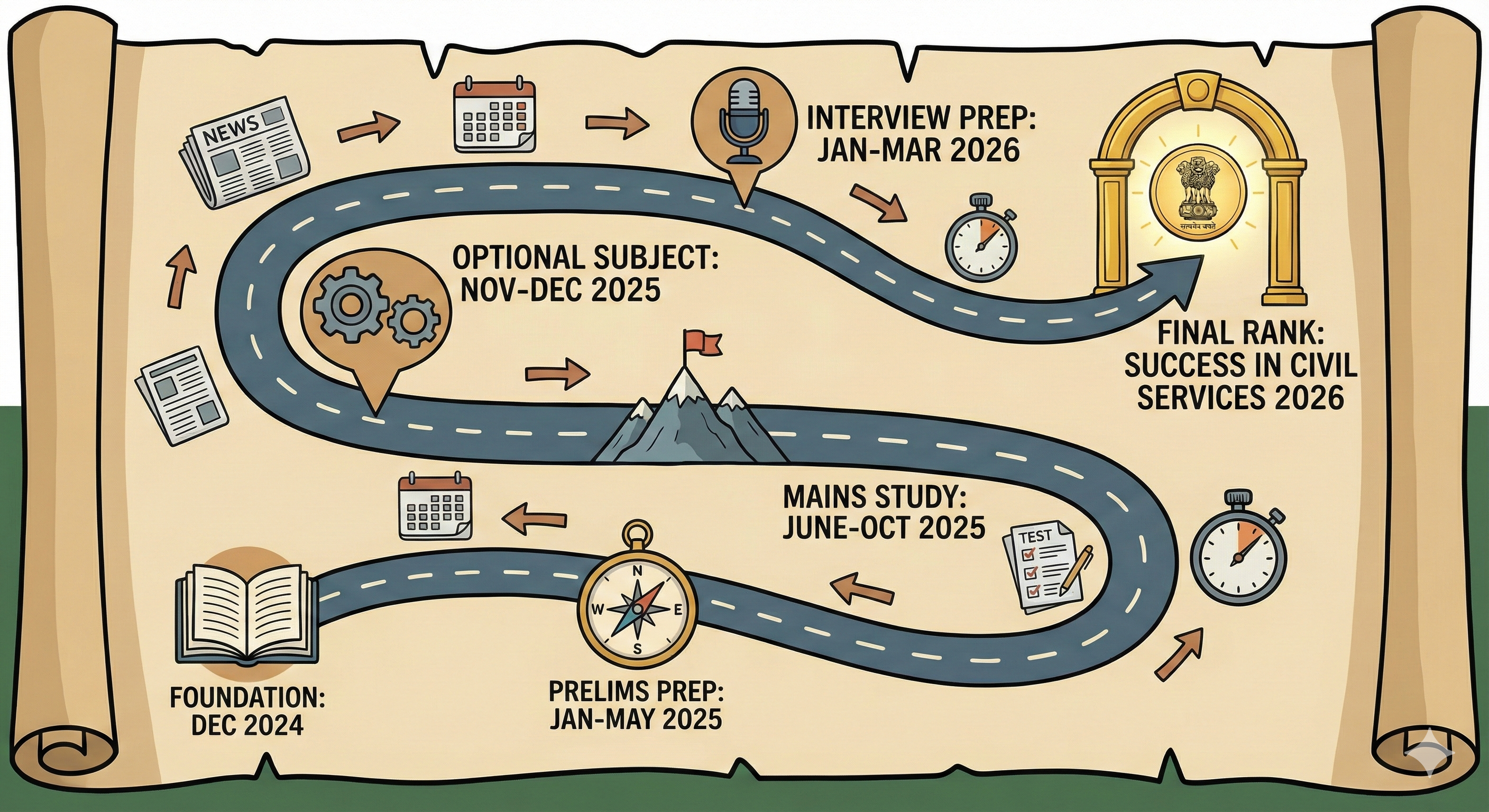
Table of Contents
Introduction: Why PSC 2026 Requires a Long-Term Strategy
Many aspirants wait until the notification drops, leading to panic and incomplete syllabus coverage. Targeting the State PSC 2026 cycle now—18 to 24 months in advance—gives you the crucial time needed to build a robust foundation, master subjective answer writing, and handle the immense diversity of the syllabus.
Defining State PSCs: Roles and Opportunities
State PSCs conduct exams (like PCS in UP, RAS in Rajasthan, or BPS in Bihar) to recruit officers for key administrative positions within the state government. These roles—ranging from Deputy Collector and DSP to various departmental officers—offer direct engagement in regional development and public service, often providing better work-life balance and immediate ground-level impact compared to central services.
The 24-Month Advantage: Planning vs. Reaction
The biggest challenge in state civil service exams is the vastness of the syllabus, which merges general studies (common to UPSC) with highly specific state knowledge. Starting early allows you to read NCERTs slowly, grasp conceptual clarity, and practice answer writing without the pressure of an imminent deadline. You are building a sustainable habit, not cramming information.
Who Should Target the 2026 Cycle? (Eligibility Snapshot)
The 2026 cycle is ideal for:
While specific age and reservation criteria vary by state, generally, a bachelor's degree from a recognized university is the minimum educational qualification.
Understanding the Structure: Prelims, Mains, and Interview
Every State PSC exam follows a three-stage sequential process. Failing one stage means you cannot proceed to the next. You must respect the unique demands of each phase.
Phase I: Preliminary Examination (The Screening Filter)
The Prelims is entirely objective (Multiple Choice Questions) and serves only to filter candidates. Your score here does not count towards the final rank, but qualifying is mandatory.
Phase II: The Mains Examination (The Rank Decider)
The Mains is the most critical stage, consisting of subjective, descriptive papers. Your rank and eventual service allocation depend entirely on your Mains score.
Phase III: Personality Test/Interview (Assessing Suitability)
This phase is not about testing your knowledge (which Mains already did) but assessing your personality, integrity, decision-making ability, and suitability for high-stakes administrative roles. Current affairs, ethical dilemmas, and your state-specific knowledge are often tested here.
Comparative Analysis: Choosing Your Target State PSC
Choosing the right state is crucial, especially if you have local connections, language skills, or specific interests. While the core GS syllabus is similar across all exams, the differences are often hidden in the details.
Key Differences Between UPSC and State PSCs
Focus Areas: High-Priority State PSCs
If you are serious about 2026, understanding the requirements of major exams like Uttar Pradesh (UPPSC), Maharashtra (MPSC), Bihar (BPSC), and Rajasthan (RPSC) is essential.
| State PSC | Target Service | Typical Prelims Date (Estimate 2026) | Mandatory Local Language Test (Mains) | Weightage of State GK | CSAT/Aptitude Nature (Prelims) |
|---|---|---|---|---|---|
| UPPSC (Uttar Pradesh) | PCS | May/June 2026 | Yes (Qualifying Hindi) | High (Dedicated sections in GS Mains) | Qualifying |
| BPSC (Bihar) | BPS | April/May 2026 | Yes (Qualifying Hindi) | Moderate to High | Not applicable (Only 1 GS paper in Prelims) |
| MPSC (Maharashtra) | MPSC Civil Services | March/April 2026 | Yes (Marathi Language) | High | Scoring (Contributes to Prelims cut-off) |
| RPSC (Rajasthan) | RAS | July/Aug 2026 | Yes (Hindi and English Composition) | High | Qualifying (Integrated into GS) |
Local Knowledge and Language Proficiency Requirements
If you are attempting a PSC exam outside your home state, start learning the mandatory local language immediately. Many states require basic proficiency, and language papers in Mains are non-negotiable filters. This takes time and cannot be rushed in the last few months.
The 2026 Preparation Roadmap (Phase-by-Phase Timeline)
This roadmap assumes an 18 to 24-month preparation window. Treat these phases as fluid, focusing on completion rather than strict calendar months.
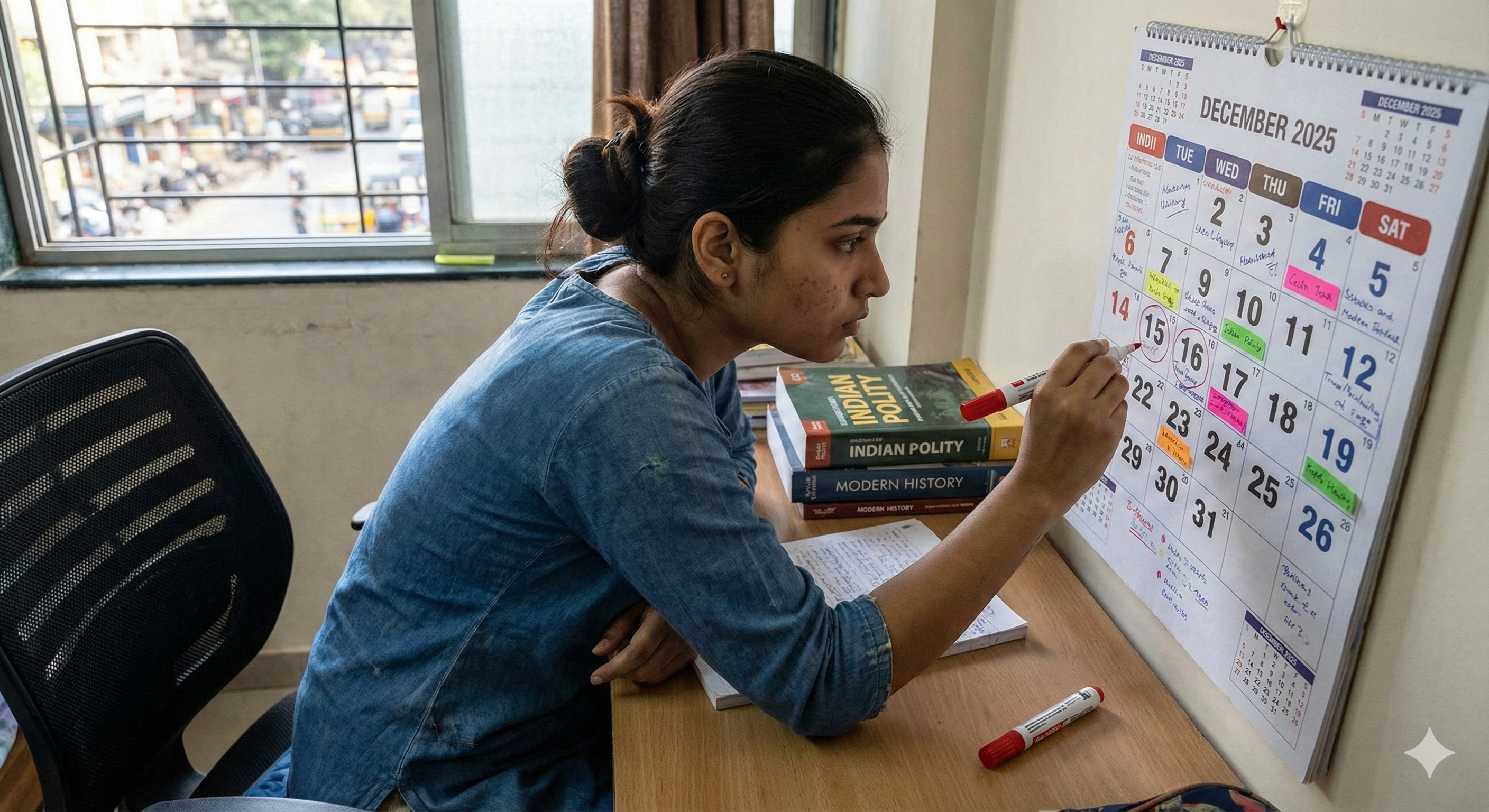
Phase I (Months 1-8): Foundation Building (The NCERT/Basic Phase)
Your goal here is conceptual clarity. Do not worry about retaining every detail yet. Focus on understanding the fundamentals.
Phase II (Months 9-16): Subject Specialization and Consolidation
This is where you integrate the general syllabus with the state-specific demands and move towards Mains preparation.
Phase III (Months 17-24): Revision, Practice, and Testing
By this stage, your syllabus coverage should be complete. The focus shifts entirely to application and timed practice.
Critical Resources and Must-Have Preparation Tools
Success in PSC exams hinges on using limited, high-quality resources and revising them multiple times, rather than reading everything once.
Recommended Book List (Standard PSC resources)
Utilizing Online Resources and PSC-Specific Portals
Leverage the digital age for efficiency. Follow official state government websites for scheme updates and utilize standard news aggregation apps for tracking current affairs quickly. Look for reputable online coaching portals that specialize specifically in your target state PSC (e.g., UPPSC focused modules).
Importance of Previous Years' Question Papers (PYQs)
PYQs are your map. They show you the depth and breadth required for each subject and reveal the PSC’s favorite topics. For Prelims, attempt all last 10 years' papers under timed conditions. For Mains, practice writing answers to last 5 years' questions.
Selecting the Right Optional Subject (If applicable)
If your state still requires an optional subject, choose strategically. Considerations include:
Conclusion: Maintaining Motivation Until Notification Day
The journey to the 2026 State PSC selection is a marathon, not a sprint. The 18-month lead time offers control and reduces stress, but only if you maintain momentum.
Key Takeaways for the 2026 Aspirant
The Three Pillars of Success: Consistency, Revision, and Health
Your preparation relies on three constants: Consistency in daily study, meticulous Revision of integrated notes, and maintaining physical and mental Health. Never neglect sleep or exercise; they are essential for optimizing retention.