
BPT 2026 Admission: Bachelor of Physiotherapy Course Details
Enroll in the BPT 2026 program. Learn evidence-based physical rehabilitation, movement science, and clinical practice over 4.5 years. Eligibility, syllabus, and career scope.
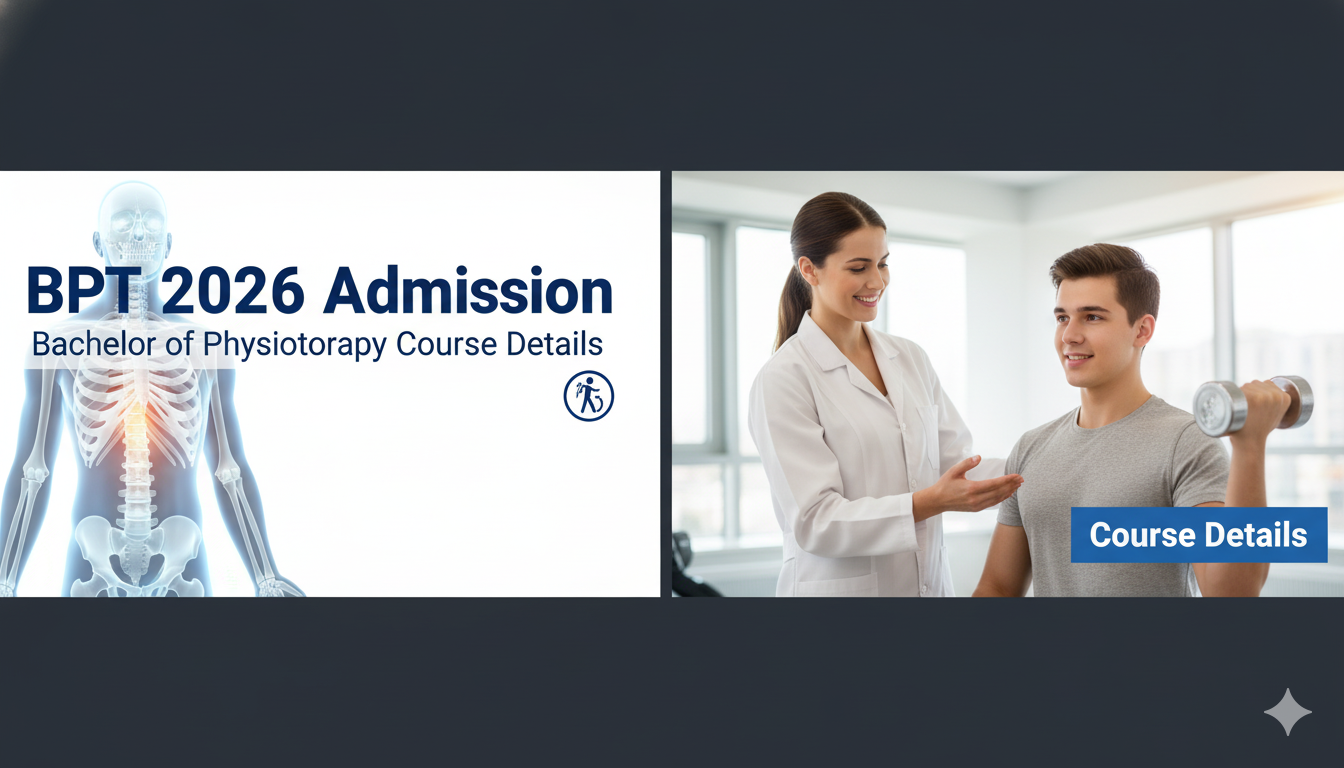
Bachelor of Physiotherapy (BPT) Program - Cohort 2026
Develop the expertise needed to restore function, improve mobility, and enhance the quality of life for patients globally. The BPT 2026 program is a comprehensive undergraduate professional degree focused on training skilled, evidence-based practitioners in physical rehabilitation, movement science, and functional restoration, combining rigorous academic theory with extensive clinical training.
1. Course Overview & Key Highlights
The Bachelor of Physiotherapy (BPT) is a 4.5-year intensive program designed to meet the growing demand for rehabilitation specialists. This course emphasizes practical skills, ethical practice, and interdisciplinary collaboration, ensuring graduates are ready for immediate clinical roles.
Key Highlights Table
| Attribute | Details |
|---|---|
| Course Name | Bachelor of Physiotherapy (BPT) - Cohort 2026 |
| Course Level | Undergraduate (UG) Professional Degree |
| Duration | 4.5 Years (4 years Academic + 6 months Mandatory Clinical Internship) |
| Eligibility Criteria | Successful 10+2 completion with Physics, Chemistry, and Biology (PCB) as mandatory subjects, typically 50-60% aggregate marks. |
| Entrance Exams | NEET (National Eligibility cum Entrance Test), State CETs (Common Entrance Tests), or specific university entrance examinations. |
| Course Fees (Estimate) | ₹1,00,000 to ₹2,50,000 per annum (Varies significantly by institution type) |
| Admission Process | Entrance-based, followed by counseling based on merit score and often an institutional interview. |
| Key Subjects | Human Anatomy, Exercise Therapy, Biomechanics, Electrotherapy, Musculoskeletal Physiotherapy, Neuro-Rehabilitation. |
| Examination Type | Semester-wise (Theory, Practical/OSPE, Viva Voce) and Final Dissertation/Project. |
| Average Starting Salary | ₹3.0 LPA to ₹6.0 LPA (Varies based on sector, location, and specialization) |
2. Course Identity & Logistics
- Course Title & Code: Bachelor of Physiotherapy (BPT)
- Credit Value/ECTS: Approximately 200-220 Total Required Credits, adhering to National Regulatory Council guidelines.
- Delivery Mode: Full-Time, On-Campus, Clinical/Lab Intensive.
- Format: Didactic Lectures, Practical Skill Labs, Clinical Rotations (starting from Year 3), Seminars, and Research Workshops.
- Affiliation: Affiliated with [University/Governing Body Name] and recognized by the relevant National Regulatory Council (e.g., Indian Association of Physiotherapists - IAP guidelines).
- Start Date: Typically commences in July/August [Year] (Subject to counseling schedule).
3. Course Description & Rationale
The BPT program is a rigorous, comprehensive professional degree designed to equip students with the necessary scientific knowledge and practical skills to assess, diagnose, and treat physical impairments, disabilities, and pain using non-pharmacological, physical means. This includes manual therapy, exercise prescription, electrotherapeutic modalities, and patient education.
Curriculum Context & Rationale
The curriculum integrates foundational medical sciences (Anatomy, Physiology) with specialized therapeutic techniques (Orthopedics, Neurology, Cardiopulmonary PT). The structure ensures a smooth transition from classroom theory to supervised clinical practice. The mandatory 6-month internship provides essential real-world exposure across diverse patient populations.
Industry Relevance (2025 Trends)
The global healthcare landscape in 2025 shows a significant shift towards preventive care and rehabilitation. Factors driving demand include an aging population, rising rates of chronic lifestyle diseases (diabetes, obesity), and increased awareness of sports injury management. Graduates of the BPT 2026 program will be essential frontline healthcare providers, specializing in functional restoration and injury prevention.
Target Audience
High-achieving 10+2 science students who possess strong communication skills, empathy, patience, and a genuine interest in human movement, biological sciences, and hands-on patient care.
4. Prerequisites & Eligibility
Academic Prerequisites
- 10+2 Completion: Must have successfully completed the 10+2 (or equivalent) examination from a recognized board.
- Mandatory Subjects: Physics, Chemistry, and Biology (PCB). English is also required.
- Minimum Marks: An aggregate of 50% to 60% in the science stream subjects (PCB).
- Entrance Examination: A valid qualifying score in a national or institutional entrance test is mandatory.
Skill Requirements
- Strong observational and analytical skills for movement assessment.
- Excellent interpersonal and communication skills for patient counseling.
- Physical stamina and manual dexterity for administering treatments.
Technical Requirements
- Basic computer literacy and proficiency in using digital medical records systems.
- Consistent access to the internet for e-learning platforms (LMS) and accessing medical research databases.
Health Requirements
Students must provide a mandatory physical fitness certificate and adhere to all institutional vaccination protocols (e.g., Hepatitis B, Tetanus) necessary for clinical exposure.
5. Learning Objectives (LOs)
Upon successful completion of the Bachelor of Physiotherapy program, students will be clinically competent and ethically grounded, able to:
- Define: Key terminology, principles of human anatomy, physiology, and pathology relevant to physical rehabilitation across the lifespan.
- Apply: Evidence-based therapeutic tools, frameworks (e.g., manual therapy, therapeutic exercise), and electrophysical modalities to manage acute and chronic conditions.
- Analyze: Complex musculoskeletal, neurological, and cardiopulmonary dysfunctions, determining the underlying causes of movement impairment and disability.
- Evaluate: The effectiveness of treatment interventions critically, modifying rehabilitation plans based on patient outcomes and current clinical guidelines.
- Create: Holistic, patient-centered rehabilitation programs and conduct original research projects that contribute to the body of knowledge in physiotherapy science.
6. Course Materials
Required Textbooks (Core Texts)
- Anatomy:Gray's Anatomy for Students (Standring) or BD Chaurasia’s Human Anatomy.
- Physiology:Textbook of Medical Physiology (Guyton and Hall).
- Exercise Therapy:Therapeutic Exercise: Foundations and Techniques (Kisner and Colby).
- Biomechanics:Kinesiology of the Musculoskeletal System (Neumann).
- Electrotherapy:Clayton's Electrotherapy (Forster and Palastanga).
Resource Access
- Access to the institutional medical library, including print and digital journals.
- Online databases subscription (e.g., PubMed, Cochrane Library, PEDro for physiotherapy evidence).
- Specialized simulation and practical skills labs (e.g., Gait Lab, Hydrotherapy Unit).
Equipment & Digital Tools
- Required practical kits (e.g., goniometers, stethoscopes, sphygmomanometers, reflex hammers).
- Access to the institutional Learning Management System (LMS) for lecture notes, video tutorials, and assignment submission.
7. Detailed Syllabus & Module Breakdown (Semester Structure)
The 4-year BPT curriculum is structured into three progressive phases, integrating theory and clinical skills, culminating in the mandatory internship.
Phase I: Foundations (Year 1 - Basic Medical Sciences)
Objective: Establish core vocabulary and foundational principles of human structure and function necessary for clinical reasoning.
- Semester 1: Human Anatomy (Gross & Histology), General Physiology, Basic Psychology, Orientation to Physiotherapy and Ethics.
- Semester 2: Applied Biomechanics (Kinesiology), Biochemistry, Sociology, Introduction to Exercise Therapy Principles.
Phase II: Application & Core Concepts (Years 2 & 3 - Pathology and Techniques)
Objective: Practical application of theories, understanding disease processes, and mastering core therapeutic techniques.
- Year 2 Focus: Pathology & Microbiology, Pharmacology, Electrotherapy & Actinotherapy, Advanced Biomechanics, Musculoskeletal Assessment Techniques.
- Year 3 Focus: Introduction to Clinical Practice (Early Rotations), General Surgery & Medicine, Neurological Physiotherapy (Introduction), Orthopedic Physiotherapy (Core), Community Based Rehabilitation (CBR).
Phase III: Advanced Topics & Synthesis (Year 4 & Internship)
Objective: Advanced complexity, specialization, research synthesis, and independent clinical practice preparation.
- Year 4 Focus: Cardiorespiratory Physiotherapy, Sports Physiotherapy, Geriatric and Paediatric PT, Research Methodology & Biostatistics, Project/Dissertation Submission, Health Administration.
- Internship (6 Months): Mandatory full-time clinical rotations across diverse specialties (e.g., Orthopedics, Neurology, ICU, Community Health).
8. Assessment & Grading Scheme
Assessment is rigorous, designed to test both theoretical knowledge (cognitive domain) and practical mastery (psychomotor domain) required for competent clinical practice.
Assessment Distribution
| Assessment Component | Weightage | Focus |
|---|---|---|
| Theory Exams (Mid-term & End-of-Semester) | 60% | Conceptual understanding and medical knowledge. |
| Practical/Clinical Exams (OSPE/Viva Voce) | 30% | Technique mastery, patient handling, and clinical reasoning skills. |
| Internal Assessment (Assignments, Attendance, Professionalism) | 10% | Continuous evaluation and adherence to ethical standards. |
Passing Criteria
Students must achieve a minimum of 50% marks separately in both the theoretical and practical components of each subject to pass the semester examination.
Grading Scale (Example Institutional Model)
| Percentage Range | Letter Grade | Description |
|---|---|---|
| 75% and above | A+ / Distinction | Exceptional performance; eligible for Honors. |
| 65% – 74% | A | High achievement; superior grasp of subject matter. |
| 50% – 64% | B | Satisfactory performance; meets minimum passing requirements. |
| Below 50% | F | Failure; required to re-appear in subsequent examination. |
9. Course Policies
Academic Integrity
The institution maintains a zero-tolerance policy regarding academic dishonesty. Plagiarism, cheating, or unauthorized collaboration will result in disciplinary action, including failure in the course or potential expulsion from the program.
Attendance Requirements
- Theory Classes: Mandatory minimum 75% attendance.
- Practical/Clinical Rotations: Mandatory minimum 90% attendance.
Failure to meet the required attendance percentage will render the student ineligible to appear for the final semester examination.
Professional Conduct
Students must adhere strictly to ethical guidelines, maintain patient confidentiality (as per HIPAA or local data privacy laws), and follow the institutional dress code during all practical sessions and clinical postings.
Grievance Redressal
A formal process is established for addressing academic disputes, grading issues, or harassment. Students should first approach the course coordinator and, if unresolved, refer the matter to the Department Head or the Student Welfare Office.
10. Career Scope & Certification
A BPT degree opens doors to a dynamic and highly rewarding career in healthcare, with opportunities for specialization and global practice.
Skills Acquired
- Technical Skills: Manual Therapy, Dry Needling, Therapeutic Exercise Prescription, Posture and Gait Analysis, Use of Electrotherapy equipment.
- Soft Skills: Patient Education, Empathy, Interdisciplinary Teamwork, Critical Thinking, Time Management.
Primary Job Roles and Salary Estimates
| Job Role | Description | Average Starting Salary (Annual Estimate) |
|---|---|---|
| Clinical Physiotherapist | Providing direct patient care in hospitals or private clinics, specializing in various musculoskeletal or neurological conditions. | ₹3.5 LPA - ₹6.0 LPA |
| Sports Team Physiotherapist | Injury prevention, acute management, and rehabilitation for professional or amateur athletic teams. | ₹4.0 LPA - ₹8.0 LPA (Highly variable) |
| Rehabilitation Specialist | Working in dedicated rehabilitation centers focusing on long-term disability management (e.g., spinal cord injury, stroke). | ₹3.0 LPA - ₹5.5 LPA |
| Ergonomics Consultant | Assessing workplaces and designing interventions to prevent occupational injuries and improve worker health. | ₹4.5 LPA - ₹7.0 LPA |
Certification & Licensure
Graduates must register with the appropriate state or national council (e.g., State Physiotherapy Council) after completing the mandatory internship to obtain a professional license required for legal practice.
Further Studies
Graduates are strongly encouraged to pursue a Master of Physiotherapy (MPT) for specialization in high-demand areas such as Orthopedics, Neurology, Cardiopulmonary PT, or Community Health.
11. Frequently Asked Questions (FAQs)
Is the NEET exam mandatory for BPT admission in 2026?
While NEET is primarily for MBBS/BDS, many top institutions and government colleges now use NEET scores or require a qualifying percentile for BPT admission. Candidates must check the specific requirements of their target state or university entrance examinations (CETs).
What is the structure of the 4.5-year BPT course?
The program is divided into 8 semesters of academic study (4 years) focusing on theory, labs, and practical skills, followed by a mandatory, full-time 6-month (24 weeks) clinical internship. The internship is crucial for obtaining a practice license.
How demanding is the clinical rotation schedule during the final years?
Clinical rotations are highly demanding. Students are expected to commit full days (often 8+ hours) to hospital settings, working under supervision across various departments (ICU, OPD, Wards). This phase requires dedication, stamina, and rigorous adherence to professionalism.
What is the typical difference between Physical Therapy (PT) and Occupational Therapy (OT)?
PT focuses on restoring gross motor function, mobility, balance, and reducing pain (e.g., teaching someone to walk again). OT focuses on fine motor skills and adapting environments to help patients perform daily living activities (ADLs) like dressing, cooking, or writing.
Is a research project or dissertation mandatory for BPT graduation?
Yes, most recognized BPT programs require students to complete a mandatory research project or dissertation during the final year. This requirement promotes evidence-based practice skills, critical appraisal, and scientific writing abilities essential for modern healthcare professionals.