
BMLT 2026: Medical Laboratory Technology Degree Course
Enroll in BMLT 2026. Master diagnostic testing, molecular diagnostics, and lab management. 3.5-year program with mandatory clinical internship.
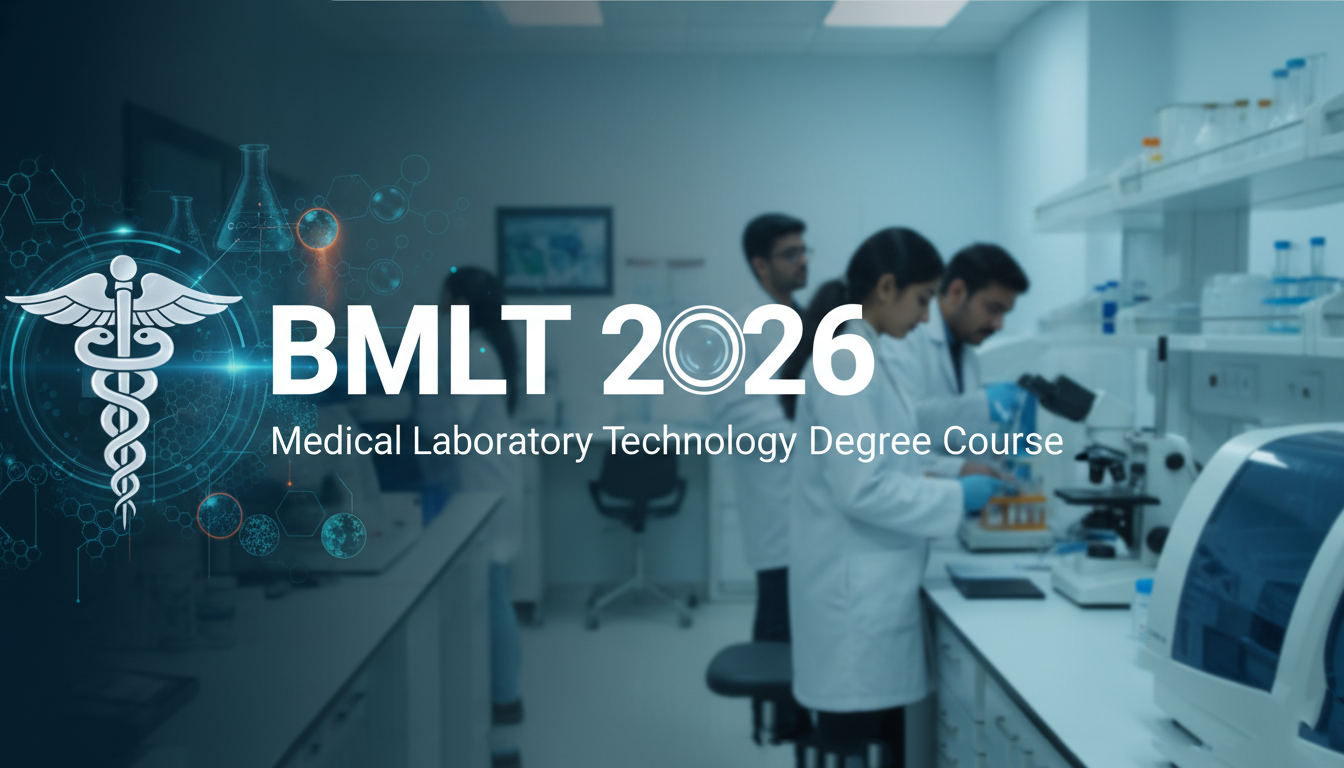
Bachelor of Medical Laboratory Technology (BMLT) 2026 Program
The Bachelor of Medical Laboratory Technology (BMLT) is a rigorous undergraduate program designed to train highly skilled laboratory professionals proficient in the complex diagnostic techniques essential for modern healthcare. This 3.5-year degree integrates foundational medical sciences with extensive hands-on training in core disciplines like Hematology, Clinical Biochemistry, and Molecular Diagnostics, preparing graduates for immediate clinical application and professional certification.
1. Course Overview & Key Highlights
The BMLT 2026 curriculum emphasizes practical proficiency and the integration of cutting-edge technology, including automation and Laboratory Information Systems (LIS), ensuring graduates are prepared for the rapidly evolving diagnostic landscape.
Category Detail Course Name Bachelor of Medical Laboratory Technology (BMLT) Course Level Undergraduate Degree Program Duration 3 Academic Years + 6 Months Mandatory Clinical Internship (Total 3.5 Years) Eligibility Criteria 10+2 (High School) with Science Stream (PCB mandatory). Minimum 50% aggregate score. Entrance Exams Merit-based or Entrance Examination (e.g., CET, NEST, Institutional Entrance Test) Course Fees (Estimate) ₹10,000 - ₹1 Lakh annually in government colleges to ₹50,000 - ₹3 Lakh+ in private institutions Varies by institution/region) Admission Process Merit-based ranking followed by Counseling/Interview, or Entrance-based. Key Subjects Clinical Biochemistry, Hematology, Clinical Microbiology, Molecular Diagnostics, Histopathology, Lab Management. Examination Type Semester-wise (Theory and Practical Viva-Voce) Average Starting Salary (Estimate) INR 3,00,000 – 5,00,000 per annum / ₹2.5 to ₹4.5 Lakhs per annum (LPA) 2. Course Identity & Logistics
This program is structured to provide a comprehensive, accredited education recognized globally for clinical excellence.
- Official Title: Bachelor of Medical Laboratory Technology (BMLT)
- Awarding Body: [Affiliated University Name]
- Total Credits: Approximately 160–180 ECTS equivalent (Total Credits: [X])
- Accreditation: Recognized by [Relevant National Medical/Paramedical Council].
- Format: Hybrid (Lectures, Seminars, Extensive Laboratory Work, Mandatory Clinical Rotations).
- Medium of Instruction: English
3. Course Description & Rationale
Summary
BMLT is a vocational healthcare program that focuses on the scientific application of laboratory analysis for disease diagnosis, prognosis, and therapeutic monitoring. Students learn to analyze biological specimens (blood, urine, tissues) using sophisticated automated instrumentation and manual techniques. The curriculum balances theoretical knowledge with extensive practical exposure, starting early clinical rotations to build competence.
Curriculum Context & Industry Relevance (2025 Trends)
The 2026 BMLT curriculum is strategically aligned with the shift towards personalized medicine. It places a significant emphasis on high-throughput automation, advanced molecular diagnostics (PCR, sequencing), and the ethical use of Laboratory Information Systems (LIS) for data management and reporting. Graduates will be prepared to manage quality control in high-complexity testing environments, meeting stringent international standards (e.g., NABL/CAP).
Target Audience
This course is ideal for high school graduates with a strong foundation in Physics, Chemistry, and Biology who possess a meticulous attention to detail, strong analytical skills, and a commitment to maintaining ethical standards in a critical healthcare support role.
4. Prerequisites & Eligibility
Academic Requirements
- Qualifying Examination: Successful completion of the 10+2 level (or equivalent) from a recognized board.
- Mandatory Subjects: Physics, Chemistry, and Biology (PCB) or Physics, Chemistry, Mathematics, and Biology (PCMB).
- Minimum Grade: A minimum aggregate score of 50% in the qualifying examination (may be higher for competitive entry).
Skill Requirements
- Aptitude: Strong interest in analytical and scientific work, excellent concentration, and manual dexterity.
- Corequisites: Mandatory physical fitness and submission of up-to-date immunization records prior to commencement of clinical rotation phases.
5. Learning Objectives
Upon successful completion of the Bachelor of Medical Laboratory Technology program, students will be able to:
- Define: Key pathological processes, disease states, and the scientific principles governing all core laboratory disciplines (Hematology, Microbiology, Chemistry, Immunology).
- Apply: Standard Operating Procedures (SOPs) to perform complex clinical laboratory tests accurately and efficiently across all phases of testing (pre-analytical, analytical, post-analytical).
- Analyze: Quality Control (QC) data, identify trends and shifts, and troubleshoot common technical and instrumental failures in high-throughput automated systems.
- Evaluate: Laboratory results critically, correlate findings with patient clinical data, and recognize potential sources of error or interference affecting diagnostic accuracy.
- Create: Comprehensive laboratory reports, manage data effectively using Laboratory Information Systems (LIS), and design small-scale research projects or dissertations focusing on diagnostic improvement.
6. Course Materials
Required Textbooks
- Harmening, D. (2020). Modern Blood Banking & Transfusion Practices.
- Rodak, B. F., et al. (2024). Hematology: Clinical Principles and Applications.
- Bishop, M. L., et al. (2023). Clinical Chemistry: Principles, Techniques, and Correlations.
- Mahon, C. R., et al. (2022). Textbook of Diagnostic Microbiology.
Reference Materials
- Access to institutional LMS (Learning Management System) for lecture notes and assignments.
- Subscription access to scientific databases and online journals (e.g., PubMed, ScienceDirect).
- Customized SOPs and detailed laboratory manuals for practical sessions.
Software & Tools
- Proficiency in Microsoft Office Suite (Excel for data analysis).
- Training modules for specialized diagnostic software simulations.
- Practical exposure to industry-standard Laboratory Information Systems (LIS).
- Mandatory Personal Protective Equipment (PPE): Lab coats, safety goggles, specialized gloves.
7. Detailed Syllabus & Module Breakdown (3.5 Year Program Structure)
The course is structured into three progressive phases, leading to an intensive, mandatory clinical internship.
Phase I: Foundations (Year 1 Focus)
Objective: Establish core vocabulary, scientific principles, and fundamental laboratory safety and ethical practices.
- Topics Covered:
- Human Anatomy & Physiology and their relevance to diagnostic sampling.
- General Biochemistry and Metabolism.
- Basic Physics, Optics, and Laboratory Instrumentation (Microscopy, Centrifugation).
- Biostatistics and Data Interpretation.
- Laboratory Safety, First Aid, and Biohazard Management.
Phase II: Application & Core Concepts (Year 2 Focus)
Objective: Practical application of theories; mastering routine diagnostic procedures and clinical methods across core disciplines.
- Topics Covered:
- Clinical Hematology I: Routine blood cell counts, staining techniques, and basic coagulation studies.
- Clinical Microbiology I: Basic Bacteriology, culture media preparation, and routine sensitivity testing.
- Clinical Biochemistry I: Metabolic panels, liver function tests (LFTs), and renal function tests (RFTs).
- Histopathology & Cytology Techniques: Tissue processing, embedding, sectioning, and basic staining (H&E).
- Phlebotomy and Specimen Management (Pre-analytical Phase Mastery).
Phase III: Advanced Topics (Year 3 & Internship Focus)
Objective: Advanced complexity, specialization, quality management, and synthesis of knowledge in a clinical setting.
- Topics Covered:
- Clinical Parasitology & Virology, Mycology.
- Clinical Immunology & Serology (Autoimmunity, ELISA, RIA).
- Molecular Diagnostics (PCR, Real-time PCR, DNA Sequencing principles).
- Laboratory Management, Accreditation Standards (NABL/CAP), and Quality Systems (QA/QC).
- Research Project/Dissertation.
- Mandatory Clinical Internship (6 months) in rotating departments (Blood Bank, Molecular Lab, etc.).
8. Assessment & Grading Scheme
Assessment in the BMLT program is comprehensive, ensuring competence in both theoretical knowledge and essential practical skills.
Distribution Table (Typical Semester Weighting)
| Assessment Component | Weighting | Description |
|---|---|---|
| Internal Assessment (IA) | 40% | Mid-term exams, quizzes, case study presentations, assignments, professional conduct. |
| End-of-Term Theory Examination | 30% | Comprehensive written examination covering all modules. |
| Practical Examination / Viva-Voce | 30% | Demonstration of technical skills and oral examination by internal and external examiners. |
Grading Scale
Grades are typically awarded on a standard University Grading Scale (e.g., A+, A, B+, B, C, F).
Passing Criteria
Students must achieve a minimum passing grade, typically 50%, in both the theoretical and practical components of each subject separately to pass the semester.
Internship Evaluation: The 6-month mandatory internship is evaluated based on rotation reports, direct observation of procedural skills (DOPS), logbook completion, and final supervisor reviews.
9. Course Policies
Academic Integrity
Strict adherence to academic integrity policies is mandatory. Any instance of plagiarism, cheating, or unauthorized collaboration will result in disciplinary action, including failure of the course or expulsion.
Attendance Requirements
A minimum of 75% attendance is required for both theory lectures and practical laboratory sessions. Failure to meet this requirement will render the student ineligible to sit for the end-of-term examinations.
Lab Safety
Compliance with institutional biosafety levels (BSL) protocols and standard laboratory safety procedures is non-negotiable. Violation of safety protocols may result in immediate suspension from practical sessions and a failing grade for the practical component.
Accommodations for Students with Disabilities
Students requiring academic accommodations should register with the university's Disability Services office at the beginning of the semester. Accommodations will be provided in accordance with institutional policy and accessibility standards.
10. Career Scope & Certification
BMLT graduates are crucial members of the healthcare team, with diverse employment opportunities across clinical, research, and industrial sectors.
Skills Acquired
- Technical Skills: Advanced knowledge of automated analyzers, molecular techniques (PCR), microscopic analysis, blood grouping, and cross-matching.
- Soft Skills: Critical thinking, data interpretation, ethical decision-making, meticulous documentation, and effective communication with clinicians.
Job Roles and Salary Expectations
| Primary Job Role | Description | Average Starting Salary (Annual, Estimate) |
|---|---|---|
| Medical Laboratory Technologist/Scientist | Performing and supervising routine and specialized diagnostic tests in hospital labs and private diagnostic centers. | INR 3,00,000 – 5,00,000 |
| Quality Assurance Technologist | Monitoring and maintaining quality control/assurance protocols (QA/QC) to ensure laboratory accreditation compliance. | INR 4,00,000 – 6,50,000 |
| Blood Bank Specialist/Technician | Handling donor screening, blood component preparation, compatibility testing, and inventory management. | INR 3,50,000 – 5,50,000 |
| Research Assistant (Diagnostics) | Supporting clinical trials or basic science research using advanced laboratory techniques. | INR 4,00,000 – 6,00,000 |
Further Studies Recommendations
Graduates are well-positioned for advanced education, including M.Sc. programs in specialized fields (e.g., Clinical Biochemistry, Immunology, Molecular Pathology), Post-Graduate Diplomas, or management roles such as MBA in Healthcare Administration.
Professional Certification
The curriculum is designed to prepare students for professional licensure and international certification examinations offered by bodies such as ASCP-i (American Society for Clinical Pathology International) or local/national MLT councils, enhancing global employability.
11. Frequently Asked Questions (FAQs)
What is the difference between BMLT and a BSc in Microbiology?
BMLT is a highly vocational, patient-focused, and regulated paramedical program centered on performing and interpreting diagnostic testing in a clinical setting. A BSc in Microbiology is generally broader and focuses on pure microbial research, food science, or industrial applications, with less emphasis on clinical patient care and diagnostic pathology.
Is the 6-month mandatory clinical internship paid?
The status of the internship (paid or unpaid stipend) varies significantly based on the affiliated hospital, the region, and institutional policies. Detailed information regarding stipends and benefits will be provided by the affiliated university upon successful completion of the academic phases.
What are the primary eligibility criteria for BMLT 2026 admission?
The primary eligibility requirement is the successful completion of 10+2 (High School) with Physics, Chemistry, and Biology (PCB) as mandatory subjects, achieving a minimum aggregate score of 50% in the qualifying examination.
Does the course structure allow for specialization?
While the core BMLT program covers all major disciplines, specialization occurs primarily during the final year and the mandatory clinical internship. Students can focus their rotation reports and final research projects on niche areas like Transfusion Medicine, Molecular Pathology, or Advanced Histopathology.
What kind of ethical and safety training is involved?
The program includes extensive training in biosafety protocols (BSL levels), ethical guidelines related to patient confidentiality (HIPAA/local privacy laws), informed consent, and professional conduct. Strict adherence to these policies is mandatory throughout the program, particularly during clinical rotations.