
BVSC 2026 Admission: Bachelor of Veterinary Science Course Details
Prepare for BVSC 2026. Comprehensive 5.5-year professional degree covering clinical medicine, public health, and animal welfare, VCI accredited. Eligibility and syllabus included.
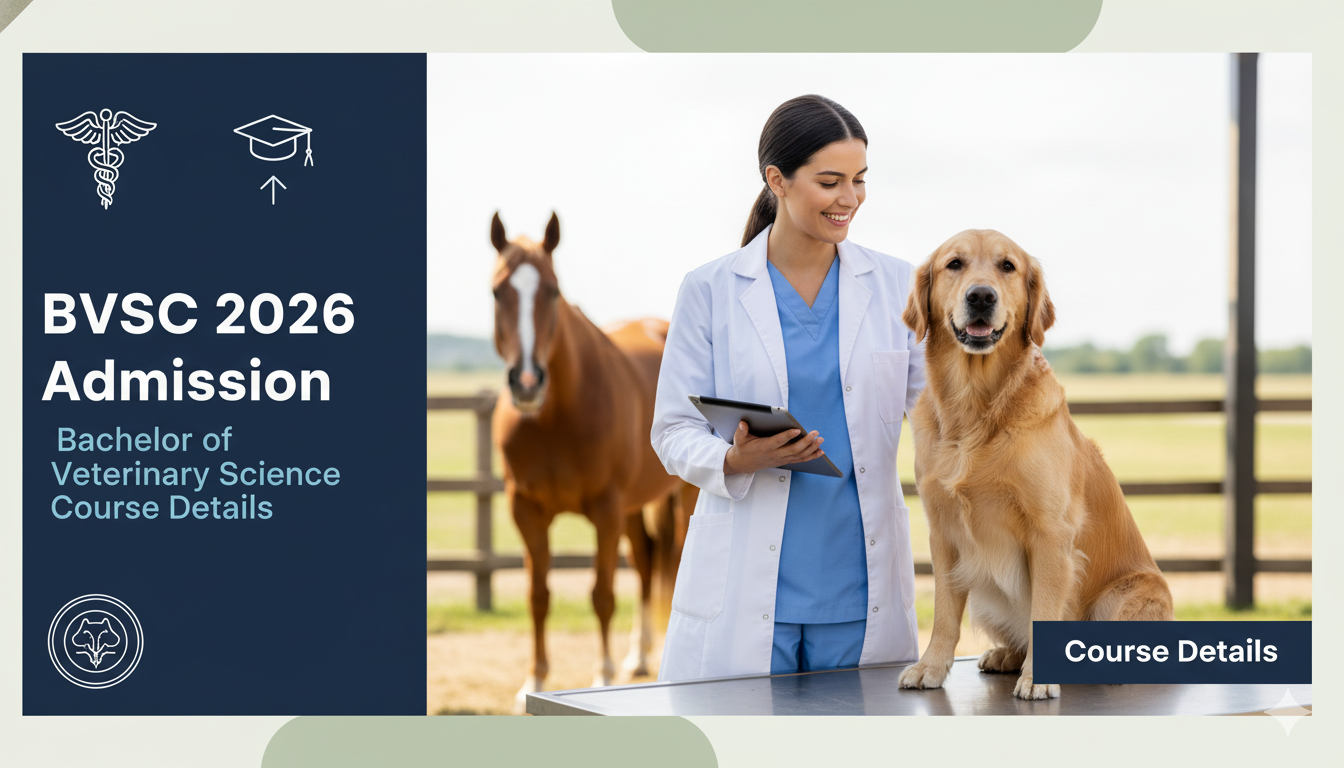
BVSC 2026: Bachelor of Veterinary Science (Professional Degree Course)
The Bachelor of Veterinary Science (BVSC) is a rigorous professional undergraduate program designed to prepare future veterinarians for competent practice in animal health, livestock management, and crucial public health roles. Accredited by the Veterinary Council of India (VCI), the BVSC 2026 curriculum is structured over 5.5 years, integrating foundational biomedical sciences with extensive hands-on clinical and surgical training.
1. Course Overview & Key Highlights
The BVSC program is the primary pathway to becoming a licensed veterinary professional in India. This 5.5-year degree equips students with the knowledge and practical skills necessary to diagnose, treat, and prevent diseases across diverse animal species, emphasizing the critical intersection of animal health, human health, and environmental well-being under the 'One Health' concept.
Key Highlights Table: BVSC 2026
| Attribute | Details |
|---|---|
| Course Name | Bachelor of Veterinary Science (BVSC) |
| Course Level | Undergraduate Professional Degree |
| Duration | 5.5 Years (4.5 Years Academic + 1 Year Compulsory Rotatory Internship) |
| Eligibility Criteria | 10+2 Science Stream (PCB/Biotechnology + English) with minimum 50% aggregate. |
| Entrance Exams | NEET (National Eligibility cum Entrance Test), AIPVT (All India Pre-Veterinary Test), or specific State/University Tests. |
| Course Fees (Estimate) | INR 50,000 to INR 2,50,000 per annum (Varies significantly by institution type). |
| Admission Process | Entrance-based, followed by centralized counseling. |
| Key Subjects | Veterinary Anatomy, Clinical Medicine, Veterinary Surgery, Animal Nutrition, Veterinary Public Health. |
| Examination Type | Semester-wise theory and practical exams, mandatory comprehensive viva-voce. |
| Average Starting Salary (Estimate) | INR 4,00,000 – INR 8,00,000 per annum (Varies based on sector and specialization). |
2. Course Identity & Logistics
- Course Title & Code: Bachelor of Veterinary Science (BVSC)
- Awarding Body: Affiliated University, recognized by the Veterinary Council of India (VCI)
- Academic Session: 2026-2031/32
- Credit Structure: Based on VCI Minimum Standards of Veterinary Education (MSVE) guidelines.
- Format: Primarily Lecture, Laboratory, Clinical Rotations, Field Trips, and Compulsory Internships.
- Instruction Medium: English (standard medium in professional colleges).
- Instructor/Department info: Faculty drawn from specialized departments including Anatomy, Physiology, Medicine, Surgery, and Public Health.
3. Course Description & Rationale
The BVSC 2026 program is a comprehensive professional degree that integrates fundamental biomedical sciences—such as anatomy, physiology, and biochemistry—with applied clinical, surgical, and livestock management principles. The curriculum is meticulously designed to create day-one ready veterinarians capable of handling diverse challenges across small and large animal practices.
Curriculum Context & Industry Relevance
The modern veterinary curriculum is driven by the global 'One Health' initiative, recognizing that the health of humans, animals, and the environment are inextricably linked. The BVSC program places significant emphasis on Veterinary Public Health, zoonotic disease control (like Avian Influenza or Rabies), biosecurity, and ensuring food safety through meat and milk hygiene standards. The 2026 syllabus incorporates advanced diagnostic techniques and sustainable animal production methodologies to address contemporary agricultural and environmental needs.
Target Audience
This course is ideal for highly motivated students who possess a strong aptitude for science, compassion for animals, excellent observational skills, and a commitment to public service. It targets those aspiring to careers in clinical practice, livestock production management, government veterinary services, or biomedical research.
4. Prerequisites & Eligibility
Academic Prerequisites
- Educational Qualification: Successful completion of the 10+2 examination or equivalent.
- Mandatory Subjects: Physics, Chemistry, Biology/Biotechnology, and English must be compulsory subjects in the qualifying examination.
- Minimum Marks: Typically 50% aggregate marks in the mandatory science subjects (may be relaxed for reserved categories as per government norms).
- Entrance Qualification: Must qualify in a recognized national or state-level entrance examination (e.g., NEET).
Skill Requirements
- Strong observational and critical thinking skills.
- Excellent manual dexterity (crucial for surgery and procedures).
- High level of empathy and ethical responsibility towards animals.
- Effective communication and teamwork skills (essential for client interaction and clinical teams).
5. Learning Objectives
Upon successful completion of the BVSC program, students will be able to demonstrate professional competence in veterinary medicine and public health:
- Define: Key concepts in veterinary anatomy, physiology, and biochemistry, establishing a strong foundational understanding of normal animal structure and function.
- Apply: Principles of clinical medicine and surgery to formulate accurate diagnoses and execute appropriate therapeutic and surgical plans for various species (large, small, and exotic animals).
- Analyze: Complex livestock production scenarios, applying knowledge of nutrition, genetics, and reproduction to optimize animal welfare and productivity sustainably.
- Evaluate: Public health risks, particularly those related to zoonotic diseases and food-borne pathogens, and implement effective surveillance and biosecurity measures.
- Create: Professional documents, case reports, research proposals, and adhere strictly to professional ethical standards and veterinary jurisprudence in practice.
6. Course Materials
Required Textbooks
- Sisson and Grossman's The Anatomy of the Domestic Animals (Standard VCI prescribed text)
- Dukes' Physiology of Domestic Animals
- Veterinary Medicine: A Textbook of the Diseases of Cattle, Horses, Sheep, Pigs and Goats (or similar comprehensive clinical text)
- VCI Minimum Standards of Veterinary Education (MSVE) Curriculum Manual
- Veterinary Pharmacology and Therapeutics (Latest Edition)
Reference Materials
- Peer-reviewed journals (e.g., Indian Journal of Veterinary Science, Veterinary Record).
- Institutional manuals and standard operating procedures (SOPs) for clinical and laboratory work.
- Online veterinary databases (CABI, PubMed, VetMed Resource).
Software & Tools
- Learning Management System (LMS) access for digital resources and lectures.
- Microscopic and Gross Anatomy Simulation Software.
- Clinical diagnostic equipment (Stethoscopes, Otoscopes, Ophthalmoscopes).
- Dissection kits and surgical simulation models.
7. Detailed Syllabus & Module Breakdown (VCI Phases)
The BVSC curriculum is divided into three distinct phases, ensuring progressive learning from foundational science to integrated clinical practice.
Phase I: Foundations (Years 1 & 2)
Objective: Establish core vocabulary, structural knowledge, and understanding of normal bodily functions and basic animal husbandry.
- Veterinary Anatomy: Gross Anatomy, Histology, Embryology.
- Veterinary Physiology: Blood, Respiration, Circulation, Digestion, Nervous System.
- Veterinary Biochemistry: Metabolism, Enzymes, Molecular Biology.
- Livestock Production Management (LPM) I: Management of Cattle, Buffalo, Sheep, and Goat.
Phase II: Application & Core Concepts (Years 3 & 4)
Objective: Understanding disease mechanisms, therapeutic interventions, and developing diagnostic interpretation skills. Introduction to clinical rotations.
- Veterinary Pathology: General Pathology, Systemic Pathology, Poultry Pathology.
- Veterinary Microbiology: Bacteriology, Virology, Mycology, Immunology.
- Veterinary Parasitology: Helminthology, Protozoology, Entomology.
- Veterinary Pharmacology & Toxicology: Pharmacodynamics, Chemotherapy, Veterinary Toxicology.
- Veterinary Medicine: General and Systemic Clinical Medicine, Preventive Veterinary Medicine.
- Veterinary Surgery & Radiology: General Surgery, Anesthesia, Diagnostic Imaging.
Phase III: Advanced & Professional (Year 5 & Internship)
Objective: Integrated clinical practice, public health application, professional maturity, and specialized skills acquisition.
- Veterinary Public Health & Epidemiology: Zoonoses, Food Safety, Meat and Milk Hygiene, Biostatistics.
- Animal Nutrition: Principles of Nutrition, Feeding Management of different species.
- Veterinary Gynaecology & Obstetrics: Reproductive Physiology, Infertility, Assisted Reproduction.
- Animal Genetics & Breeding: Population Genetics, Breeding Strategies, Biotechnology.
- Professional Requirements: Veterinary Jurisprudence & Ethics, Extensive Clinical Rotations (Small Animal, Large Animal, Poultry), and Experiential Learning Units (ELU).
- Compulsory Rotatory Internship: 6 months to 1 year of integrated, supervised clinical training required for degree conferral.
8. Assessment & Grading Scheme
Assessment follows the VCI pattern, emphasizing both theoretical knowledge and practical competence, particularly in clinical and laboratory settings.
Assessment Distribution
| Assessment Component | Weightage | Description |
|---|---|---|
| Internal Assessment (Sessional Exams) | 40% | Quizzes, mid-term exams, practical/laboratory performance records, seminars, and clinical case presentations. |
| External Assessment (End-Semester) | 60% | Comprehensive end-of-semester theory examinations and rigorous practical/viva-voce examinations conducted by external examiners. |
| Internship Evaluation | Mandatory Pass/Fail | Assessment based on clinical logbook maintenance, performance reports from supervisors, and final comprehensive evaluation. |
Grading Scale & Passing Criteria
The grading system typically utilizes a 10-point GPA scale. Students must secure minimum passing grades (usually 50% or higher) in both the theory and practical components of each subject separately to pass the course unit and progress to the next phase.
9. Course Policies
Academic Integrity
The institution enforces a strict zero-tolerance policy regarding academic misconduct. Any instance of plagiarism, cheating on examinations, or falsification of clinical records will result in severe disciplinary action, including potential expulsion from the program.
Attendance Requirements
Due to the professional nature of the degree and VCI mandates, students are required to maintain a minimum of 75% to 80% attendance in both theory classes and practical sessions to be eligible to appear for the end-semester examinations.
Late Submissions Policy
Assignments, case presentations, and practical records must be submitted by the stipulated deadlines. Late submissions may incur penalties or may not be accepted, impacting the internal assessment score.
Safety Protocols
Mandatory adherence to all laboratory and clinical safety regulations is required, including proper use of PPE, biohazard handling protocols, and humane animal restraint techniques. Failure to comply poses a risk to self, animals, and peers.
10. Career Scope & Certification
Certification Details
Successful completion of the 5.5-year program leads to the award of the Bachelor of Veterinary Science (BVSC) Degree. Graduates must then register with the Veterinary Council of India (VCI) or the respective State Veterinary Council to obtain a license to practice.
Skills Acquired
- Technical Skills: Advanced diagnostic imaging interpretation, surgical techniques (soft tissue and orthopedic), disease surveillance, epidemiological analysis, and livestock productivity management.
- Soft Skills: Client communication, ethical decision-making, crisis management, leadership, and public health advocacy.
Job Roles & Average Salary
| Job Role | Description | Avg. Starting Salary (INR p.a.) |
|---|---|---|
| Clinical Veterinary Practitioner | Establishing private practice (Small Animal, Large Animal, or Mixed) or working in private veterinary hospitals. | 4,50,000 – 10,00,000+ (Highly variable based on practice success) |
| Veterinary Officer / Assistant Surgeon | Government jobs in State Animal Husbandry Departments, managing livestock healthcare and implementing government schemes. | 6,00,000 – 8,00,000 (Plus government benefits) |
| Food Safety Inspector / Public Health Officer | Working in municipal corporations or food processing units, ensuring meat and milk hygiene and controlling zoonotic diseases. | 5,00,000 – 7,50,000 |
| Research Associate / Academician | Pursuing research in specialized fields or taking up teaching positions after post-graduation (MVSc). | 4,00,000 – 6,00,000 (Starting) |
| Industry Consultant | Working for pharmaceutical, animal feed, or agro-chemical companies in sales, quality control, or R&D. | 5,50,000 – 9,00,000 |
Further Studies Recommendations
Graduates can pursue post-graduate studies (MVSc) in specialized fields such as Veterinary Surgery & Radiology, Veterinary Pathology, Veterinary Microbiology, Animal Genetics & Breeding, or Veterinary Public Health. Doctoral programs (PhD) are also available for those interested in research or high-level academia.
11. Frequently Asked Questions (FAQs)
1. What is the primary entrance exam required for BVSC 2026 admission?
While some state universities conduct their own tests, the primary and most common route for BVSC admission across India is through qualifying the National Eligibility cum Entrance Test (NEET-UG). Seats are often allocated based on NEET scores, followed by centralized counseling.
2. Is the BVSC degree equivalent to a human medicine degree (MBBS)?
No. BVSC is the equivalent professional degree for veterinary medicine. Graduates are recognized as licensed veterinarians (equivalent to DVM/VMD in Western countries). While the foundational sciences are similar, the scope of practice and registration are distinct.
3. What is the structure of the BVSC program, and how long is the internship?
The BVSC program spans 5.5 years. This includes 4.5 years of academic study divided into semesters and a mandatory, comprehensive Rotatory Internship period of 6 months to 1 year. The internship is crucial for degree conferral and professional registration.
4. What are the typical BVSC course fees, and is the internship paid?
Course fees vary widely. Government colleges typically charge lower tuition (INR 50,000 - 1,50,000 per year), while private institutions are significantly higher. Regarding the internship, students in most government and some private institutions receive a monthly stipend, though the amount varies significantly by state and institution.
5. What are the main career prospects after completing BVSC?
Graduates have excellent career prospects in three main sectors: clinical practice (private or institutional), government services (Veterinary Officer, public health roles), and industry (pharmaceuticals, feed, research). The demand for skilled veterinarians remains high due to growing livestock sectors and public focus on zoonotic disease control.