
Bachelor of Radiology & Imaging Technology (BRIT) 2026
The 4-year BRIT 2026 program trains expert radiologic technologists. Master advanced imaging modalities (CT, MRI, X-ray) with extensive clinical exposure and AI integration.
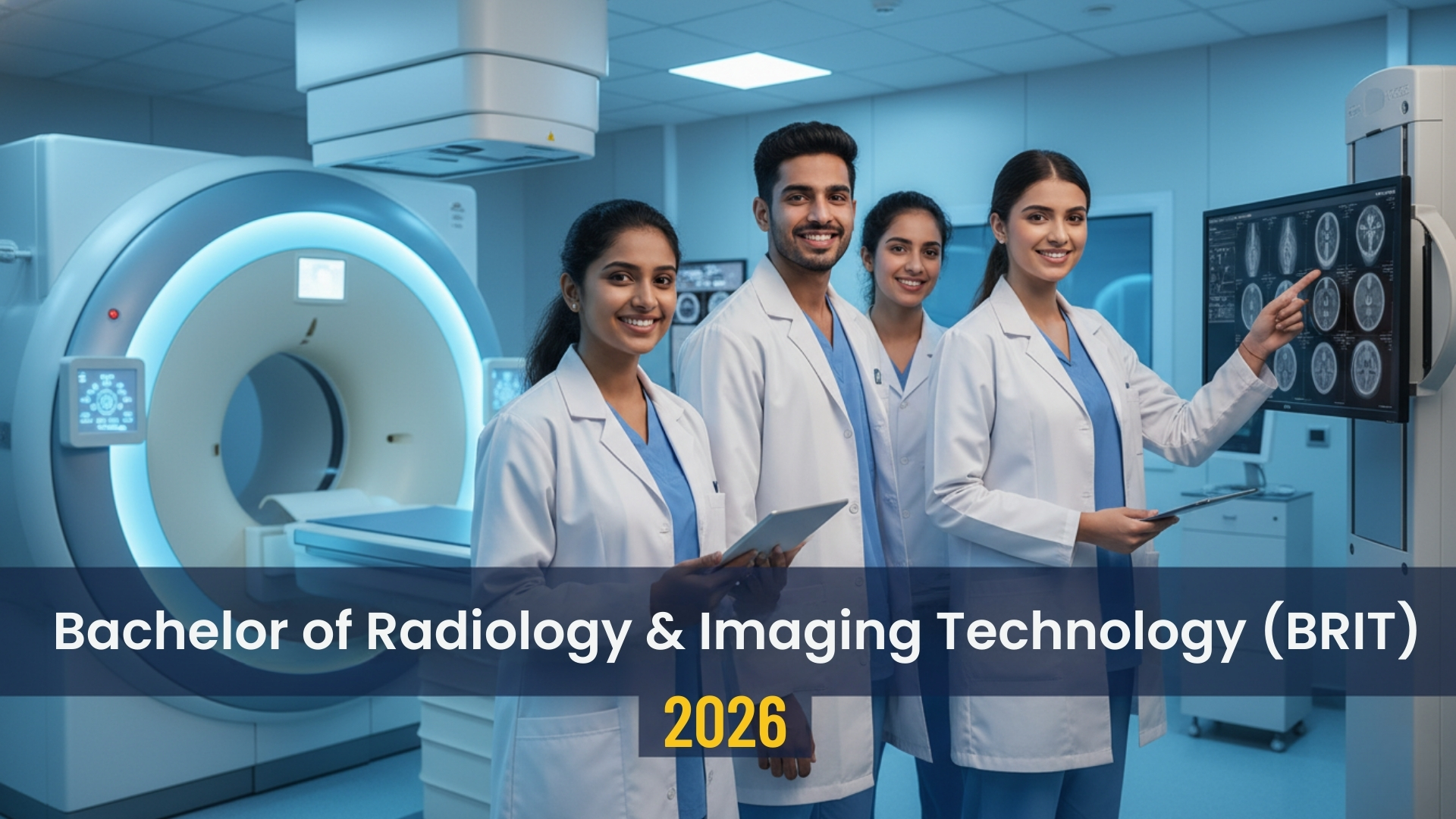
Bachelor of Radiology & Imaging Technology (BRIT) 2026
The Bachelor of Radiology & Imaging Technology (BRIT) is a rigorous four-year undergraduate program designed to produce highly competent, ethically-aware radiologic technologists. This course integrates foundational medical physics and human anatomy with intensive hands-on training across all major diagnostic imaging modalities, ensuring graduates are prepared for the rapidly evolving digital healthcare landscape of 2026 and beyond.
1. Course Overview & Key Highlights
The BRIT program emphasizes extensive clinical exposure, utilizing state-of-the-art simulation labs and real-world hospital rotations to ensure mastery in patient safety, radiation protection, and advanced equipment operation.
Attribute Details Course Name Bachelor of Radiology & Imaging Technology (BRIT) Course Level Undergraduate (UG) Duration 4 Years (8 Semesters, including 6-12 months mandatory internship/rotation) Eligibility Criteria 10+2 (High School) Science Stream, mandatory Physics, Chemistry, and Biology/Mathematics. Minimum 50% aggregate score. Entrance Exams Successful clearance of institutional entrance exams; national scores (e.g., NEET/CET) may be considered. Estimated Annual Fees (Avg.) ₹20,000 - ₹80,000 Admission Process Entrance-based followed by counseling/interview. Key Subjects Radiation Physics, Cross-Sectional Anatomy, CT/MRI Technology, Patient Safety & Dosimetry, Imaging Informatics (PACS). Examination Type Semester-wise theory and practical assessments, mandatory Objective Structured Clinical Examinations (OSCEs). Average Starting Salary (Entry-Level) ₹2.5 to ₹4.5 Lakhs Per Annum (LPA) 2. Course Identity & Logistics
- Award: Bachelor of Radiology & Imaging Technology (BRIT)
- Course Level: Undergraduate (UG)
- Typical Credit Structure: 180 - 200 Total Credits (Based on institutional standards)
- Delivery Format: Full-time, On-campus. Mandatory practical and clinical components.
- Affiliation/Accreditation: Affiliated with recognized University/Board and approved by relevant professional allied health councils.
- Department: Department of Allied Health Sciences / School of Medical Imaging.
3. Course Description & Rationale
The BRIT program is a comprehensive educational pathway designed to equip students with the technical, anatomical, and physical knowledge necessary to perform accurate diagnostic procedures using sophisticated medical imaging equipment. Students gain expertise in operating modalities such as Conventional Radiography (X-ray), Computed Tomography (CT), Magnetic Resonance Imaging (MRI), and specialized procedures like Interventional Radiology and Nuclear Medicine.
Curriculum Context & Industry Relevance
The curriculum is strategically aligned with international quality standards (e.g., WHO guidelines) and focuses heavily on digital imaging informatics (PACS/RIS) and emerging technologies, particularly the integration of Artificial Intelligence (AI) in image processing and quality control. The rationale for this program is clear: the global demand for skilled allied health professionals capable of managing advanced imaging technologies is escalating rapidly, making the radiologic technologist a critical component of modern diagnostic medicine.
Target Audience
This course is ideally suited for ambitious high school graduates from the Science stream (PCB/PCM) who possess strong attention to detail, a commitment to patient care, excellent problem-solving skills, and a keen interest in the intersection of technology and human anatomy.
4. Prerequisites & Eligibility
Academic Prerequisites
- Educational Qualification: Successful completion of 10+2 (High School) or equivalent.
- Mandatory Subjects: Physics, Chemistry, and either Biology or Mathematics in the qualifying examination.
- Minimum Score: An aggregate score of 50-60% (as specified by the institution) in the 10+2 examination.
Skill & Technical Requirements
- Skill Requirements: Strong analytical skills, manual dexterity (for equipment handling), effective communication, and basic scientific terminology familiarity.
- Technical Requirements: Basic computer literacy and proficiency in using digital tools for documentation and learning.
- Health Requirements: Mandatory medical fitness certificate confirming suitability for strenuous clinical duties and exposure to hospital environments.
5. Learning Objectives
Upon successful completion of the Bachelor of Radiology & Imaging Technology (BRIT) program, students will be able to:
- Technical Mastery: Safely operate, calibrate, and troubleshoot standard and advanced imaging equipment, including 128-slice CT scanners, 3T MRI systems, and C-arm fluoroscopy units.
- Patient Care & Safety: Implement optimal patient positioning techniques for various procedures and strictly adhere to radiation protection protocols (ALARA principle) to minimize patient and operator dose.
- Analyze: Critically analyze and evaluate imaging parameters and acquisition protocols to ensure the production of images that meet high diagnostic quality standards.
- Evaluate: Assess complex clinical scenarios, recognize imaging artifacts, and adjust protocols dynamically in emergency or non-standard patient situations.
- Professional Ethics: Demonstrate ethical conduct, maintain stringent patient confidentiality (HIPAA/GDPR compliance), and function effectively as a collaborative member of the healthcare team.
6. Course Materials
Required Textbooks (Core Texts)
- Bushong, Stewart C. Radiologic Science for Technologists: Physics, Biology, and Protection.
- Bontrager, Kenneth L. Textbook of Radiographic Positioning and Related Anatomy.
- Fauber, Terri L. Radiographic Imaging and Exposure.
- Weir, Jamie, et al. Clinical Imaging: With Skeletal, Chest, and Abdomen Pattern Recognition.
Reference Materials & Resources
- Access to institutional e-library databases (e.g., ScienceDirect, PubMed).
- Virtual Reality (VR) Anatomy Lab and simulated PACS (Picture Archiving and Communication System) software.
- Online modules and tutorials provided by equipment manufacturers (e.g., Siemens, GE Healthcare).
Mandatory Equipment & Attire
- Clinical uniforms and identification badge.
- Personal Protective Equipment (PPE) including mandatory dosimeters, lead aprons, and thyroid shields during clinical rotations.
7. Detailed Syllabus & Module Breakdown
The BRIT curriculum is structured across three progressive phases, combining theoretical knowledge with intensive practical and clinical application.
Phase I: Foundations (Year 1)
Objective: Establish core vocabulary, principles of physics, and detailed human anatomy essential for imaging practice.
- Semester 1 Topics Covered:
- Human Anatomy and Physiology (Systemic Approach)
- Basic Pathology and Microbiology
- Radiation Physics I: Fundamentals of Matter and Energy
- Basic Computer Applications and Medical Terminology
- Labs/Practicals: Basic Anatomy Model Lab, Physics Lab, Patient Handling and First Aid Certification.
Phase II: Application & Core Concepts (Year 2)
Objective: Practical application of physics and anatomy to conventional imaging, introducing safety and advanced modalities.
- Semester 3 & 4 Topics Covered:
- Radiographic Techniques (Conventional X-ray Positioning and Procedures)
- Imaging Physics II: Interaction of Radiation with Matter and Image Formation
- Patient Care, Pharmacology, and Contrast Media Administration
- Introduction to Cross-Sectional Anatomy (CT/MRI correlation)
- Introduction to Computed Tomography (CT) and Magnetic Resonance Imaging (MRI) Principles
- Clinical Training: Structured observation and supervised basic X-ray positioning practice; darkroom procedures (if applicable) and digital image processing.
Phase III: Advanced & Specialization (Years 3 & 4)
Objective: Advanced technical mastery, specialization in complex modalities, quality assurance, and capstone clinical internship.
- Semester 5 & 6 Topics Covered:
- Advanced Modalities: Nuclear Medicine, Positron Emission Tomography (PET-CT), and Interventional Radiology
- Quality Assurance and Control in Diagnostic Imaging
- Imaging Informatics (PACS/RIS) and Teleradiology
- Radiation Safety, Dosimetry, and Biological Effects of Radiation
- Medical Ethics and Jurisprudence
- Year 4 Capstone: Mandatory Clinical Rotations (6-12 months) across all major modalities (CT, MRI, Ultrasound, Special Procedures) and comprehensive research project or dissertation.
8. Assessment & Grading Scheme
Student performance in the BRIT program is evaluated continuously, combining theoretical knowledge, practical skills, and clinical competency.
Assessment Distribution
| Assessment Component | Weightage | Description |
|---|---|---|
| Theory Assessment | 50% | Mid-term and End-term written examinations covering core subjects. |
| Practical Assessment | 30% | Viva Voce examinations, Objective Structured Clinical Examination (OSCE), and Lab performance scores. |
| Clinical Assessment | 20% | Continuous Performance Evaluation (CPE) by clinical supervisors, logbook maintenance, and case studies. |
Passing Criteria
Students must achieve a minimum aggregate score of 50% in both the theoretical and practical components of each subject separately to pass the semester. Mandatory clinical logbooks must be signed off, and required clinical hours (e.g., minimum 1,500 supervised hours) must be completed.
9. Course Policies
Academic Integrity
The institution maintains a zero-tolerance policy regarding academic dishonesty, including plagiarism, cheating on examinations, and falsification of clinical data. Violations will result in disciplinary action up to and including expulsion from the program.
Attendance Requirements
Strict attendance is enforced due to the highly practical nature of the course. A minimum of 75% attendance in theory classes and 90% attendance in all clinical/practical sessions is mandatory for eligibility to sit for end-term examinations.
Clinical Conduct
Students are required to adhere strictly to all hospital protocols, maintain professional conduct, follow the mandated dress code, and ensure absolute patient confidentiality at all times (in compliance with regional data protection laws).
10. Career Scope & Certification
Graduates of the BRIT program are essential members of the modern healthcare system, benefiting from high demand globally. The program prepares students not only for entry-level positions but also for specialized roles requiring advanced technical knowledge.
Certification Details
Graduates are prepared to sit for required national or regional professional registration and licensing examinations (e.g., ARRT in the US, regional council licensing in other jurisdictions) necessary to practice as certified Radiologic Technologists.
Skills Acquired
- Technical Skills: Proficient operation of X-ray, CT, MRI, Ultrasound, and Nuclear Medicine equipment; advanced image manipulation and processing; radiation dosimetry calculation.
- Soft Skills: Patient communication, critical thinking, teamwork, ethical decision-making, and stress management in high-pressure clinical environments.
Job Roles and Salary Expectations
| Job Role | Description | Average Annual Salary (Mid-Career Estimate) |
|---|---|---|
| Radiologic Technologist (General) | Performs standard X-ray procedures and assists with basic fluoroscopy. | ₹2.2 to ₹4 Lakhs Per Annum |
| CT Specialist / MRI Technologist | Operates advanced modalities, manages complex protocols, and ensures optimal cross-sectional image acquisition. | ₹2.5 to ₹4.5 Lakhs Per Annum (LPA) |
| Interventional Radiology Assistant | Aids Radiologists in minimally invasive procedures (e.g., angiography, biopsies) requiring high-level sterile technique and C-arm operation. | Interventional Radiology Assistant |
| Application Specialist | Works for medical equipment vendors, providing training and technical support to hospital staff on new imaging systems. | ₹3 LPA to ₹7 LPA |
Further Education
BRIT graduates are eligible to pursue specialized postgraduate studies, including M.Sc. in Medical Imaging Technology, M.Sc. in Radiation Physics, or specialized certifications in areas like Cardiac CT or Breast Imaging.
11. Frequently Asked Questions (FAQs)
Is the BRIT program the same as becoming a Radiologist (MD)?
No. This is a critical distinction. The BRIT program trains Allied Health Professionals (Technologists) who are experts in operating the complex imaging equipment and acquiring high-quality diagnostic images. Radiologists are medical doctors (MD/DNB) who undergo extensive post-MBBS training to interpret, diagnose, and report on the images produced by the technologists.
What are the mandatory eligibility requirements for 2026 admission?
Candidates must have successfully completed 10+2 (High School) in the Science stream, with Physics, Chemistry, and Biology/Mathematics as mandatory subjects. A minimum aggregate score (typically 50% or higher) is required, along with successful clearance of the institutional entrance examination.
How many mandatory clinical hours must be completed during the course?
The program requires a significant commitment to hands-on training. Students typically must complete a minimum of 1,500 supervised clinical hours across the four years, concentrated heavily in Years 3 and 4, ensuring comprehensive exposure to all major modalities (X-ray, CT, MRI, etc.).
What is the structure of the course fees?
Course fees generally cover tuition, laboratory charges, and examination fees. Students should also budget separately for mandatory clinical uniforms, required professional insurance during rotations, and essential PPE (like personal dosimeters and lead shields). Financial aid and scholarship opportunities may be available based on merit or need.
What makes the 2026 BRIT curriculum relevant to current industry trends?
The 2026 curriculum is highly industry-integrated, featuring dedicated modules on Imaging Informatics (PACS/RIS), Teleradiology, and the role of Artificial Intelligence (AI) in optimizing workflow and image analysis. This prepares graduates for the increasing digitalization of diagnostic services.