
Diploma in Clinical Pathology 2026 | DCP Course Details
Master clinical diagnostics, lab management, and advanced molecular techniques with the 18-24 month specialized Diploma in Clinical Pathology (DCP 2026). Gain hands-on expertise.
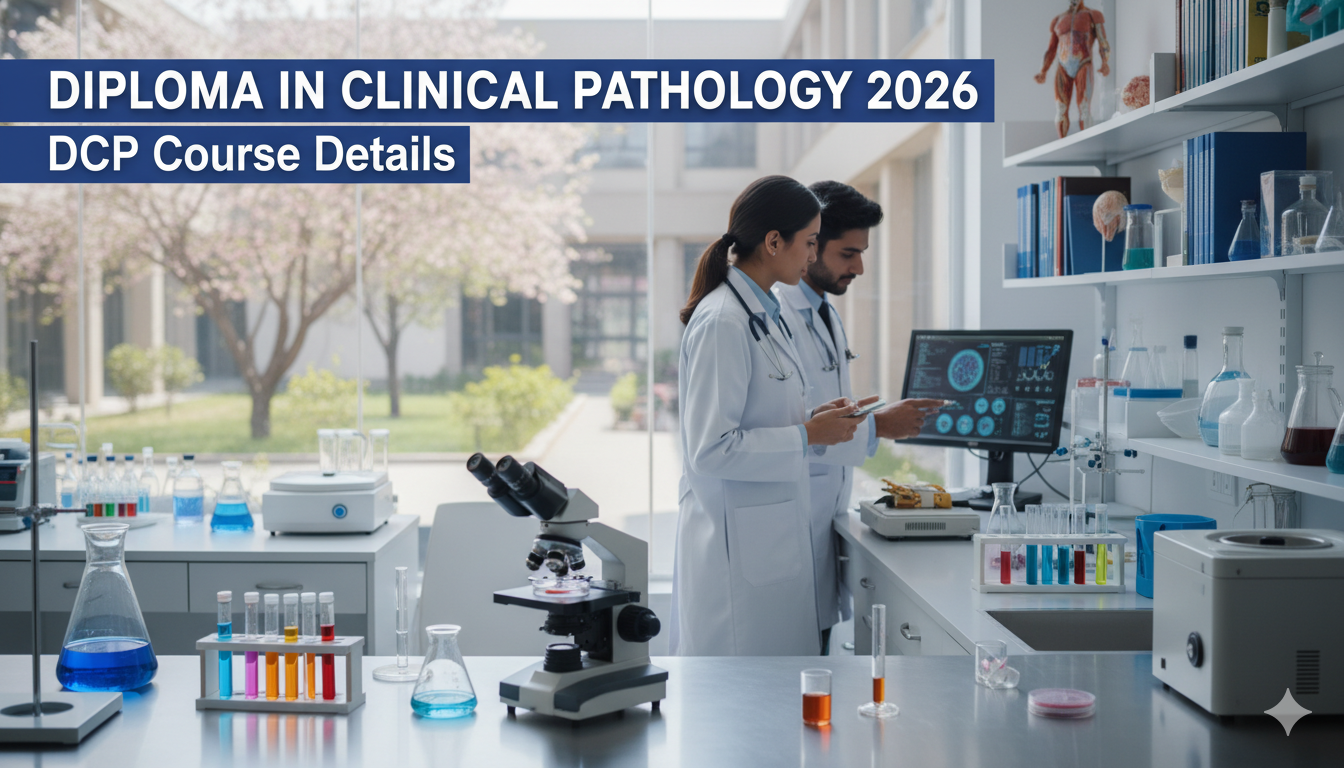
Diploma in Clinical Pathology (DCP) 2026: Advanced Diagnostic Training
1. Course Overview & Key Highlights
The Diploma in Clinical Pathology (DCP) 2026 is an intensive, specialized postgraduate program designed to transform medical and allied health professionals into proficient diagnostic experts. Focused heavily on practical skills, the course emphasizes accurate interpretation of laboratory data, modern laboratory management, and the application of diagnostic techniques across core disciplines including Hematology, Clinical Chemistry, Microbiology, and Molecular Pathology. This diploma provides the critical training necessary to ensure high-quality, patient-centered laboratory services.
Key Highlights Table
| Attribute | Details |
|---|---|
| Official Course Name | Diploma in Clinical Pathology 2026 |
| Course Level | Diploma (Postgraduate/Specialized Professional Certification) |
| Duration | 18 - 24 Months (Full-time Blended Format) |
| Eligibility Criteria | MBBS, BDS, or B.Sc. in Medical Laboratory Technology (MLT) with relevant experience. |
| Entrance Exams | Institution-specific Entrance Examination or Interview may be required. |
| Estimated Course Fees | ₹1-5 Lakhs total |
| Admission Process | Entrance Exam Score + Interview/Merit Review |
| Key Subjects | Hematology, Clinical Chemistry, Molecular Diagnostics, Quality Management, Transfusion Medicine. |
| Examination Type | Phase-wise Written Exams, Continuous Practical Assessment, Final Dissertation Defense. |
| Average Starting Salary | ₹3-6 LPA |
2. Course Identity & Logistics
- Official Course Title: Diploma in Clinical Pathology 2026
- Course Code: DCP-2026
- Credit Value/ECTS: Approximately 60 ECTS
- Awarding Body/Institution: [To be specified by the offering institution]
- Delivery Method: Blended Learning (Lectures, Intensive Practical Labs, Clinical Rotations, Case Studies)
- Department: Department of Pathology and Laboratory Medicine
3. Course Description & Rationale
The Diploma in Clinical Pathology 2026 is a rigorous, postgraduate diploma tailored for healthcare professionals seeking specialization in laboratory diagnostics. The program is fundamentally practical, dedicating over 60% of contact hours to hands-on laboratory training, ensuring graduates are immediately workplace-ready. Students engage deeply with complex clinical scenarios, mastering the technical procedures and interpretive skills necessary for accurate disease diagnosis and monitoring.
Curriculum Context & Rationale
The rapid evolution of medical technology, particularly in molecular diagnostics and automation, necessitates specialized training beyond traditional foundational degrees. This DCP program is designed to bridge the gap between theoretical medical knowledge and the execution of high-quality, modern laboratory diagnostics. It places a strong emphasis on Quality Assurance (QA) standards, regulatory compliance (e.g., ISO 15189), and the ethical interpretation of results.
Industry Relevance (2025 Trends)
In 2025, clinical pathology demands expertise in data management (via Laboratory Information Systems - LIS), integration of genomic data, and proficiency in automated high-throughput testing. This course uniquely integrates training on LIS simulation and mandatory research projects focused on current diagnostic challenges, preparing professionals for leadership roles in highly automated, technologically advanced laboratory environments.
Target Audience
This program is ideal for recent MBBS/BDS graduates, experienced B.Sc. MLT professionals, and allied health scientists who aspire to careers in hospital laboratories, reference laboratories, public health sectors, or diagnostic research.
4. Prerequisites & Eligibility
Academic Prerequisites
- A Bachelor of Medicine, Bachelor of Surgery (MBBS) degree.
- A Bachelor of Dental Surgery (BDS) degree.
- A B.Sc. in Medical Laboratory Technology (MLT), Biomedical Science, or an equivalent Allied Health Sciences degree, typically requiring a minimum of 1-2 years of verified relevant work experience post-graduation.
- Successful completion of the institutional entrance examination or interview process.
Skill Requirements
- Strong analytical and problem-solving skills, particularly in scientific data interpretation.
- Excellent attention to detail and manual dexterity required for laboratory procedures.
- Demonstrated proficiency in scientific communication (written and oral).
Technical Requirements
- Basic proficiency in scientific data handling, spreadsheet software (e.g., Excel), and statistical computing.
- Reliable access to a computer and internet for accessing digital resources and LIS simulation tools.
Corequisites
Students are required to maintain active affiliation with a recognized clinical laboratory setting during the final phase for their rotation and research project.
5. Learning Objectives
Upon successful completion of the Diploma in Clinical Pathology 2026, students will be able to:
- Analyze: Complex laboratory results (e.g., abnormal coagulation profiles, complex metabolic panels) and effectively correlate findings with patient clinical presentations and differential diagnoses.
- Perform: Advanced diagnostic techniques across major disciplines, including flow cytometry, ELISA, PCR, and intricate manual morphological examinations.
- Implement: and maintain rigorous Quality Assurance (QA), Quality Control (QC), and proficiency testing protocols necessary for achieving and maintaining international accreditation standards (e.g., ISO 15189).
- Manage: A clinical laboratory efficiently, covering resource allocation, inventory management, automation integration, staff supervision, and comprehensive regulatory compliance.
- Interpret: Molecular diagnostic results relevant to infectious disease identification, pharmacogenomics, and basic oncology screening, understanding the limitations and applications of current genomic technologies.
6. Course Materials
Required Textbooks (Core Texts)
- Harmening, D. (2025 Edition). Modern Blood Banking & Transfusion Practices.
- Rodak, B. (Latest Edition). Hematology: Clinical Principles and Applications.
- Tietz, N. (Latest Edition). Fundamentals of Clinical Chemistry and Molecular Diagnostics.
- Murray, P. R., et al. (Latest Edition). Medical Microbiology.
- Bancroft, J. D., & Gamble, M. (Latest Edition). Theory and Practice of Histological Techniques.
Reference Materials
- Detailed Standard Operating Procedures (SOPs) for all practical sessions (provided in institutional manuals).
- Access to major pathology and medical journals (e.g., Archives of Pathology & Laboratory Medicine, Clinical Chemistry).
- CLSI (Clinical and Laboratory Standards Institute) Guidelines and relevant national regulatory documents.
Software & Tools
- Access to institutional Laboratory Information Systems (LIS) simulation software.
- Statistical software package (e.g., SPSS, R).
- Use of automated hematology analyzers, chemistry analyzers, mass spectrometers, and molecular biology equipment (PCR machines, sequencers).
7. Detailed Syllabus & Module Breakdown (18-24 Months)
Phase I: Foundations in Laboratory Science (Months 1-6)
Objective: Establish core vocabulary, principles of laboratory operation, safety, quality control, and foundational knowledge in major pathology disciplines.
Topics Covered:
- Months 1-2: Principles of General Pathology, Laboratory Safety (BSL Levels), Biostatistics, and Research Methodology.
- Months 3-4: Basic Clinical Chemistry (Carbohydrate/Lipid Metabolism, Renal/Liver Function Tests) and Principles of Instrumentation and Automation.
- Months 5-6: Introductory Hematology (Cell morphology, Basic Coagulation Cascade), and Quality Assurance/Quality Control (QA/QC) implementation.
Phase II: Application and Interpretation (Months 7-14)
Objective: Practical application of theories across specialized areas, focusing on advanced diagnostics and clinical correlation.
Topics Covered:
- Months 7-8: Advanced Clinical Chemistry (Toxicology, Therapeutic Drug Monitoring (TDM), Endocrinology, Tumor Markers).
- Months 9-10: Diagnostic Microbiology (Advanced Bacteriology, Antibiograms, Basic Virology and Mycology techniques).
- Months 11-12: Blood Banking and Transfusion Medicine (Donor screening, Immunohematology, Transfusion reactions).
- Months 13-14: Clinical Immunology, Serology, Cytology techniques, and Advanced Urine/Body Fluid Analysis.
Phase III: Advanced Diagnostics and Professional Practice (Months 15-18/24)
Objective: Advanced complexity, synthesis of knowledge, professional management skills, and execution of the mandatory research project/clinical rotation.
Topics Covered:
- Months 15-16: Molecular Pathology and Genetics (PCR techniques, DNA sequencing fundamentals, applications in infectious disease and oncology).
- Months 17-18: Histopathology Techniques (Tissue processing, special staining, immunohistochemistry basics). Laboratory Quality Management Systems (ISO 15189 compliance).
- Months 19-24 (Variable): Mandatory Clinical Rotation Posting (in affiliated hospital labs) and Final Research Project/Dissertation Development and Defense.
8. Assessment & Grading Scheme
Assessment Distribution Table
| Assessment Component | Weightage | Description |
|---|---|---|
| Theory Examinations | 40% | Mid-term and End-of-Phase written exams (MCQs, Short Answer Questions). |
| Practical/Viva Voce | 30% | Hands-on lab skills assessment, demonstration of SOP adherence, and oral examinations. |
| Continuous Assessment | 15% | Weekly lab reports, case presentations, quizzes, and assigned readings. |
| Final Project/Dissertation | 15% | Submission and defense of the required research project focusing on a pathology topic. |
| Total | 100% |
Grading Scale and Passing Criteria
The program utilizes a standardized grading scale. A minimum aggregate score of 60% is required to pass the course and proceed to certification.
- Distinction: 85% and above (Demonstrates exceptional mastery)
- Pass: 60% – 84% (Meets all course requirements)
- Fail: Below 60% (Requires re-examination or course repetition)
9. Course Policies
Academic Integrity
The institution enforces a strict zero-tolerance policy regarding all forms of academic dishonesty, including plagiarism, unauthorized collaboration, and cheating. Any proven violation will result in disciplinary action, potentially leading to immediate dismissal from the program.
Attendance Requirements
Mandatory attendance is required: 80% minimum for all theoretical lectures and seminars, and 90% minimum for all scheduled practical laboratory sessions and clinical rotation postings, due to the critical hands-on nature of the training.
Late Submissions Policy
Assignments submitted after the specified deadline may incur a penalty (e.g., 5% deduction per day late) unless a documented, approved extension has been granted by the course coordinator.
Safety Protocols
All students must adhere strictly to Biosafety Levels (BSL) protocols established by the institution and affiliated clinical labs. Failure to comply with personal protective equipment (PPE) and safety guidelines will result in immediate suspension from lab activities.
10. Career Scope & Certification
Certification Details
Upon successful completion of all didactic, practical, and clinical requirements, and the successful submission and defense of the mandatory dissertation, the candidate will be awarded the official Diploma in Clinical Pathology (DCP).
Skills Acquired
Technical Skills:
- Advanced proficiency in operating automated diagnostic equipment.
- Expertise in immunochemical and molecular diagnostic methodologies.
- Competency in interpreting complex pathological slides and smears.
- Mastery of Quality Management System implementation (ISO 15189).
Soft Skills:
- Critical clinical correlation and consultation skills.
- Effective leadership and laboratory team management.
- Research development and scientific writing.
Job Roles and Career Paths
| Job Role | Description | Estimated Avg. Annual Salary (USD) |
|---|---|---|
| Clinical Laboratory Director/Manager (under supervision) | Overseeing daily lab operations, staff training, budgeting, and quality control maintenance. | ₹15,000 to ₹1,00,000. |
| Diagnostic Specialist / Consultant Pathologist Assistant | Performing specialized diagnostic tests and providing expert interpretation of complex results to clinicians. | INR 75,000 to INR 3,00,000 total for government colleges |
| Research Assistant in Pathology/Biomedical Science | Engaging in clinical trials or academic research focusing on diagnostic test development and disease mechanisms. | INR 15,000 to INR 1 lakh per year. |
| Technical Consultant for Diagnostic Companies | Providing technical support, sales, and training for specialized diagnostic equipment and reagents. | INR 1 lakh to INR 6 lakhs, |
Further Studies Recommendations
Graduates are well-positioned to pursue higher degrees such as a Master of Science (M.Sc.) in Pathology, a Ph.D. in Biomedical Science, or specialized fellowships in niche areas like Molecular Diagnostics or Cytopathology.
11. Frequently Asked Questions (FAQs)
1. What are the specific eligibility requirements for medical professionals vs. MLT graduates?
While MBBS/BDS graduates are typically eligible immediately, B.Sc. in MLT or related fields often requires candidates to demonstrate a minimum of 1 to 2 years of documented, relevant professional experience in a clinical laboratory setting to ensure foundational practical competency before entering this advanced diploma.
2. How competitive is the admission process for the DCP 2026 course?
Admission is highly competitive. Candidates are usually evaluated based on a combination of academic merit (undergraduate GPA), performance in the mandatory entrance examination (which tests foundational medical/scientific knowledge), and a structured personal interview assessing motivation and suitability for intensive practical training.
3. What is the expected weekly workload for a full-time DCP student?
Students should anticipate a demanding schedule, with approximately 25-35 contact hours per week, split between lectures and mandatory practical labs/rotations. Additionally, 15-20 hours per week should be allocated for self-study, research project work, and preparing detailed lab reports and case studies.
4. Are clinical stipends or assistance provided during the mandatory rotations?
Stipend policies vary significantly by institution and affiliation agreements. Some institutions affiliated with large teaching hospitals may provide a small monthly stipend during the mandatory Phase III clinical rotations, while others may require students to cover their own expenses. Applicants should confirm this detail directly with the institution's admissions office.
5. Is the Diploma in Clinical Pathology recognized for medical licensure or board certification?
The DCP provides specialized professional certification in laboratory diagnostics. While it enhances career prospects and technical expertise, its recognition for full medical licensure or board certification (e.g., as a fully licensed Pathologist) depends entirely on the specific regulatory body and country/region where the graduate intends to practice. It often qualifies graduates for technical leadership roles or specialized laboratory management positions.