
RRB NTPC 2026 Notification, Eligibility, and Exam Roadmap: The Definitive Guide to Preparation
The Railway Recruitment Board (RRB) Non-Technical Popular Categories (NTPC) examination is one of the most sought-after government jobs in India. Securing a position in the Railways offers stability, prestige, and excellent career growth.
While the official dates for the 2026 cycle may seem far off, the reality is that high-stakes exams like NTPC require dedicated, long-term planning. This guide is built specifically for serious aspirants looking to gain a significant advantage by starting their preparation today. We cover everything from projected timelines and eligibility to a comprehensive 12-month study roadmap.

Table of Contents
Introduction: Your First Step Towards a Railway Career
What is RRB NTPC?
The RRB NTPC exam recruits candidates for various Non-Technical Popular Categories posts across the Indian Railways. These roles are typically administrative and clerical, ranging from Junior Clerk cum Typist and Accounts Clerk to Senior Commercial cum Ticket Clerk and Goods Guard.
It’s a massive recruitment drive, usually filling thousands of posts, making it a golden opportunity for graduates and 12th-pass candidates across the country.
Why Focus on the 2026 Cycle Now?
The NTPC selection process is long, complex, and highly competitive, involving two demanding Computer-Based Tests (CBT 1 and CBT 2) followed by skill tests. By starting your preparation early, you gain a strategic advantage:
Section 1: Official Overview and Key Dates (Projected)
Based on previous RRB recruitment cycles and administrative processes, here is the projected timeline for the RRB NTPC 2026 notification and examination.
Anticipated Notification Release Timeline
While official dates are pending, large-scale recruitment often follows a structured two-year cycle. We anticipate the detailed notification for RRB NTPC 2026 will be released in the latter half of 2025.
Projected Examination Schedule (CBT 1 and CBT 2)
Given the typical lag between notification and the first exam, candidates should aim to complete their core syllabus before the end of 2025.
| Event | Projected Month/Quarter | Preparation Goal |
|---|---|---|
| Official Notification Release | Q3/Q4 2025 (Sep – Dec) | Complete 70% of core concepts. |
| Application Period Closes | Q4 2025 | Start sectional tests. |
| CBT 1 (Qualifying) Start Date | Q1 2026 (Jan – Mar) | Intense full-length mock tests. |
| CBT 2 (Merit Deciding) Start Date | Q2/Q3 2026 | Advanced revision and practice. |
Understanding the Vacancy Trends
Indian Railways often sees cycles of large-scale recruitment. Given infrastructure expansion and retirements, the 2026 cycle is expected to have a substantial number of vacancies, potentially ranging from 25,000 to 35,000+ posts across various categories and zones.
Section 2: Detailed RRB NTPC Eligibility Criteria 2026
Before diving into study plans, you must confirm your eligibility. The criteria are divided primarily based on two levels of posts: Undergraduate (12th Pass) and Graduate (Degree Holder).
Age Limit Breakdown
The age is calculated as on the prescribed cutoff date (usually July 1 of the notification year). Standard limits are:
Note: Relaxation in the upper age limit is provided for reserved categories (SC/ST: 5 years, OBC-NCL: 3 years, PWD: 10 years, etc.) as per government rules.
Educational Qualification Requirements
Ensure you possess the following qualifications from a recognized board or university:
Medical Standards Required for Railway Jobs
Railway jobs have strict medical fitness standards, denoted by categories (A-2, B-2, C-2). Posts like Traffic Assistant require better vision (A-2) compared to Clerical posts (C-2). You must be physically fit in all respects, especially concerning vision and general health, to be appointed.
Section 3: Decoding the RRB NTPC Exam Pattern
The selection process is multi-staged and demands consistency across two main Computer Based Tests (CBTs).
Stage 1: Computer Based Test (CBT 1) Structure (Qualifying Nature)
CBT 1 is mandatory for all candidates. Its marks are used only for shortlisting candidates for CBT 2 (usually 20 times the number of vacancies).
Stage 2: Computer Based Test (CBT 2) Structure (Merit Deciding)
CBT 2 is the most crucial stage, as the marks obtained here form the basis of the final merit list (alongside Skill Test results, where applicable).
| Subject | Questions (CBT 1) | Questions (CBT 2) | Duration |
|---|---|---|---|
| Mathematics | 30 | 35 | 90 Minutes (CBT 1) 120 Minutes (CBT 2) |
| General Intelligence & Reasoning | 30 | 35 | |
| General Awareness | 40 | 50 | |
| Total | 100 Marks | 120 Marks |
Skill Tests (Typing Test, Aptitude Test – Relevant posts only)
Candidates shortlisted for specific posts (like Junior Clerk or Traffic Assistant) must pass a subsequent skill test. The Computer Based Aptitude Test (CBAT) for Traffic Assistant requires strong performance, as 70% of the CBT 2 score and 30% of the CBAT score determine the final merit.
Understanding Negative Marking Policy
A crucial rule in both CBT 1 and CBT 2 is the negative marking. One-third (1/3rd) of the marks assigned for the question will be deducted for every wrong answer. This emphasizes accuracy over simply attempting all questions.
Section 4: Comprehensive Syllabus 2026 (Subject-Wise Deep Dive)
The core syllabus generally remains stable across NTPC cycles. Dedicate serious time to mastering the following areas:

Mathematics Syllabus (Focus Areas: Arithmetic, Algebra, Geometry)
Focus on speed and accuracy. Key topics include:
General Intelligence & Reasoning Syllabus (Verbal and Non-Verbal)
This section tests your logical and analytical ability. Practice is key here.
General Awareness Syllabus (Static GK, Current Affairs, Science & Tech)
This is the broadest and most challenging section, requiring consistent effort.
Weightage Analysis: Which Subjects Demand More Time?
In CBT 2, General Awareness carries the highest weightage (50 marks). This subject is vast but offers high returns if studied systematically. Mathematics and Reasoning are slightly lower in question count (35 each) but are essential for maximizing your score, as they are often easier to score perfectly in than GA.
Section 5: The Strategic 12-Month Preparation Roadmap
A 12-month window allows for mastery, not just covering the basics. Divide your journey into three distinct phases:
Phase 1 (Months 1-3): Fundamentals and Concept Building
Phase 2 (Months 4-7): Advanced Practice and Subject Mastery
Phase 3 (Months 8-12): Mock Tests, Analysis, and Revision Strategy
Recommended Study Resources
Always rely on a few trusted sources rather than many:
Section 6: Post-Exam Stages: Document Verification and Selection
Document Verification Checklist
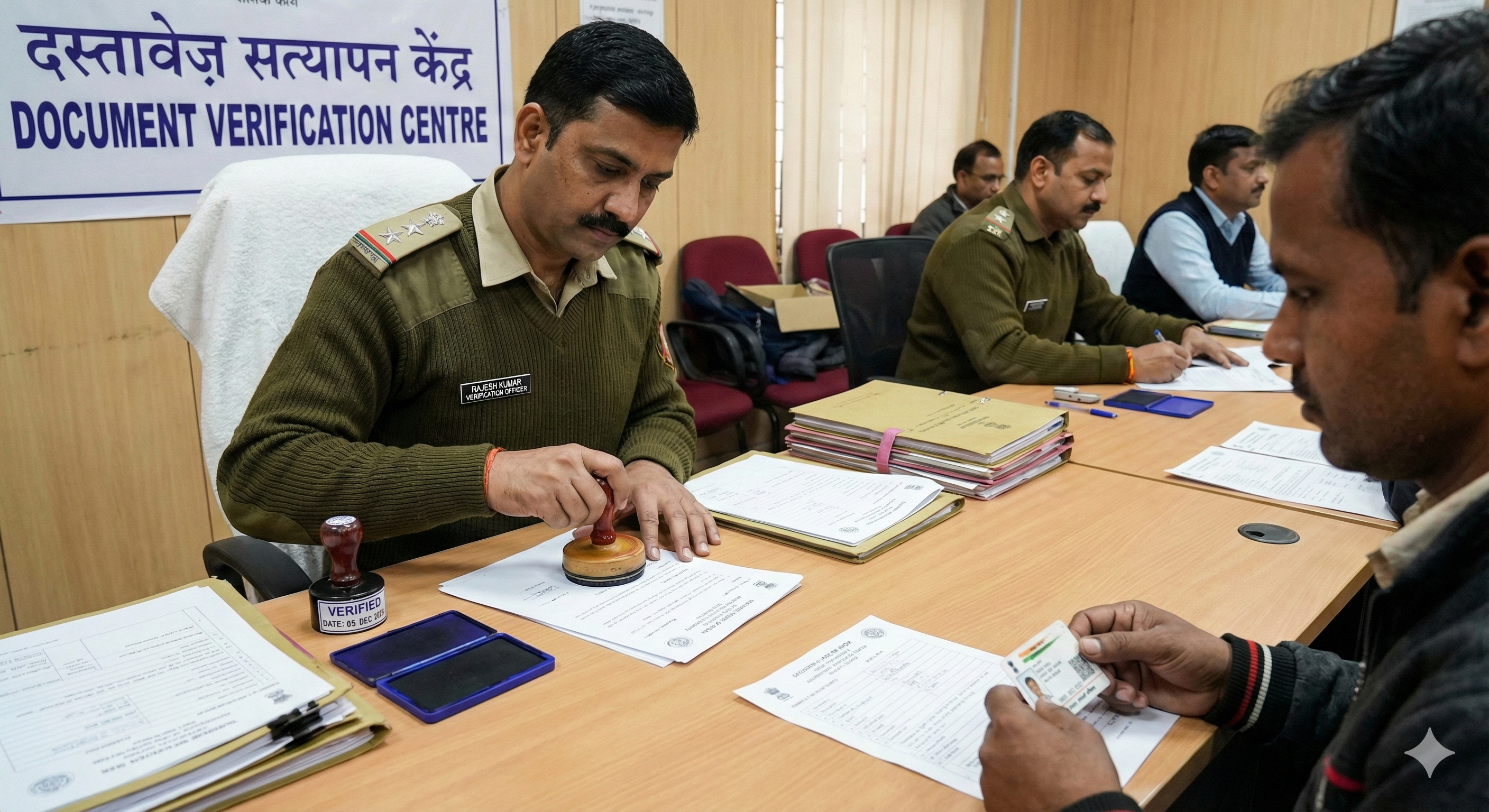
Once you clear CBT 2 and skill tests, the final stage is Document Verification (DV). Candidates are called based on merit, usually 1.05 times the number of vacancies. Be prepared with originals and two sets of self-attested copies of:
Understanding the Final Merit List Generation
The final merit list relies almost entirely on the CBT 2 score. For posts requiring skill tests (CBAT or Typing Test), the weightage is typically adjusted (e.g., 70% CBT 2 + 30% CBAT). Performance in CBT 1 and Document Verification is simply qualifying.
Salary Structure and Career Progression for NTPC Posts
NTPC posts are categorized under the 7th Central Pay Commission (CPC). Starting salaries (Pay Level 2 to Level 6) typically range from approximately Rs. 30,000 to Rs. 45,000 per month (in-hand, including allowances) depending on the post and city (X, Y, or Z category).
Career progression is excellent, with opportunities for promotion through departmental examinations to higher managerial roles.
🔥 Key Takeaways for RRB NTPC 2026 Aspirants
Your path to success relies on these critical points:
Conclusion: Seizing the RRB NTPC 2026 Opportunity
The RRB NTPC 2026 exam is more than just a test; it is your gateway to a secure and respected career in the Indian Railways. Success in this highly competitive exam is directly proportional to the amount of structured, consistent effort you invest early on.
Use this definitive guide to map out your study schedule, track the projected timeline, and dedicate yourself to mastering the syllabus. The race begins today. Good luck!