
Diploma in Radiology & Imaging Technology (DRIT) 2026
Master diagnostic imaging with the 3-year DRIT 2026 course. Intensive training in X-Ray, CT, MRI, patient safety, and clinical rotations. Apply now!
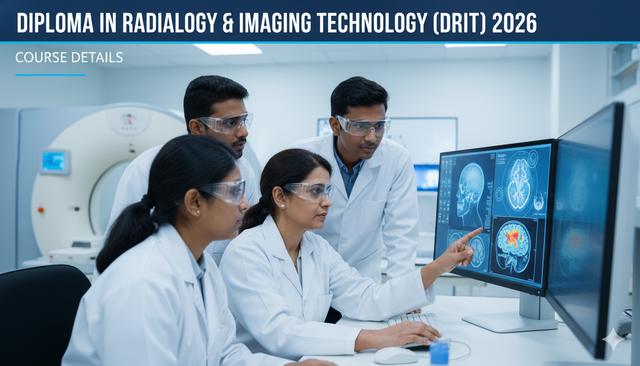
Diploma in Radiology & Imaging Technology (DRIT) 2026
The Diploma in Radiology & Imaging Technology (DRIT) is a comprehensive, three-year paraprofessional program designed to train highly competent Radiology Technologists. This curriculum, aligned with 2025 industry standards, provides intensive hands-on experience in operating sophisticated diagnostic equipment, including X-Ray, CT, and MRI machines, while maintaining strict adherence to radiation safety and quality patient care protocols. Graduates are prepared for immediate entry into the rapidly growing healthcare sector globally.
1. Course Overview & Key Highlights
The DRIT 2026 program offers rigorous vocational training focusing on the practical application of physics, anatomy, and technological procedures essential for generating high-quality diagnostic images. Emphasizing mandatory clinical rotations and patient safety, this diploma ensures graduates meet the critical demand for skilled imaging professionals in hospitals and diagnostic centers.
Parameter Detail Course Name Diploma in Radiology & Imaging Technology (DRIT) Course Level Diploma (Paraprofessional/Vocational) Duration 3 Years (6 Semesters) Eligibility Criteria 10+2 (High School) Science Stream (PCB/PCM) Entrance Exams May require institutional entrance tests or merit-based selection. Course Fees (Estimate) Varies by institution, typically ₹10,000 to over ₹1,90,000 for the total program Admission Process Merit-based selection based on 10+2 scores, followed by interview/counseling. Key Subjects Radiation Physics, Radiographic Positioning, CT/MRI Principles, Patient Care, Quality Assurance. Examination Type Semester-wise (Theory Exams, Practical & Viva Voce, Clinical Evaluation). Average Starting Salary Highly variable, typically ₹2.5 to ₹7 Lakhs per year (LPA). 2. Course Identity & Logistics
- Official Course Title: Diploma in Radiology & Imaging Technology (DRIT)
- Target Intake Year: 2026
- Course Code: DRIT/26/300
- Total Credits: 150-180 Credits (Approx.)
- Delivery Mode: Full-time, On-campus (Mandatory Clinical Rotations).
- Format: Balanced blend of Lectures, Laboratory Sessions, Simulation Labs, and extensive Clinical Rotations.
- Instructor/Department Info: Taught by certified Radiologists, Medical Physicists, and Senior Radiology Technologists.
3. Course Description & Rationale
Summary
The DRIT 2026 curriculum is a rigorous, vocationally focused program designed to produce highly skilled Radiology Technologists. Students learn to master the technical operation of complex imaging modalities, including Conventional Radiography, Fluoroscopy, Computed Tomography (CT), and Magnetic Resonance Imaging (MRI) principles. A significant portion of the course is dedicated to ensuring patient safety, radiation protection (adhering to the ALARA principle), and ethical practice.
Curriculum Context
The program follows a progressive structure, moving from foundational sciences (Anatomy, Physics) in Year 1, through core imaging techniques and equipment application in Year 2, culminating in advanced modalities, regulatory compliance, and mandatory full-time clinical integration in Year 3.
Industry Relevance (2025 Trends)
The global demand for diagnostic services is accelerating, driven by aging populations and advances in non-invasive diagnosis. This course directly addresses the critical shortage of certified personnel capable of operating modern digital imaging systems (PACS/RIS) and specialized modalities. The emphasis on digital image processing and quality assurance ensures graduates are prepared for the contemporary, highly digitized hospital environment.
Target Audience
Recent high school graduates (10+2 Science stream) who possess strong attention to detail, physical stamina, excellent communication skills, and a genuine interest in combining technology and direct patient care in a clinical setting.
4. Prerequisites & Eligibility
Academic Prerequisites
- Successful completion of 10+2 (High School) or equivalent qualification.
- Mandatory enrollment in the Science stream with core subjects: Physics, Chemistry, and either Biology (PCB) or Mathematics (PCM).
- Minimum aggregate score of 50% in core science subjects (may vary).
Skill Requirements
- Demonstrated attention to detail and precision, crucial for accurate patient positioning and dose calculation.
- Strong communication and interpersonal skills for effective patient interaction and collaboration with clinical teams.
- Physical stamina and dexterity required for handling equipment and assisting patients.
Technical Requirements
- Basic computer literacy for using Radiology Information Systems (RIS) and Picture Archiving and Communication Systems (PACS).
Corequisites
Students must maintain satisfactory academic standing in all theoretical modules to be eligible for progression to mandatory clinical rotations in Phase 3.
5. Learning Objectives
By the end of this course, students will be able to:
- Define: Key principles of radiation physics, human anatomy, and pathology relevant to diagnostic imaging procedures.
- Apply: Strict radiation protection protocols (ALARA) and quality assurance (QA) checks to ensure the safety of patients and personnel.
- Analyze: Radiographic images for technical quality, identifying errors in positioning, exposure factors, and image processing artifacts.
- Evaluate: Patient conditions and medical histories to select appropriate imaging techniques and effectively manage emergency situations in the imaging suite.
- Create: High-quality diagnostic images across various modalities (X-Ray, CT, basic Ultrasound) while adhering to ethical standards and institutional SOPs.
6. Course Materials
Required Textbooks
- Bushong, Stewart C. Radiologic Science for Technologists: Physics, Biology, and Protection.
- Bontrager, Kenneth L. Textbook of Radiographic Positioning and Related Anatomy.
- Fauber, Terri L. Radiographic Imaging and Exposure.
- Ballinger, Philip W. Merrill's Atlas of Radiographic Positioning & Procedures.
Reference Materials
- Detailed Clinical Manuals and Standard Operating Procedures (SOPs) for all major imaging departments.
- Access to institutional digital libraries for peer-reviewed journals on medical imaging advancements.
- Radiation safety guidelines and regulatory compliance documents from relevant national bodies.
Software & Tools
- Access and training on Picture Archiving and Communication Systems (PACS) and Radiology Information Systems (RIS).
- Simulation software for dose calculation, patient positioning practice, and virtual fluoroscopy.
- Personal Protective Equipment (PPE) including lead aprons, thyroid shields, and mandatory personal dosimeters.
7. Detailed Syllabus & Module Breakdown (3 Years)
The DRIT program is structured across three phases, integrating foundational knowledge, practical application, and intensive clinical experience.
Phase I: Foundations (Year 1)
Objective: Establish core vocabulary and principles of human biology and radiation physics necessary for safe imaging practice.
| Module Focus | Topics Covered |
|---|---|
| Semester 1: Core Sciences | Human Anatomy & Physiology I, General Physics, Basic Electricity & Electronics, Hospital Practice & Patient Care Fundamentals. |
| Semester 2: Imaging Basics | Introduction to Radiation Physics, Basic Mathematics for Technologists, Darkroom Techniques (Analog), Introduction to Positioning Terminology. |
Phase II: Application & Core Concepts (Year 2)
Objective: Master foundational radiographic techniques, positioning, and understand the instrumentation of advanced modalities.
| Module Focus | Topics Covered |
|---|---|
| Semester 3: Radiography Mastery | Radiographic Techniques & Positioning (Chest, Abdomen, Extremities), Image Quality & Processing (Digital & Analog), Pharmacology relevant to Imaging, Patient Management. |
| Semester 4: Advanced Modality Principles | Radiographic Techniques & Positioning (Head, Spine, Pelvis), Computed Tomography (CT) Principles & Instrumentation, Ultrasound Physics & Instrumentation, Initial supervised clinical observation/assisting. |
Phase III: Advanced & Clinical Integration (Year 3)
Objective: Achieve clinical competency through mandatory rotations, study advanced imaging, and focus on professional compliance.
| Module Focus | Topics Covered |
|---|---|
| Semester 5: Advanced Modalities & Safety | Magnetic Resonance Imaging (MRI) Principles, Nuclear Medicine & Radiobiology, Advanced Contrast Media Procedures, Quality Assurance & Regulatory Compliance. |
| Semester 6: Clinical Competency | Mandatory full-time Clinical Internship/Rotation (X-Ray, CT, Fluoroscopy), Interventional Radiology Techniques, Research Methodology & Capstone Project/Dissertation. |
8. Assessment & Grading Scheme
Assessment in the DRIT program is continuous and comprehensive, ensuring competency in both theoretical knowledge and practical execution, particularly in high-stakes clinical settings.
| Assessment Type | Weightage (Typical) | Description |
|---|---|---|
| Theory Exams (Mid-term & Final) | 40% | Written examinations assessing knowledge of physics, anatomy, and instrumentation. |
| Practical & Viva Voce | 35% | Hands-on demonstration of patient positioning, equipment setup, and oral defense of procedures. |
| Clinical Evaluation | 15% | Assessed by supervising Radiologists/Technologists based on professionalism, skill application, and patient interaction during rotations. |
| Assignments & Projects (Capstone) | 10% | Case studies, presentations, and the final Capstone Project focusing on a specific imaging area or QA improvement. |
Passing Criteria
Students must achieve a minimum of 50% in both the theoretical and practical components separately in each semester to proceed to the next phase.
9. Course Policies
Academic Integrity
The institution maintains a zero-tolerance policy regarding plagiarism, cheating, and academic dishonesty. Violations may result in immediate expulsion from the program.
Attendance Requirements
A mandatory 85% attendance is required for all theoretical sessions. Due to the clinical nature of the course, 100% attendance is strictly enforced for all mandatory clinical rotations and lab sessions.
Late Submissions Policy
Assignments submitted past the deadline will incur a penalty (e.g., 10% deduction per day) unless a valid medical or emergency exemption is provided.
Radiation Safety Policy
Strict adherence to all radiation protection protocols is mandatory. Failure to correctly wear and monitor personal dosimeters, or any deliberate breach of safety protocols, constitutes a serious violation and may lead to immediate suspension from clinical duties.
10. Career Scope & Certification
Graduates of the DRIT program are essential members of the healthcare team, bridging the gap between advanced technology and patient diagnosis. The skills acquired ensure employability in diverse healthcare settings both nationally and internationally.
Certification Details
Upon graduation, students will be eligible to sit for relevant national or state licensing examinations required to practice as a certified Radiology Technologist (e.g., certification required by the local regulatory body).
Skills Acquired
- Technical Skills: Operation of X-Ray, Fluoroscopy, CT, and basic Ultrasound equipment; digital image manipulation (PACS/RIS); dose calculation.
- Soft Skills: Empathetic patient care and communication; teamwork; critical thinking in emergency situations; adherence to ethical and confidentiality standards.
Job Roles & Prospects
| Primary Job Role | Role Description | Further Studies Pathway |
|---|---|---|
| Radiology Technologist (General) | Performs routine X-Ray and Fluoroscopy procedures in hospitals and clinics. | B.Sc. in Medical Imaging Technology (Lateral Entry) |
| CT Scan Technician | Specializes in operating Computed Tomography scanners and administering contrast media. | Post-Graduate Diploma in CT Technology |
| MRI Technician | Assists in preparing patients and operating Magnetic Resonance Imaging equipment. | Certification in MRI Safety and Advanced Imaging |
| Interventional Radiology Assistant | Assists radiologists during complex, minimally invasive procedures under image guidance. | Specialized Fellowship/Training in Interventional Procedures |
| Equipment Application Specialist | Works for medical equipment companies, providing training and technical support to hospitals. | Business Management or Sales Certification |
11. Frequently Asked Questions (FAQs)
1. What are the minimum requirements for DRIT 2026 admission?
To be eligible for the DRIT 2026 program, candidates must have successfully completed the 10+2 (High School) level in the Science stream, including Physics, Chemistry, and Biology/Mathematics, with a specified minimum aggregate score (typically 50%).
2. Is the Diploma in Radiology & Imaging Technology recognized for professional licensing?
Yes. The curriculum is meticulously designed to meet the rigorous standards set by national and state regulatory bodies. Graduates are eligible to sit for the required professional licensing or certification exams necessary to practice as a certified technologist in the respective jurisdiction.
3. How much of the DRIT course is dedicated to practical training?
The course is heavily practical. Approximately 50% of the final year is dedicated to mandatory, full-time clinical rotations across various departments (X-Ray, CT, Ultrasound) to ensure hands-on mastery of procedures and patient handling.
4. What is the typical fee structure for the DRIT program?
Course fees vary significantly based on the type of institution (government vs. private) and geographic location. Prospective students should budget approximately INR 15,000 to over INR 2,00,000, .
5. What is the career progression after completing the DRIT?
Graduates typically start as General Radiology Technologists. Career progression often involves specializing in advanced modalities like CT, MRI, or Interventional Radiology, or pursuing lateral entry into a Bachelor’s degree program (B.Sc. MIT) to take on supervisory or educational roles.