
Diploma in Physiotherapy (DPT) 2026 | Vocational Training
Enroll in the 2.5-year Diploma in Physiotherapy (DPT) 2026. Gain practical skills in electrotherapy, manual techniques, and clinical assistance. This program prepares you for entry-level assistant roles.
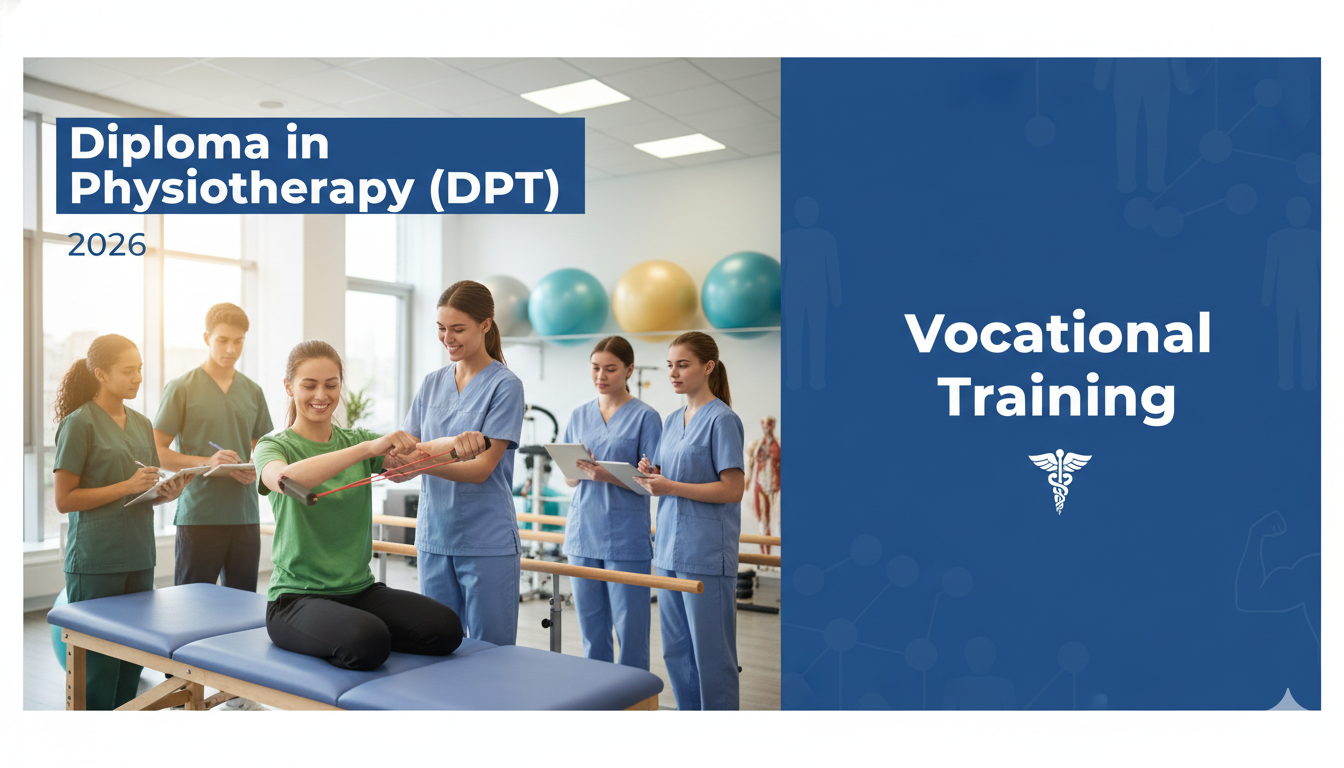
Diploma in Physiotherapy (DPT) 2026: Vocational Training Program
1. Course Overview & Key Highlights
The Diploma in Physiotherapy (DPT) 2026 is a rigorous 2.5-year vocational program designed to rapidly train skilled Physiotherapy Technicians and Assistants. Focusing heavily on practical competence (70% clinical training), this diploma ensures students master foundational sciences, therapeutic exercises, and modern electrotherapy modalities, culminating in a mandatory 6-month clinical internship for immediate industry readiness.
Key Highlights Table
Attribute Details Course Name Diploma in Physiotherapy (DPT) 2026 Course Level Diploma (Vocational/Professional Training) Duration 2.5 Years (5 Semesters) Eligibility Criteria Successful completion of 10+2 (High School) with Physics, Chemistry, and Biology (PCB stream). Minimum 50% aggregate required. Entrance Exams Entrance exam or interview (varies by institution) Estimated Course Fees ₹10,000 to over ₹5 Lakhs for the entire program Admission Process Merit-based selection followed by institutional interview/counseling. Key Subjects Human Anatomy, Kinesiology, Electrotherapy, Manual Therapy Fundamentals, Therapeutic Exercises, Clinical Communication. Examination Type Semester-wise theory exams and Objective Structured Clinical Examinations (OSCEs). Average Starting Salary ₹1.8 to ₹3 Lakhs per year 2. Course Identity & Logistics
- Course Title: Diploma in Physiotherapy (DPT) 2026
- Course Code: DPT-VOC-26
- Awarding Body: [Institution Name/Affiliating University]
- Total Credits: 120 Credits (ECTS equivalent)
- Instructional Mode: Full-time, On-campus (Hybrid modules for select theoretical components)
- Format: Balanced blend of Lectures, Clinical Simulation Labs, and Hands-on Workshops.
- Start Date: Fall 2026 Intake
- Language of Instruction: English
3. Course Description & Rationale
The Diploma in Physiotherapy is a comprehensive vocational program tailored specifically to cultivate skilled support staff for the healthcare rehabilitation sector. This curriculum emphasizes practical application, ensuring graduates are competent in assisting licensed physiotherapists across a variety of clinical settings. Students gain proficiency in applying physical modalities, instructing patients in prescribed exercises, and maintaining critical clinical documentation.
Industry Relevance (2025 Trends): The global aging population and increased focus on non-invasive rehabilitation methods have driven a significant demand for qualified physiotherapy support staff. This DPT program integrates modern healthcare technologies, including basic telehealth management tools and digital patient record keeping, ensuring graduates are prepared for the contemporary, digitally-enabled clinic environment.
Target Audience: Recent 10+2 Science graduates (PCB) who are seeking a fast-track, skills-focused entry into the allied health sector, aiming for roles such as Physical Therapy Assistant or Rehabilitation Aide.
4. Prerequisites & Eligibility
Admission to the DPT program requires a combination of academic achievement, foundational skills, and professional aptitude.
- Academic Prerequisites: Successful completion of 10+2 (High School/Intermediate) or equivalent, with mandatory subjects Physics, Chemistry, and Biology (PCB stream). Minimum 50% aggregate score required.
- Skill Requirements: Strong interpersonal communication skills, compassion and empathy for patient care, high ethical standards, and physical stamina required for hands-on therapeutic assistance.
- Technical Requirements: Basic computer literacy, including proficiency in MS Office (Word, Excel) and reliable access to internet resources for utilizing the institutional Learning Management System (LMS).
- Corequisites: Mandatory certification in Basic Life Support (BLS) must be obtained prior to commencing the final clinical internship phase.
5. Learning Objectives
By the end of this Diploma program, successful students will be able to:
- Assess: Perform basic objective measurements, including musculoskeletal and neurological screenings, range of motion tests, and accurate recording of patient vital signs.
- Implement: Execute prescribed therapeutic exercise plans, including dynamic strengthening, postural correction, and complex gait training techniques under supervision.
- Apply: Safely and effectively utilize common physiotherapy modalities such as Ultrasound, TENS, Interferential Therapy (IFT), and heat/cold treatments, adjusting parameters according to protocol.
- Educate: Provide clear, accessible, and culturally sensitive instructions to patients and caregivers regarding adherence to home exercise programs and injury prevention strategies.
- Manage: Maintain detailed and compliant clinical records, manage inventory and equipment maintenance logs, and adhere strictly to professional ethics, safety protocols, and patient confidentiality standards.
6. Course Materials
Students are required to utilize a blend of traditional texts, specialized laboratory resources, and digital platforms to succeed in this program.
- Required Textbooks:
- Textbook of Medical Physiology (Guyton and Hall)
- Clinically Oriented Anatomy (Moore, Dalley, and Agur)
- Kinesiology of the Musculoskeletal System: Foundations for Physical Rehabilitation (Neumann)
- Clay’s Handbook of Electrotherapy and Therapeutic Modalities (Prentice)
- Therapeutic Exercise: Foundations and Techniques (Kisner & Colby)
- Laboratory Access: Dedicated Human Anatomy Lab (cadaveric/model based), Advanced Simulation/Skills Lab, and a fully equipped Electrotherapy Unit.
- Digital Resources: Access to institutional LMS (Canvas/Moodle), digital anatomy atlases (e.g., Complete Anatomy), and subscriptions to peer-reviewed journals (e.g., Physical Therapy).
- Uniform & Equipment: Required clinical scrubs, professional footwear, diagnostic tools (goniometer, reflex hammer, stethoscope).
7. Detailed Syllabus & Module Breakdown (Conceptual Flow)
The 2.5-year program is structured into three progressive phases, integrating theory with intensive clinical application.
Phase I: Foundations (Semesters 1 & 2 Focus)
Objective: Establish core vocabulary, anatomical principles, and the professional context of physiotherapy.
- Module 1: Human Anatomy & Physiology I & II (Systemic and Applied)
- Module 2: Basic Physics, Biomechanics, and Medical Terminology
- Module 3: Introduction to Physiotherapy Ethics and Professional Practice
- Module 4: Initial Patient Assessment and Vital Signs Recording
Phase II: Application & Core Concepts (Semesters 3 & 4 Focus)
Objective: Practical mastery of core therapeutic modalities and manual techniques.
- Module 5: Kinesiology and Postural Analysis
- Module 6: Comprehensive Electrotherapy & Diathermy Application (Practical Labs)
- Module 7: Therapeutic Exercises Prescription and Implementation
- Module 8: Manual Therapy Fundamentals (Joint Mobilization, Soft Tissue Techniques)
- Module 9: Pathology, Pharmacology Basics, and Clinical Communication
Phase III: Advanced Integration & Internship (Semester 5 Focus)
Objective: Advanced complexity, specialization introduction, and synthesis through mandatory clinical rotation.
- Module 10: Orthopedic Physiotherapy Techniques (Common Injuries & Rehab)
- Module 11: Neurological Rehabilitation Basics (Stroke, Spinal Cord Injury)
- Module 12: Introduction to Sports Injury Management and Prevention
- Module 13: Professional Development, Digital Patient Management, and Ethics Review
- Module 14: Mandatory 6-Month Clinical Internship (Full-time practical application)
8. Assessment & Grading Scheme
Evaluation is comprehensive, ensuring competency in both theoretical knowledge and practical clinical skills.
Assessment Distribution Table
| Assessment Component | Weightage | Description |
|---|---|---|
| Theory Examinations | 40% | Mid-term and End-of-Semester written exams covering core modules. |
| Practical/Skills Examinations (OSCEs) | 30% | Objective Structured Clinical Examinations performed in skills labs to test hands-on competency. |
| Continuous Assessment | 15% | Quizzes, assignments, case studies, professionalism, and attendance records. |
| Internship/Project | 15% | Final Internship Evaluation, Supervisor Feedback, and Clinical Report Submission. |
| Total | 100% |
Passing Criteria
Students must achieve a minimum passing grade of 50% aggregate. Crucially, a minimum of 50% must be achieved separately in both the theory component (40%) and the combined practical/skills component (60%) to pass the course.
9. Course Policies
- Academic Integrity: The institution enforces a strict zero-tolerance policy against all forms of academic dishonesty, including plagiarism and cheating, enforced via academic honesty regulations.
- Attendance Requirements: A minimum of 75% attendance is required for all theoretical lectures and seminars. A mandatory 90% attendance is required for all practical, skills lab, and clinical sessions due to the hands-on nature of the training.
- Late Submissions Policy: Assignments submitted past the deadline may incur a penalty (e.g., 5% reduction per day), up to a maximum period, after which they will not be accepted unless approved by the instructor for documented medical reasons.
- Professional Conduct: Strict adherence to patient confidentiality (HIPAA/GDPR compliance), professional dress code, and ethical behavior is mandatory during all clinical and lab activities.
10. Career Scope & Certification
Graduates of the Diploma in Physiotherapy are well-positioned for immediate entry into diverse healthcare environments, providing essential support to licensed practitioners.
Certification Details
Upon successful completion of all academic, practical, and internship requirements, students will be awarded the Diploma in Physiotherapy (DPT), certifying their readiness for entry-level assistant roles.
Skills Acquired
- Technical Skills: Proficient operation of electrotherapy equipment, manual muscle testing, gait assessment, therapeutic exercise instruction, and basic wound care assistance.
- Soft Skills: Enhanced patient communication, team collaboration, ethical decision-making, time management, and detailed clinical documentation.
Job Roles and Employment Settings
| Job Role | Role Description | Estimated Avg. Annual Salary (USD) |
|---|---|---|
| Physiotherapy Assistant (PTA) | Directly assists licensed physiotherapists in implementing treatment plans, managing equipment, and patient preparation. | freshers earning around ₹10,000-₹20,000/month (₹1.2-₹2.4 LPA) and experienced professionals potentially reaching ₹25,000-₹40,000+/month (₹3-₹5 LPA or more) |
| Physical Therapy Technician | Manages clinical logistics, maintains treatment areas, applies standard modalities (heat/cold packs), and assists with administrative tasks. | ₹1.2 LPA to ₹3.6 LPA annually |
| Rehabilitation Aide | Works in rehabilitation centers, providing motivational support, monitoring patients during exercises, and ensuring safety. | ₹3 - ₹5 Lakhs annually |
| Clinical Support Staff | Employed in private clinics or hospitals, focusing on administrative duties, inventory management, and basic patient flow coordination. | ₹1.8 to ₹3.5 Lakhs per annum |
Further Studies
This Diploma serves as a strong foundation. Graduates may qualify for direct entry pathways or credit transfer opportunities into Bachelor of Physiotherapy (BPT) or other related Bachelor of Allied Health Sciences degree programs, often reducing the total time required for the degree.
11. Frequently Asked Questions (FAQs)
Is the Diploma in Physiotherapy (DPT) equivalent to a Doctor of Physical Therapy degree?
No. It is crucial to understand the distinction. This program is a vocational Diploma (2.5 years) designed to train assistants and technicians for entry-level support roles. The Doctor of Physical Therapy (DPT) is a postgraduate professional degree required for independent practice as a licensed Physiotherapist in many international jurisdictions.
What are the specific eligibility requirements for the 2026 intake?
Candidates must have successfully completed their 10+2 high school education in the Science stream, specifically mandatory subjects Physics, Chemistry, and Biology (PCB). A minimum aggregate score of 50-60% in the qualifying examination is generally required, along with potential success in an entrance exam or interview process.
Is the 6-month clinical internship a paid position?
Internship status varies significantly by the affiliated clinical partner and geographical location. Typically, the mandatory 6-month clinical internship is classified as an unpaid educational requirement. However, some institutions or specific hospital placements may offer a modest stipend to cover basic expenses.
How is the curriculum structured to ensure practical readiness?
The curriculum is heavily weighted toward practical skills, with approximately 70% of the instruction dedicated to clinical training, simulation labs, and workshops. Students are assessed through Objective Structured Clinical Examinations (OSCEs) rather than relying solely on written theory exams, guaranteeing hands-on competency.
What are the career prospects immediately after obtaining the Diploma?
Graduates are prepared for immediate employment as Physiotherapy Assistants, Rehabilitation Aides, or Physical Therapy Technicians. These roles are in high demand across hospitals, private clinics, sports rehabilitation centers, and geriatric care facilities, providing a stable and essential entry point into the healthcare industry.