Diploma in Operation Theatre Technology (DOTT) 2026 Course Details
Master aseptic techniques, surgical instrumentation, and patient safety protocols with the 2-year DOTT program. Launch your career as a skilled OT Technician.
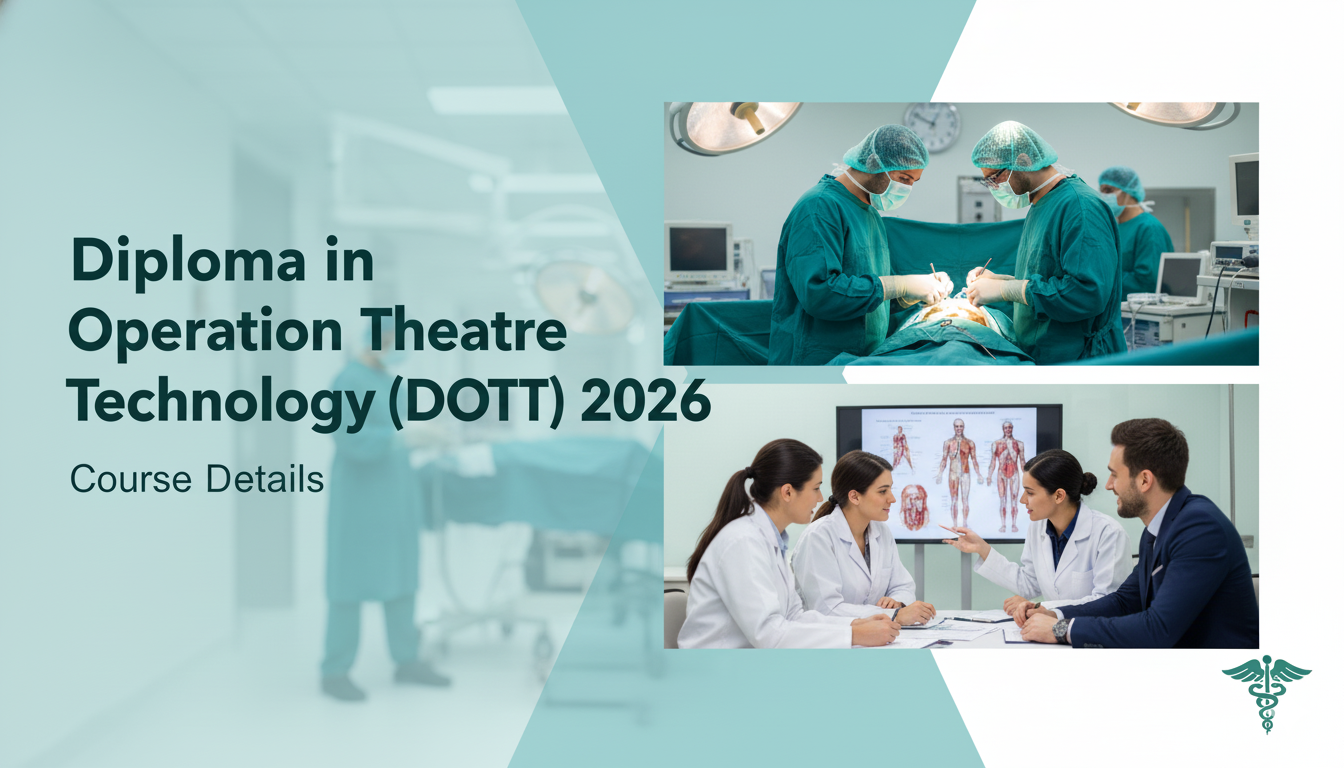
Diploma in Operation Theatre Technology (DOTT) 2026
Optimize surgical safety and patient care through specialized vocational training.
1. Course Overview & Key Highlights
The Diploma in Operation Theatre Technology (DOTT) is a rigorous 2-year vocational program designed to train highly skilled Allied Health professionals who are indispensable to the modern surgical team. Focused on practical mastery, this course equips students with core competencies in maintaining sterile environments, managing complex surgical instrumentation, and providing critical support to surgeons and anesthesiologists during operative procedures, ensuring optimal patient outcomes and procedural efficiency.
Parameter Specification Course Name Diploma in Operation Theatre Technology (DOTT) Course Level Diploma / Sub-Degree (Allied Health Vocational Training) Duration 2 Years (4 Semesters) Eligibility Criteria 10+2 (Higher Secondary) qualification, preferably Science stream (PCB/PCM) with 45-50% minimum aggregate. Entrance Exams Institutional Entrance Exam followed by Personal Interview (PI) or Counseling (Varies by institution). Course Fees (Estimate) ₹50,000 to ₹1,50,000 per annum (Excluding hostel/mess charges). Admission Process Entrance-based selection followed by merit counseling. Key Subjects Anatomy & Physiology, Aseptic Techniques, Surgical Instrumentation, Anesthesia Technology Basics, CSSD Management, Patient Safety Protocols. Examination Type Semester-wise Theory and Practical Exams (OSCE/VIVA Voce). Average Starting Salary (India) ₹2.5 LPA – ₹4.5 LPA (Highly dependent on location and hospital type). 2. Course Identity & Logistics
- Course Title: Diploma in Operation Theatre Technology (DOTT)
- Course Code: DOTT 2026
- Academic Year: 2026-2028
- Credit Value/ECTS: Total 120-140 Credits (Including Clinical Practicum)
- Format: Full-Time (Hybrid model for foundational theory; mandatory Lab/Workshop and Clinical Rotations)
- Awarding Body: [Insert Affiliating University/Council Name]
- Department: Allied Health Sciences / Paramedical Technology
3. Course Description & Rationale
The Diploma in Operation Theatre Technology (DOTT) is a comprehensive vocational program meticulously designed to transform high school graduates into competent and reliable Operation Theatre Technicians. The curriculum blends foundational medical sciences—such as Anatomy, Microbiology, and Pharmacology—with intensive hands-on training in the specialized procedures required within the sterile surgical environment.
This program addresses a critical gap in the healthcare ecosystem: the high global demand for specialized, non-physician staff capable of expertly managing the technological complexity and stringent sterility requirements of modern operating rooms. DOTT graduates are essential for ensuring smooth workflow, preventing surgical site infections, and improving overall surgical outcomes, directly impacting patient care quality and institutional efficiency.
Curriculum Context & Industry Relevance (2025 Trends)
The 2025 healthcare landscape emphasizes minimally invasive surgery (MIS), robotics, and enhanced infection control measures. The DOTT curriculum is updated to incorporate these trends, including mandatory training in Simulation Labs for handling advanced equipment (e.g., laparoscopic towers, robotic docking protocols) and strict adherence to global patient safety checklists (WHO/JCI standards). This ensures graduates are immediately employable and relevant in high-tech surgical centers.
Target Audience
This course is ideal for motivated 10+2 Science stream students who possess an aptitude for technical work, demonstrate emotional resilience, and are committed to working in a fast-paced, high-stakes medical environment requiring precision and teamwork.
4. Prerequisites & Eligibility
Academic Prerequisites
- Qualification: Successful completion of 10+2 (Higher Secondary) or equivalent from a recognized board.
- Subject Requirement: Mandatory Physics, Chemistry, and Biology (PCB) preferred. PCM students may also be eligible depending on institutional policy.
- Minimum Marks: Aggregate percentage typically ranges from 45% to 50% in the qualifying examination.
Skill Requirements
- Detail Orientation: Absolute precision in instrument counting and sterile technique is mandatory.
- Teamwork & Communication: Ability to communicate effectively and function seamlessly within a multi-disciplinary surgical team.
- Emotional Resilience: Comfort and composure when exposed to surgical procedures and high-pressure situations.
Technical Requirements
Students must meet institutional medical fitness criteria for clinical placements, including vaccination requirements relevant to healthcare workers.
Corequisites
Successful enrollment in the mandatory Clinical Rotations (Semester 4) is corequisite for graduation.
5. Learning Objectives
By the end of this course, students will be able to:
- Define: Key surgical terminology, anatomical landmarks relevant to common procedures, and the principles of sterilization and disinfection (Asepsis Mastery).
- Apply: Proper scrubbing, gowning, and gloving techniques; establish and maintain sterile fields throughout the operative process; and execute basic life support (BLS) protocols.
- Analyze: Identify and categorize surgical instruments based on their function (cutting, clamping, retracting, suturing) and anticipate the surgeon’s needs during various procedural phases.
- Evaluate: Monitor patient vital signs and basic anesthetic parameters (under supervision), and critically assess the functionality and safety of specialized OT equipment (e.g., diathermy, patient monitors).
- Create: Develop comprehensive instrument trolleys and supplies for specialized surgical cases, and compile accurate clinical documentation and inventory records.
6. Course Materials
Required Textbooks
- Draine, J. (2024). Surgical Technology Principles and Practice.
- Gupta, A. (2023). Essentials of Operation Theatre Techniques and Management.
- Bhattacharya, R. (2025). Clinical Anatomy and Physiology for Allied Health Professionals.
- Garland, S. (2024). Sterile Processing and CSSD Management.
Reference Materials
- Institutional Standard Operating Procedures (SOPs) for Infection Control.
- WHO Surgical Safety Checklist and Implementation Guidelines.
- Online access to institutional Learning Management System (LMS) for surgical video libraries.
- Anatomy visualization software (e.g., interactive 3D models).
Software & Tools
- Hospital Information System (HIS) training for patient charting and inventory.
- High-fidelity simulation mannequins for airway management and patient monitoring drills.
- Sterilization equipment (autoclaves, ETO, plasma sterilizers) access for practical sessions.
7. Detailed Syllabus & Module Breakdown (Illustrative 14-Week Term)
This structure outlines the core content flow, typically covered across two academic years (four semesters).
Phase I: Foundations (Semester 1 Focus)
Objective: Establish core vocabulary, anatomical principles, and the structure of the OT environment.
| Week | Topics Covered |
|---|---|
| Week 1-2 | Anatomy and Physiology: Systems relevant to surgery (Respiratory, Cardiovascular, Musculoskeletal). Medical Terminology. |
| Week 3 | Basic Microbiology & Pathology: Introduction to pathogens, chain of infection, and wound healing. |
| Week 4 | Introduction to OT Environment: OT layout (zones), air flow dynamics, lighting, and fire safety protocols. |
Phase II: Application & Core Concepts (Semester 2 & 3 Focus)
Objective: Practical application of aseptic techniques, equipment management, and surgical assistance principles.
| Week | Topics Covered |
|---|---|
| Week 5-6 | Sterile Processing & CSSD Management: Cleaning, decontamination, packaging, and high-level disinfection techniques. |
| Week 7 | Aseptic Mastery: Detailed practice of scrubbing, gowning, gloving, draping, and maintaining the sterile field. |
| Week 8 | Anesthesia Technology Basics: Anesthesia machine components, medical gases, basic monitoring devices, and patient positioning. |
| Week 9-10 | Surgical Procedures I: Instrument preparation and assistance for General Surgery (e.g., appendectomy, hernia repair) and basic Orthopedics. |
| Week 11 | Pharmacology Relevant to OT: IV fluids, common anesthetic agents, muscle relaxants, and emergency drugs. |
Phase III: Advanced Topics & Clinical Practicum (Semester 4 Focus)
Objective: Advanced exposure to specialized procedures, management skills, and full-time clinical integration.
| Week | Topics Covered |
|---|---|
| Week 12 | Surgical Procedures II: Introduction to specialized fields (Cardiothoracic, Neurosurgery, Urology). Specialized instrumentation. |
| Week 13 | Operation Theatre Management: Inventory control, supply chain logistics, documentation, and medico-legal aspects. |
| Week 14 | Critical Care & Emergency Response: Basic principles of ICU transfer, post-operative monitoring, and intra-operative emergency response simulation. |
| Remaining Semester | Mandatory Clinical Internship/Practicum (Minimum 6-9 months total across the program). |
8. Assessment & Grading Scheme
Assessment is continuous and cumulative, emphasizing the mastery of practical skills and adherence to professional standards, particularly during clinical rotations.
Assessment Distribution Table
| Assessment Component | Weightage | Details |
|---|---|---|
| Theory Exams | 40% | Mid-term and End-of-Semester written examinations (MCQs, short/long answers). |
| Practical Exams (OSCE/VIVA) | 40% | Objective Structured Clinical Examination focusing on instrument identification, sterile setup, and procedure assistance. |
| Internal Assessment | 20% | Assignments, seminar presentations, attendance, professional conduct, and clinical logbook completion. |
| Total | 100% |
Grading Scale
Grades are typically awarded on a letter scale based on percentage performance:
- A (90%+): Exceptional Performance and Skill Mastery.
- B (75%-89%): High Competence, Exceeds requirements.
- C (60%-74%): Competent, Meets all core requirements.
- D (50%-59%): Minimally Acceptable, Needs improvement in certain areas.
- F (Below 50%): Fail, Requires re-examination or re-enrollment.
Passing Criteria
Students must achieve a minimum of 50% in the Theory component AND a minimum of 50% in the Practical component separately to pass a module and proceed to the next semester. Failure to meet the 90% clinical attendance requirement may result in disqualification from the final practical examination.
9. Course Policies
Academic Integrity
Strict adherence to institutional policies on academic honesty is mandatory. Plagiarism, cheating, or any form of academic misconduct will result in severe penalties, including potential expulsion.
Attendance Requirements
- Theory/Lecture: Minimum 75% attendance is required.
- Clinical Rotations/Practicals: Mandatory 90% attendance is required due to the hands-on nature of the training.
Late Submissions Policy
Assignments submitted after the deadline will incur a penalty (e.g., 10% reduction per day). Clinical logbooks must be maintained and signed off weekly; failure to do so may affect internal assessment scores.
Safety and Professional Conduct
Students must maintain the highest standards of professional ethics, including strict adherence to patient confidentiality (HIPAA/Data Protection) and institutional dress codes (mandatory scrub uniform). Zero tolerance policy for violation of sterile protocols and institutional safety guidelines.
10. Career Scope & Certification
Certification Details
Upon successful completion of all theoretical, practical, and clinical components, students are awarded the Diploma in Operation Theatre Technology (DOTT), along with institutional certification of clinical competency, often including integrated certification in Basic Life Support (BLS).
Skills Acquired
Technical Skills
- Surgical instrumentation identification and setup.
- Aseptic technique mastery (scrubbing, setting up sterile fields).
- Operation and basic troubleshooting of OT equipment (e.g., suction, diathermy, monitors).
- Sterile processing and CSSD management.
Soft Skills
- Critical thinking and rapid problem-solving during procedures.
- High-stakes team communication and coordination.
- Patient handling and ethical conduct.
Job Roles Table
| Career Role | Description | Avg. Starting Salary (INR) |
|---|---|---|
| Operation Theatre Technician/Assistant | Primary role; responsible for preparing the OT, assisting the scrub nurse/surgeon, and managing instruments. | ₹2,50,000 – ₹4,50,000 |
| Sterile Processing (CSSD) Manager | Specializes in cleaning, sterilization, and inventory control of surgical supplies in the Central Sterile Supply Department. | ₹3,00,000 – ₹5,00,000 |
| Anesthesia Technician Assistant | Assists the anesthesiologist with machine setup, drug preparation, and patient monitoring during induction and emergence. | ₹2,80,000 – ₹4,80,000 |
| Endoscopy Technician | Manages specialized endoscopic equipment, sterilization, and assists during minimally invasive procedures. | ₹3,50,000 – ₹5,50,000 |
Further Studies Recommendations
DOTT graduates can pursue further academic advancement via lateral entry into a B.Sc. in Operation Theatre Technology, B.Sc. in Anesthesia Technology, or other specialized Allied Health Bachelor's degree programs.
11. Frequently Asked Questions (FAQs)
1. What are the specific eligibility requirements for DOTT 2026 admission?
The primary requirement is successful completion of the 10+2 level, preferably in the Science stream with Physics, Chemistry, and Biology (PCB) as mandatory subjects. A minimum aggregate score (usually 45-50%) is required. Admission is typically finalized after a competitive entrance exam and/or personal interview.
2. How much hands-on practical exposure is included in the DOTT program?
The DOTT program is heavily focused on practical training. The curriculum mandates extensive Simulation Lab work (scrubbing, draping, equipment handling) throughout the first three semesters, culminating in a mandatory, full-time clinical internship/practicum of 6 to 9 months in the final semester, ensuring real-world competency across various surgical specialties.
3. Is the Diploma in Operation Theatre Technology recognized internationally?
Yes, the core competencies and training standards—particularly in sterilization, surgical assistance, and patient safety—align with international surgical safety protocols (e.g., JCI, WHO). While the DOTT certification itself is institutional, the skills acquired make graduates highly competitive for jobs abroad, though local licensing or registration requirements may apply in foreign countries.
4. What is the typical fee structure and return on investment (ROI) for this course?
Course fees vary significantly by institution type (Government vs. Private), typically ranging from ₹50,000 to ₹1,50,000 per year. Given the high, consistent demand for skilled OT Technicians in both public and private healthcare sectors, the program offers an excellent ROI, with graduates securing stable starting salaries often within the ₹2.5 LPA to ₹4.5 LPA range.
5. Do DOTT graduates assist only in General Surgery, or are specialized procedures covered?
The curriculum is designed to provide broad exposure. While foundational training focuses on General Surgery, Phase III includes modules on specialized areas such as Orthopedics, Neurosurgery, Cardiothoracic, and Gynecological procedures. Graduates are trained to assist across the spectrum of surgical disciplines.