
Certificate in Patient Care Technology 2026 | Tech-Enhanced Care
Master EHRs, Telehealth, and remote monitoring. This professional certificate trains patient care specialists in cutting-edge clinical technology and data integrity.
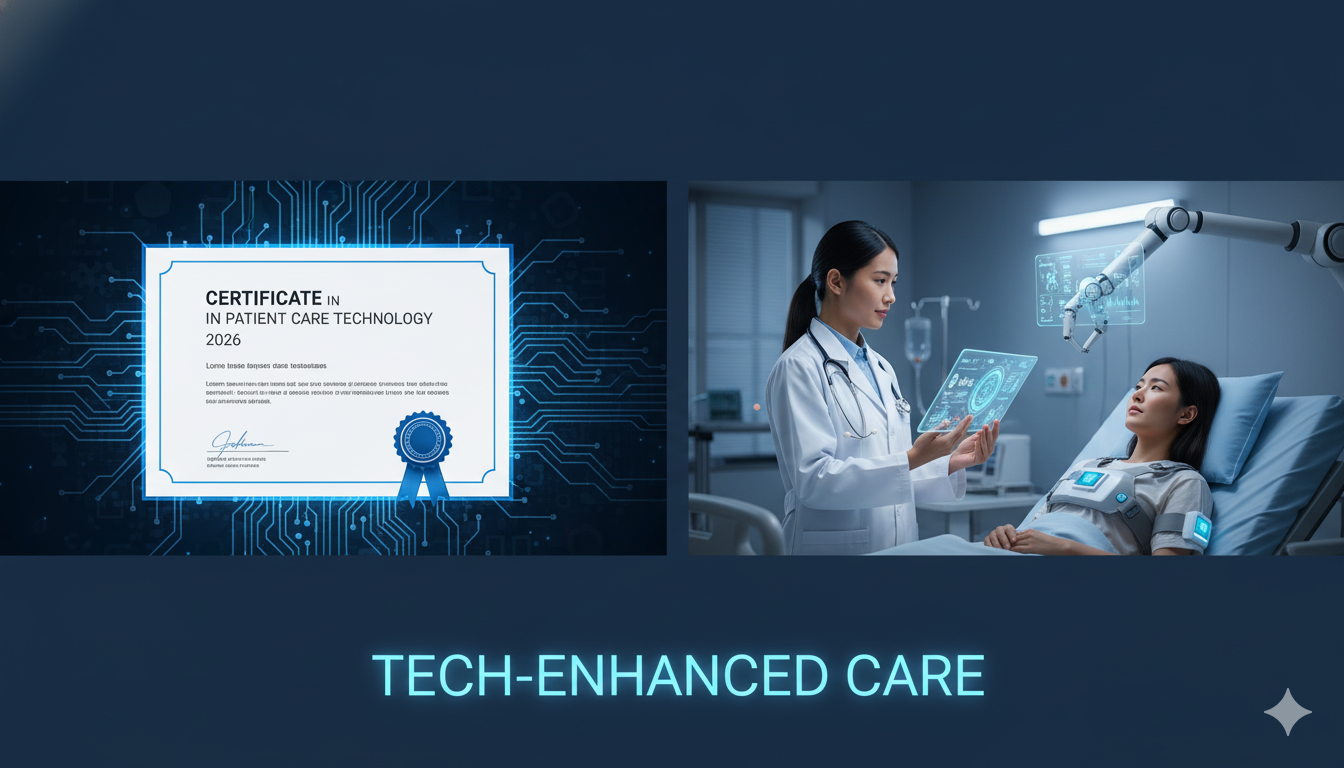
Certificate in Patient Care Technology 2026
Bridging Clinical Care and Digital Innovation
1. Course Overview & Key Highlights
The Certificate in Patient Care Technology 2026 is a specialized professional program designed to equip future healthcare professionals with essential technical skills needed in the rapidly digitalizing clinical environment. Focusing heavily on Electronic Health Records (EHR) management, remote patient monitoring (RPM), and data security, this course ensures graduates are proficient in utilizing modern patient technologies to enhance efficiency and safety in care delivery.
Key Highlights Table
Attribute Detail Course Name Certificate in Patient Care Technology 2026 Course Level Professional Certificate (Post-Secondary/Vocational) Duration 4–6 months (Part-Time, Blended Learning) Eligibility Criteria High School Diploma or GED; Must be 18+ Entrance Exams None (Basic Computer Literacy Assessment may apply) Course Fees (Estimate) ₹5,000 to ₹60,000 Admission Process Application Review and Enrollment Key Subjects EHR Mastery, Remote Patient Monitoring, Medical Device Operation, HIPAA Compliance, Cybersecurity in Healthcare Examination Type Project-based, Hands-on Simulation Labs, Mid-Term/Final Written Examinations Average Starting Salary (Estimate) ₹15,000 to ₹30,000 2. Course Identity & Logistics
This program is structured to provide flexible learning while ensuring mandatory practical skill development.
- Course Title & Code: Certificate in Patient Care Technology (CPCT-2026)
- Credit Value/ECTS: 15-20 Continuing Education Units (CEUs)
- Format: Blended (Online Modules, Mandatory Hands-on Lab Sessions/Simulations)
- Instructor/Department Info: Taught by Certified Clinical Informatics Specialists and experienced healthcare technologists.
3. Course Description & Rationale
Summary
This certificate program is specifically designed to address the growing demand for technologically proficient patient care staff. Students gain the practical skills necessary to manage, maintain, and efficiently utilize the sophisticated patient care technologies—from vital signs monitors to advanced Electronic Health Record (EHR) systems—that define the modern clinical environment. Emphasis is placed on practical application, data integrity, and enhancing overall patient safety through technical competency.
Curriculum Context & Industry Relevance
The healthcare landscape is undergoing rapid digitization. The 2025/2026 trend shows significant growth in telehealth adoption and mandatory migration to integrated EHR platforms. This curriculum is updated to reflect the latest regulatory guidelines (HIPAA, FDA) and focuses on emerging areas like remote patient monitoring (RPM) and the ethical integration of basic AI tools in predictive care workflows. Graduates will be equipped to handle the technical challenges inherent in facilitating seamless, high-quality care.
Target Audience
This course is ideal for individuals seeking entry into the healthcare field, current Patient Care Technicians (PCTs), Certified Nursing Assistants (CNAs), or medical assistants who wish to specialize and advance their careers by gaining essential technological expertise, particularly in high-tech hospital or remote care settings.
4. Prerequisites & Eligibility
Academic Prerequisites
- High School Diploma or General Education Development (GED) equivalent.
Skill Requirements
- Basic computer literacy (file management, web navigation, email communication).
- Recommended: Foundational knowledge of basic anatomy and medical terminology.
Technical Requirements
- Reliable access to a personal computer or laptop.
- High-speed internet connection (required for synchronous virtual labs).
- Functional webcam and microphone.
- Ability to handle and assemble basic simulation lab equipment (provided).
Corequisites
Students must sign a mandatory Data Confidentiality Agreement prior to accessing simulated patient data environments.
5. Learning Objectives
By the end of this course, students will be able to:
- Define: Key components of the digital healthcare ecosystem, including EHR, PACS, and LIS systems, and relevant regulatory bodies (HIPAA, FDA).
- Apply: Proper techniques for setting up and troubleshooting standard patient monitoring devices (e.g., infusion pumps, pulse oximeters) in a sterile environment.
- Analyze: Clinical workflows to identify bottlenecks and recommend technological solutions that improve efficiency and reduce data entry errors.
- Evaluate: The security posture of clinical technology systems and implement proactive cybersecurity and data integrity protocols.
- Create: A comprehensive technology integration plan (Capstone Project) for implementing a new Telehealth or Remote Patient Monitoring service within a clinical setting.
6. Course Materials
Required Textbooks (Digital Access)
- Clinical Informatics: A Comprehensive Guide (e.g., by Haux, Knaup, or similar specialized text).
- Medical Device Operation and Safety Manual (Simulation Edition).
- Guide to HIPAA and Healthcare Data Security.
Reference Materials
- Curated library of manufacturer manuals for common patient monitoring equipment.
- Regulatory guidelines and white papers from the ONC and CMS regarding interoperability.
Software & Tools
- Temporary access to simulated Electronic Health Record (EHR) platforms (e.g., Epic or Cerner sandbox environments).
- Virtual meeting software for synchronous lab sessions (e.g., Zoom/Teams).
- Basic physical simulation kit (shipped to the student) for hands-on practice.
7. Detailed Syllabus & Module Breakdown
Phase I: Foundations in Clinical Technology
Objective: Establish core vocabulary, regulatory principles, and the structure of the digital healthcare ecosystem.
| Week | Module Topic |
|---|---|
| Week 1 | Introduction to the Digital Healthcare Ecosystem (EHR/EMR, PACS, LIS). |
| Week 2 | Medical Terminology and Basic Anatomy for Technologists. |
| Week 3 | Patient Safety, Infection Control, and Device Decontamination Protocols. |
| Week 4 | Regulatory Compliance (HIPAA, FDA oversight of medical devices). |
Phase II: Application and Core Skills
Objective: Practical application of theories, focusing on device operation and data management within EHR systems.
| Week | Module Topic |
|---|---|
| Week 5 | Operation of Primary Monitoring Devices (ECG, Pulse Oximetry, IV Pumps). |
| Week 6 | Electronic Health Records Mastery: Documentation and Charting Best Practices (Practical Lab 1). |
| Week 7 | Introduction to Telehealth and Virtual Care Setup (Hardware, software, privacy). |
| Week 8 | Data Acquisition and Integrity: Input validation and common data errors. (Mid-Term Written Examination) |
| Week 9 | Advanced Application: Integrated Device Troubleshooting and Maintenance. |
Phase III: Advanced Integration and Emerging Trends
Objective: Advanced complexity, synthesis, and introduction to future-focused patient technology trends.
| Week | Module Topic |
|---|---|
| Week 10 | Remote Patient Monitoring (RPM): Device selection, patient education, and data transmission. |
| Week 11 | Cybersecurity and Clinical Data Security Protocols (Edge Cases and Exceptions). |
| Week 12 | Introduction to AI and Machine Learning in Predictive Patient Care. |
| Week 13 | Capstone Project Development and Technological Workflow Optimization. |
| Week 14 | Final Review, Capstone Presentation, and Practical Simulation Exam. |
8. Assessment & Grading Scheme
Assessment Distribution
| Assessment Component | Weight (%) |
|---|---|
| Module Quizzes & Assignments | 30% |
| Hands-on Simulation Labs (Practical Exams) | 40% |
| Mid-Term Written Examination | 15% |
| Final Capstone Project & Presentation | 15% |
| Total | 100% |
Grading Scale and Passing Criteria
The course utilizes a standard letter grading scale. A minimum overall score of 75% (C+) is required to successfully earn the Certificate in Patient Care Technology 2026. Failure to meet this threshold will result in a non-completion status.
- A: 93–100% (Exceptional Proficiency)
- B: 85–92% (High Proficiency)
- C: 75–84% (Satisfactory Proficiency)
- D: 65–74% (Needs Improvement – Must Retake)
- F: Below 65% (Failure)
9. Course Policies
Academic Integrity
The program maintains a strict zero-tolerance policy against academic misconduct, including plagiarism, cheating, and unauthorized sharing or use of simulated patient data. Violation of this policy may lead to immediate dismissal from the course.
Attendance Requirements
While theoretical modules are flexible, mandatory attendance is required for all hands-on simulation sessions (whether in-person or synchronous virtual labs). Unexcused absences from practical labs will severely impact the student's ability to achieve the required 40% practical assessment weight.
Late Submissions Policy
Assignments submitted after the deadline will incur a penalty of 5% per day, up to a maximum of five days. Practical lab assignments cannot be submitted late and must be completed during the scheduled session unless a documented emergency accommodation is approved.
Accommodations for Students with Disabilities
We are committed to providing reasonable and appropriate accommodations for students with documented disabilities in accordance with relevant legislation. Students requiring accommodations should contact the Academic Services office immediately upon enrollment.
10. Career Scope & Certification
Certification Details
Upon successful completion of the curriculum and achievement of the minimum passing grade (75%), students will be awarded the official Certificate in Patient Care Technology 2026. This certification significantly enhances marketability and provides a strong foundation for pursuing further industry-specific certifications (e.g., specialized Certified Clinical Medical Assistant credentials).
Skills Acquired
Technical Skills:
- EHR/EMR documentation and reporting.
- Medical device calibration and troubleshooting.
- Telehealth platform operation and technical support.
- Data security and HIPAA compliance implementation.
Soft Skills:
- Critical thinking in technology integration.
- Workflow optimization and problem-solving.
- Clear communication with clinical and IT staff.
- Attention to detail in patient data management.
Job Roles and Salary Expectations
| Job Role | Description | Avg. Salary Range (Entry-Level) |
|---|---|---|
| Patient Care Technician (Enhanced Role) | Provides direct patient care while managing and utilizing complex monitoring technology and EHR systems. | ₹10,000 to ₹20,000 per month |
| Telehealth Coordinator/Assistant | Manages the technical setup, scheduling, and support for virtual patient consultations and remote care programs. | ₹24,000 - ₹50,000/month), |
| Clinical Support Specialist | Focuses on troubleshooting and maintaining the integrity of clinical devices and electronic patient data within clinics or hospitals. | ₹2.1 - ₹2.3 Lakhs/year/td> |
| EHR Documentation Specialist | Ensures accurate, compliant, and timely input and retrieval of patient data within Electronic Health Records. | ₹2.5 Lakhs to ₹4.5 Lakhs |
Further Studies Recommendations
Graduates may choose to pursue an Associate’s Degree in Health Information Technology, Clinical Informatics, or enroll in certification programs like Certified Clinical Medical Assistant (CCMA) with a technology specialization.
11. Frequently Asked Questions (FAQs)
Q: Is the Certificate in Patient Care Technology 2026 offered entirely online?
A: No. This is a blended learning program. While theoretical modules are delivered online and asynchronously, the critical hands-on skills (40% of the grade) require mandatory synchronized attendance in virtual or in-person lab simulation sessions.
Q: What are the specific eligibility requirements regarding prior experience?
A: The minimum requirement is a High School Diploma or GED. While prior experience in healthcare or basic IT is recommended, it is not mandatory. The course is designed to teach specialized healthcare technology from the ground up, assuming basic computer literacy only.
Q: How does this certificate prepare me for a job in Telehealth?
A: A dedicated phase of the course focuses on Telehealth and Remote Patient Monitoring (RPM). You will gain practical skills in setting up virtual consultation hardware/software, managing RPM data streams, ensuring patient privacy during virtual care, and troubleshooting common remote technology issues.
Q: What is included in the estimated course fees?
A: The estimated fees typically cover tuition, digital access to all core textbooks and regulatory resources, temporary licenses for simulated EHR platforms (Epic/Cerner sandbox environments), and the physical simulation kit shipped to the student for lab practice.
Q: Does this certificate lead to a specific national certification?
A: This course provides an institutional certificate (CPCT-2026). While it doesn't grant a national licensure (like RN or LPN), it significantly enhances a student’s profile for roles that require technological proficiency and prepares them excellent to pursue relevant industry certifications, such as specialized Clinical Medical Assistant credentials.