
B.Sc. in Respiratory Therapy 2026 | Cardiopulmonary Care Degree
Launch your career in critical care with the B.Sc. in Respiratory Therapy. Gain expertise in mechanical ventilation, airway management, and cardiopulmonary diagnostics.
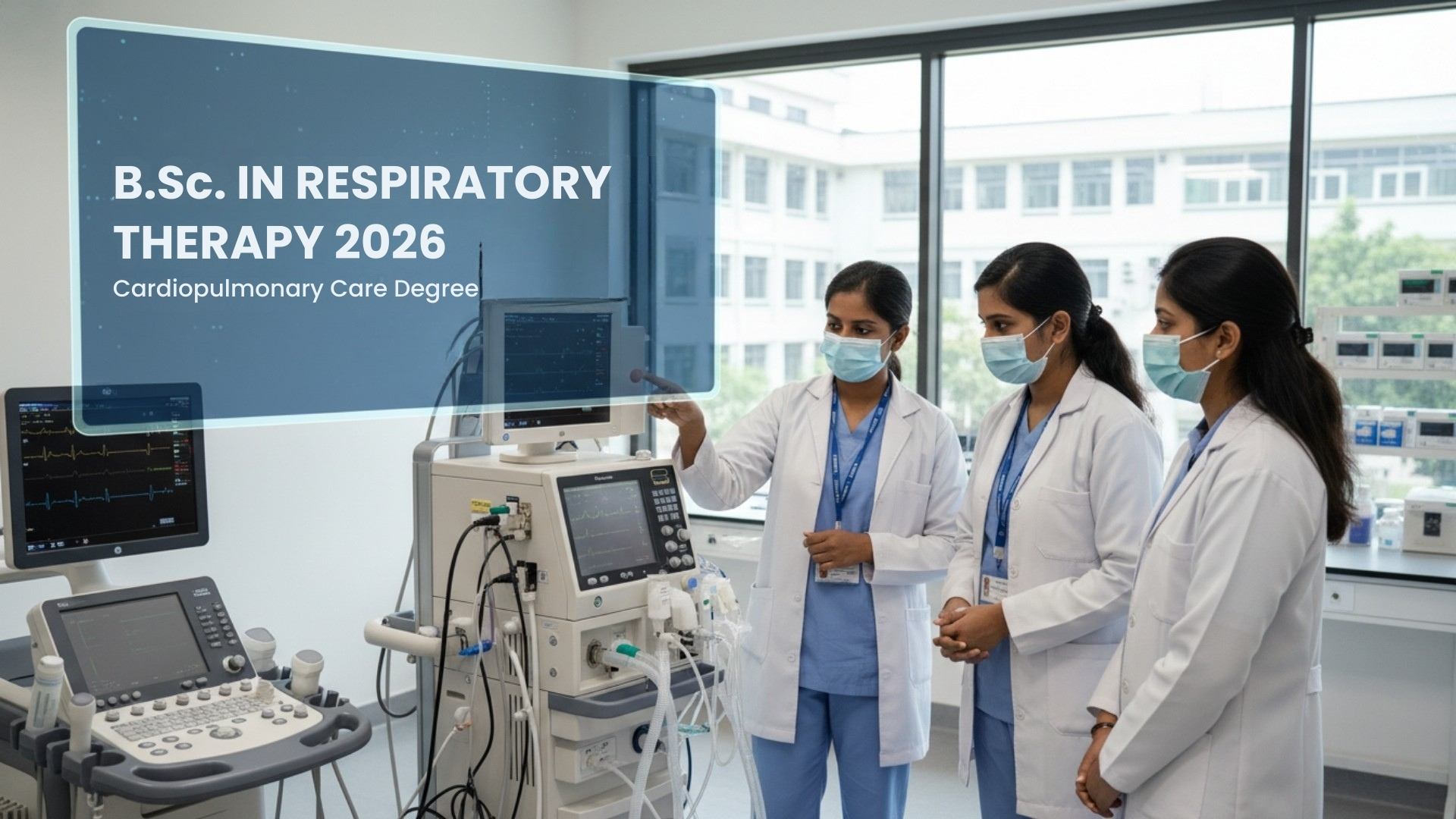
B.Sc. in Respiratory Therapy (2026 Cohort)
Specialization: Allied Health Sciences (Cardiopulmonary Care)
1. Course Overview & Key Highlights
The Bachelor of Science in Respiratory Therapy (B.Sc. R.T.) is an intensive, four-year undergraduate program designed to train specialists in the diagnosis, treatment, management, and rehabilitation of patients suffering from acute and chronic cardiopulmonary disorders. Graduates emerge as essential members of the critical care team, skilled in advanced life support, mechanical ventilation, and sophisticated patient monitoring across all age groups.
Key Highlights Table
Feature Details Course Name Bachelor of Science in Respiratory Therapy (B.Sc. R.T.) Course Level Undergraduate Degree Program (B.Sc.) Duration 4 Academic Years (Including 6–12 months of mandatory clinical internship) Eligibility Criteria 10+2 (Higher Secondary Education) with Physics, Chemistry, and Biology (PCB) Entrance Exams Successful clearance of institutional entrance examination (if applicable) Course Fees (Estimate) ₹10,000 to over ₹2,00,000 per year Admission Process Entrance-based and Merit-based on 10+2 scores Key Subjects Cardiopulmonary Physiology, Mechanical Ventilation, Airway Management, Critical Care Monitoring, Neonatal R.T. Examination Type Semester-wise Theory Exams, Practical OSCEs, and Clinical Performance Evaluations Average Starting Salary (Estimate) Competitive, varying significantly by region and certification level 2. Course Identity & Logistics
- Official Title: Bachelor of Science in Respiratory Therapy (B.Sc. R.T.)
- Course Code: RT-UG-2026-400
- Total Credits: 160–180 Credits (Varies by institutional structure)
- Delivery Mode: Full-time, On-campus, featuring extensive laboratory and clinical rotations.
- Department: Allied Health Sciences / Department of Cardiopulmonary Care
- Instructor Information: Led by board-certified Registered Respiratory Therapists (RRTs) and specialized physicians (Pulmonologists, Intensivists).
3. Course Description & Rationale
The B.Sc. in Respiratory Therapy is a comprehensive, skill-focused program rooted in evidence-based practice. It provides deep theoretical knowledge in human anatomy, physiology, and pharmacology specific to the respiratory and circulatory systems, coupled with rigorous hands-on training in critical care settings. Students learn to assess patient status, initiate and manage advanced life support technologies, and implement therapeutic interventions.
Curriculum Context: This program emphasizes extensive clinical rotations in high-acuity areas such as the ICU, Neonatal ICU (NICU), and Emergency Room (ER). Simulation-based learning is integrated throughout the curriculum to ensure students can confidently manage high-stakes, time-critical procedures like endotracheal intubation and complex ventilator weaning protocols before entering the clinical environment.
Industry Relevance (2025 Trends): The global healthcare landscape requires specialized professionals capable of managing increasingly complex respiratory illnesses, exacerbated by factors like chronic diseases (COPD, Asthma) and infectious outbreaks (e.g., post-COVID-19 pulmonary complications). This degree directly addresses the critical shortage of highly-trained cardiopulmonary specialists, ensuring graduates are immediately employable and prepared for the demands of 24/7 critical care.
Target Audience: Highly motivated science stream students (PCB) who possess strong analytical skills, manual dexterity, and a deep commitment to patient care in high-pressure medical environments.
4. Prerequisites & Eligibility
Academic Prerequisites
- Successful completion of Higher Secondary Education (10+2 or equivalent).
- Mandatory subjects: Physics, Chemistry, and Biology (PCB).
- Minimum aggregate score of 50-60% in the core science subjects.
Essential Skill Requirements (Recommended)
- Communication: Ability to clearly explain complex medical procedures to patients and collaborate effectively with multidisciplinary teams.
- Manual Dexterity: Necessary for performing procedures like airway suctioning, drawing arterial blood gases, and adjusting delicate equipment.
- Analytical Thinking: Crucial for interpreting blood gas results, ventilator waveforms, and physiological monitoring data.
- Empathy and Resilience: Ability to provide compassionate care in stressful, critical situations.
Health Requirement
Mandatory comprehensive health check-up, up-to-date immunization record (including Hepatitis B and annual flu shots), and compliance with institutional drug screening policies.
5. Learning Objectives
By the end of this course, graduates will be highly competent Respiratory Therapists, able to:
- Analyze: Pathological conditions related to the cardiopulmonary system and interpret diagnostic data (e.g., chest X-rays, ECGs, Pulmonary Function Tests) to determine appropriate therapeutic interventions.
- Operate and Maintain: Complex respiratory care equipment, including various modes of mechanical ventilators, non-invasive positive pressure devices, and specialized life support systems (e.g., ECMO support devices).
- Manage: Emergency cardiopulmonary situations, proficiently performing advanced airway management techniques, cardiopulmonary resuscitation (CPR), and rapid response interventions.
- Formulate: Individualized, evidence-based patient treatment plans, adapting protocols based on continuous clinical monitoring and physician orders.
- Educate: Patients, families, and other healthcare providers on disease management, preventive respiratory care, and the proper use of home medical equipment.
6. Course Materials
Required Textbooks (Core Texts)
- Egan's Fundamentals of Respiratory Care (Latest Edition)
- Rau's Respiratory Care Pharmacology
- West's Respiratory Physiology: The Essentials
- Clinical Application of Mechanical Ventilation
Practical Resources & Technology
- Simulation Labs: Access to state-of-the-art simulation environments utilizing high-fidelity manikins for practicing intubation, CPR, and ventilator management scenarios.
- Wet Labs: Dedicated facilities for anatomy, physiology, and arterial blood gas analysis training.
- EHR Systems: Hands-on training using electronic health records (EHR) systems for documentation and clinical charting.
Software & Tools
Students will utilize medical imaging software (PACS viewers), statistical analysis tools (SPSS/R), and access specialized online academic databases (e.g., PubMed, Cochrane Library) for research and evidence-based practice.
7. Detailed Syllabus & Module Breakdown (4 Academic Years)
The curriculum is structured across three progressive phases, combining rigorous academic study with mandatory clinical exposure.
Phase I: Foundations (Year 1)
- Objective: Establish core vocabulary, anatomical principles, basic patient assessment skills, and safety protocols essential for healthcare practice.
- Topics Covered:
- Human Anatomy and Physiology (Focus on Cardiopulmonary System)
- Basic Physics, Chemistry, and Mathematics for Clinicians
- Introduction to Respiratory Care and Professional Ethics
- Infection Control and Patient Safety Protocols
- Basic Life Support (BLS) and First Aid Certification
Phase II: Application & Core Concepts (Year 2 & 3 - Theory & Simulation)
- Objective: Master core respiratory procedures, understand disease pathology, and gain proficiency in basic critical care monitoring techniques.
- Topics Covered:
- Cardiopulmonary Pharmacology and Drug Delivery Systems (Aerosolization)
- Respiratory Diseases and Pathology (COPD, Asthma, Pneumonia)
- Acid-Base Homeostasis and Arterial Blood Gas Analysis
- Airway Management Techniques and Airway Clearance Therapy
- Introduction to Mechanical Ventilation Principles and Modes
- Pulmonary Function Testing (PFT) and Diagnostics
Phase III: Advanced & Specialization (Year 4 - Clinical Rotations & Research)
- Objective: Apply complex strategies in specialized settings, manage high-acuity patients, and complete mandatory clinical internships and capstone research.
- Topics Covered:
- Advanced Mechanical Ventilation Strategies (e.g., APRV, HFOV)
- Neonatal and Pediatric Respiratory Care
- Sleep Medicine and Polysomnography
- Adult Critical Care Rotation (ICU/CCU/Trauma)
- Pulmonary Rehabilitation and Home Care
- Research Methodology, Biostatistics, and Capstone Thesis/Project
8. Assessment & Grading Scheme
Assessment is designed to test both theoretical knowledge and practical clinical competence, ensuring graduates meet the high standards required for critical care practice.
Evaluation Components Distribution
| Assessment Component | Weightage | Description |
|---|---|---|
| Theory Examinations | 40% | Mid-term and End-of-Semester written papers covering core subjects. |
| Practical/Skill Assessments | 30% | Objective Structured Clinical Examinations (OSCEs), Lab Reports, and Simulation Performance. |
| Clinical Performance Evaluation | 20% | Preceptor feedback, case studies, and clinical logbook completion during rotations. |
| Research Project/Thesis | 10% | Final year Capstone project demonstrating scientific inquiry and synthesis. |
Passing Criteria
Students must achieve a minimum passing grade (typically 50% or C grade equivalent) in both the theoretical and practical/clinical components of every core subject to proceed to the next academic year and qualify for graduation.
9. Course Policies
- Academic Integrity: The institution maintains a zero-tolerance policy regarding plagiarism, cheating, and academic misconduct. All work must adhere to strict ethical standards.
- Attendance Requirements: Mandatory minimum attendance of 80% for theoretical classes and 90% for all clinical and laboratory hours is required for eligibility to sit for final examinations.
- Professional Conduct: Strict adherence to clinical ethical guidelines, including HIPAA/patient confidentiality protocols, is mandatory during all rotations.
- Safety Compliance: Students must comply with all hospital and lab safety protocols, including mandatory use of Personal Protective Equipment (PPE) and proper handling of hazardous materials.
10. Career Scope & Certification
Graduates of the B.Sc. R.T. program are prepared for immediate entry into high-demand, specialized healthcare roles globally. The curriculum is structured to align with international certification standards.
Professional Certification/Licensure
The program prepares students for national and international licensing examinations, such as the National Board for Respiratory Care (NBRC) examinations in the US, leading to the designation of Registered Respiratory Therapist (RRT), or equivalent national board certification.
Key Skills Acquired
Technical Skills: Mechanical ventilation management, arterial blood gas analysis, pulmonary function testing, advanced airway techniques, hemodynamic monitoring, and neonatal critical care.
Soft Skills: Critical decision-making under pressure, interprofessional collaboration, patient education, and ethical reasoning.
Job Roles and Salary Expectations
| Job Role | Description | Average Starting Salary (Regional Estimate) |
|---|---|---|
| Registered Respiratory Therapist (RRT) | Provides direct patient care in ICUs, ERs, and general wards, specializing in life support and airway management. | ₹3 Lakhs to ₹7 Lakhs annually |
| Pulmonary Function Technologist | Conducts and interprets diagnostic tests to measure lung capacity and function. | ₹5.5 LPA to ₹7.5 LPA |
| Clinical Specialist/Educator | Training staff, developing protocols, or specializing in a specific area (e.g., Neonatal R.T.). | High (Varies based on experience and setting) |
| Medical Device Sales Representative | Sales and technical support for respiratory devices (e.g., ventilators, oxygen systems). | Competitive + Commission |
Further Studies
Graduates are eligible to pursue M.Sc. programs in Respiratory Therapy, Public Health, Healthcare Administration, or specialized post-graduate certifications in areas such as Neonatal/Pediatric R.T. or Sleep Technology.
11. Frequently Asked Questions (FAQs)
What are the minimum eligibility requirements for admission to the B.Sc. R.T. program?
Candidates must have successfully completed their Higher Secondary Education (10+2 or equivalent) with mandatory subjects Physics, Chemistry, and Biology (PCB). A minimum aggregate score, typically between 50% and 60%, is required, along with successful clearance of any mandatory institutional entrance exams.
Is this course clinically heavy, and when do the rotations begin?
Yes, the B.Sc. R.T. is highly clinical. While foundational theory is covered in Years 1 and 2, formal, supervised clinical rotations begin extensively in Year 3 and dominate the final year (Year 4). The final year includes 6–12 months of mandatory, intensive clinical internship across various critical care settings.
What is the typical career progression after becoming a Registered Respiratory Therapist (RRT)?
RRTs typically begin in general hospital settings (wards or ICUs). Progression involves specialization (e.g., pediatric/neonatal care, sleep medicine, or pulmonary rehabilitation), moving into leadership roles (Clinical Supervisor, Department Manager), or transitioning into education or medical device sales.
Are B.Sc. R.T. graduates required to work night shifts?
Respiratory care is a continuous, 24/7 service, especially in critical care units. During mandatory clinical rotations and in professional practice afterward, R.T. professionals must be prepared and scheduled for shift work, including nights, weekends, and holidays.
Does the tuition fee include the cost of textbooks and clinical certification fees?
Typically, the estimated course fee covers tuition and mandatory lab usage. Students are generally responsible for the cost of core textbooks, institutional uniforms, specialized equipment (stethoscopes), and external certification examination fees (e.g., NBRC or national licensing boards).