
B.Sc. Clinical Laboratory Science 2026: Course Details & Scope
Train as a certified Clinical Laboratory Scientist. Learn advanced diagnostics, hematology, microbiology, and molecular techniques over 4 years. High demand career.
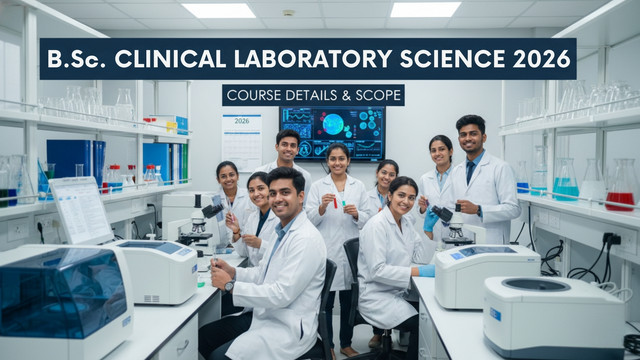
B.Sc. in Clinical Laboratory Science (CLS) 2026: Course Details and Structure
The Bachelor of Science in Clinical Laboratory Science (B.Sc. CLS) is a rigorous four-year undergraduate program designed to train highly skilled professionals in diagnostic medicine. Students gain proficiency in performing complex biomedical analyses across major laboratory disciplines—including hematology, microbiology, clinical chemistry, and molecular diagnostics—which are essential for disease detection, monitoring patient health, and guiding therapeutic decisions in modern healthcare settings.
1. Course Overview & Key Highlights
B.Sc. Clinical Laboratory Science Program Snapshot Attribute Detail Course Name B.Sc. in Clinical Laboratory Science Course Level Undergraduate (Bachelor of Science) Duration 4 Academic Years (8 Semesters) + Mandatory Clinical Rotations Eligibility Criteria 10+2 (High School equivalent) with mandatory Physics, Chemistry, and Biology (PCB) Entrance Exams Institution-specific entrance exams or standardized national tests (e.g., NEET, CET, or equivalent) Estimated Annual Fees (Avg.) ₹1,00,000 to ₹4,00,000 for the entire 3-4 year program) Admission Process Entrance Exam Score followed by Counseling/Interview Key Subjects Clinical Hematology, Medical Microbiology, Immunohematology (Blood Banking), Molecular Diagnostics, Clinical Chemistry, Laboratory Management. Examination Type Semester-wise Theoretical and Practical Examinations Average Starting Salary (Entry-Level CLS) ₹2.5 to ₹4 Lakhs per annum (LPA) 2. Course Identity & Logistics
This program is anchored in the principles of evidence-based diagnostics and quality assurance.
- Course Title: Bachelor of Science in Clinical Laboratory Science (B.Sc. CLS)
- Course Code: CLS-BS-2026
- Total Credits/ECTS: Approximately 140–160 Credits
- Delivering Department: Department of Pathology and Laboratory Medicine or Allied Health Sciences
- Mode of Delivery: Full-time, On-campus with mandatory extensive hands-on laboratory sessions and clinical rotations.
3. Course Description & Rationale
Summary and Curriculum Context
The B.Sc. CLS curriculum provides an in-depth understanding of human disease processes from a laboratory perspective. It moves sequentially from foundational sciences (Anatomy, Physiology, Chemistry) in the first year to specialized clinical disciplines (Hematology, Microbiology, Blood Banking) in subsequent years. The program culminates in a mandatory clinical internship, ensuring students meet the professional competency standards required for certification.
Industry Relevance (2025 Trends)
The role of the Clinical Laboratory Scientist is increasingly critical, especially with the rise of personalized medicine and infectious disease outbreaks. The 2026 curriculum places strong emphasis on emerging technologies, including automation, bioinformatics integration, and high-complexity molecular diagnostics (e.g., PCR, sequencing), ensuring graduates are equipped to manage the advanced diagnostic demands of modern healthcare facilities.
Target Audience
This program is ideal for highly motivated high school graduates with a strong aptitude for science, exceptional attention to detail, and a commitment to contributing directly to patient care through behind-the-scenes diagnostic excellence.
4. Prerequisites & Eligibility
Academic Prerequisites
- Formal Education: Successful completion of the 10+2 system (High School) or equivalent.
- Mandatory Subjects: Physics, Chemistry, and Biology (PCB).
- Minimum Score: A minimum aggregate score (typically 50% to 60%) in the science stream is required.
- Entrance: Successful completion of the required institutional or national entrance examination.
Skill Requirements
- Analytical Skills: Ability to interpret complex data and troubleshoot instrumentation issues.
- Attention to Detail: Absolute necessity for accurate testing and quality control procedures.
- Commitment to Ethics: Understanding and adherence to strict biosafety, confidentiality, and professional integrity standards.
5. Learning Objectives
Upon successful completion of the B.Sc. in Clinical Laboratory Science program, students will be able to:
- Define: The pathological basis of major human diseases and the corresponding laboratory markers used for diagnosis and prognosis.
- Apply: Standard Operating Procedures (SOPs) to perform complex manual and automated laboratory tests across all core disciplines (e.g., microscopic analysis, culturing, spectrophotometry).
- Analyze: Clinical laboratory data (including abnormal results, delta checks, and QC data) to ensure accuracy and communicate findings effectively to clinical personnel.
- Evaluate: Quality control (QC) metrics, identify sources of error, and implement corrective actions to maintain the reliability and integrity of laboratory results.
- Create: Research protocols, conduct small-scale research projects, and manage laboratory information systems (LIMS) and inventory efficiently.
6. Course Materials
Required Textbooks
- Clinical Chemistry: Principles, Techniques, and Correlations (Author: Michael L. Bishop, et al.)
- Rodak’s Hematology: Clinical Principles and Applications (Author: Elaine M. Keohane, et al.)
- Bailey & Scott's Diagnostic Microbiology (Author: Patricia M. Tille)
- Immunohematology: Principles and Practice (Author: Eva D. Quinley)
Reference Materials
- Detailed Laboratory Manuals and Standard Operating Procedures (SOPs) for all core techniques.
- Access to scientific journals (e.g., Clinical Chemistry, Journal of Clinical Microbiology).
- Professional organization guidelines (e.g., CLSI, ASCP standards).
Software & Tools
Students will utilize industry-standard tools for data management and simulation:
- Laboratory Information Management Systems (LIMS) simulation software.
- Statistical analysis software (e.g., SPSS, R, or equivalent).
- Virtual microscopy platforms for histopathology and hematology slide review.
7. Detailed Syllabus & Module Breakdown (4-Year Program Structure)
The B.Sc. CLS program is structured into three progressive phases, integrating theoretical knowledge with extensive practical competency development.
Phase I: Foundations (Year 1)
Objective: Establish core vocabulary, general scientific principles, and introductory concepts necessary for clinical application.
- Semester 1: Anatomy & Physiology, General Chemistry, Biostatistics, Medical Terminology.
- Semester 2: Biochemistry, Introduction to Clinical Laboratory Science, Basic Instrumentation, Principles of Phlebotomy.
Phase II: Application & Core Concepts (Year 2 - 3)
Objective: Practical application of theories across major CLS disciplines using standard laboratory methodologies and instrumentation.
- Year 2 Focus: Clinical Hematology (including Coagulation), Clinical Chemistry I (Organ function tests, Enzymes), Introduction to Immunohematology (Blood Banking basics).
- Year 3 Focus: Clinical Microbiology (Bacteriology, Parasitology, Mycology), Clinical Chemistry II (Endocrinology, Toxicology), Immunology & Serology, Histopathology & Cytology Techniques.
Phase III: Clinical Integration, Management & Specialization (Year 4)
Objective: Advanced complexity, synthesis of knowledge, management skills, and mandatory full-time clinical competency development.
- Semester 7: Molecular Diagnostics (PCR, DNA Sequencing), Clinical Toxicology, Laboratory Management & Informatics (LIMS), Research Methodology and Project Development.
- Semester 8: Mandatory Full-time Clinical Internship/Rotation (Hospital Laboratories), Professional Ethics and Compliance Review, Final Competency Examinations.
8. Assessment & Grading Scheme
Assessment is comprehensive, measuring both theoretical mastery and practical competency required for professional practice.
Assessment Distribution
| Component | Weight (%) | Description |
|---|---|---|
| Theoretical Exams | 50% | Mid-term and End-of-Semester written examinations. |
| Practical Assessments | 30% | Hands-on lab exams, competency checklists, and maintenance of lab notebooks. |
| Clinical Performance | 10% | Supervisor evaluations during mandatory clinical rotations (Year 4). |
| Projects & Seminars | 10% | Case study presentations, research projects, and assignments. |
Grading Scale and Passing Criteria
A standardized letter grading or GPA system is used. Students must achieve a minimum passing grade (typically C or 60%) in both the theoretical and practical components of each core subject to proceed to the next semester and qualify for clinical rotations.
9. Course Policies
Academic Integrity
Strict policies govern academic conduct. Any incidence of plagiarism, cheating on exams, or falsification of laboratory data will result in immediate disciplinary action, potentially including expulsion from the program.
Attendance Requirements
A minimum attendance of 75% to 80% (as specified by the institution) is mandatory for both theoretical lectures and practical laboratory sessions. Failure to meet this requirement will disqualify students from sitting for the final semester examinations.
Laboratory Safety and Professional Conduct
Compliance with all institutional and regulatory biosafety levels (BSL) and protocols is non-negotiable. During clinical rotations, students must maintain the highest level of professional conduct, adhere strictly to patient confidentiality (HIPAA/GDPR compliance), and wear appropriate Personal Protective Equipment (PPE) at all times.
10. Career Scope & Certification
Certification Details
Graduates are prepared to sit for professional certification examinations, which are often legally required for employment. Key certifications include the ASCP Board of Certification (BOC) or equivalent local professional licensing board exams (e.g., CSMLS in Canada, specific state licenses in the US). Certification validates competency and significantly enhances career mobility and earning potential.
Skills Acquired
- Technical Skills: Advanced microscopy, flow cytometry, immunoassay techniques, nucleic acid amplification (PCR), automation management, and blood product preparation.
- Soft Skills: Critical thinking, problem-solving, quality assurance auditing, interprofessional communication (with physicians and nurses), and ethical decision-making.
Key Job Roles and Salary Projection
| Job Role | Description | Avg. Starting Salary Range (USD) |
|---|---|---|
| Clinical Laboratory Scientist/Technologist | Performs complex diagnostic tests in hospital or reference laboratories. | ₹2.5 to ₹4 Lakhs per year |
| Quality Assurance (QA) Officer | Monitors lab processes, ensures regulatory compliance (CLIA, CAP), and manages accreditation. | ₹2.5 to ₹4.0 Lakhs per year (LPA) |
| Specialty Technologist (Molecular/Cytogenetics) | Focuses on highly specialized testing, often in research or niche diagnostic labs. | ₹2.5 Lakhs to ₹4 Lakhs per year. |
| Public Health Laboratory Analyst | Works in government labs focusing on infectious disease surveillance and outbreak investigation. | ₹2.5 to ₹4 Lakhs per year |
Further Studies
Graduates are well-positioned for advanced education, including M.Sc. programs in Pathology, Medical Microbiology, Clinical Chemistry, Biotechnology, or specialized professional degrees such as Physician Assistant (PA) or Medical School (with required prerequisites).
11. Frequently Asked Questions (FAQs)
1. What are the specific eligibility requirements for admission to the B.Sc. CLS program?
You must have completed high school (10+2) with Physics, Chemistry, and Biology (PCB) as mandatory subjects. Most institutions require a minimum aggregate score (usually 50-60%) in the science stream and successful qualification in a prescribed entrance examination.
2. How is the course structured, and how much time is spent in the hospital setting?
The course is structured over 4 years (8 semesters). The first three years focus on foundational and core CLS disciplines through lectures and intensive on-campus lab practice. The final year (Semester 8) is typically dedicated entirely to a mandatory, full-time clinical internship or rotation in accredited hospital laboratories, ensuring hands-on patient exposure and competency development.
3. Are the clinical rotations or internships paid?
This varies significantly by institution and country. While some private hospitals or large reference laboratories may offer a stipend to interns, the primary focus of the rotation is education and competency development. Students should confirm the specific financial arrangement with their institution prior to placement.
4. What is the difference between a Clinical Laboratory Scientist (CLS) and a Lab Technician?
A B.Sc. CLS program trains scientists who are qualified to perform and interpret high-complexity testing, troubleshoot sophisticated instruments, manage quality assurance protocols, and often supervise technical staff. Technicians typically perform routine testing under the supervision of a CLS or Pathologist.
5. What career advancement opportunities are available after completing the B.Sc. CLS?
Graduates can advance into supervisory or management roles (Laboratory Manager), specialize in high-demand areas like Molecular Diagnostics or Cytogenetics, or pursue further education (M.Sc., Ph.D.) to enter academia or research and development in pharmaceutical or diagnostic companies.