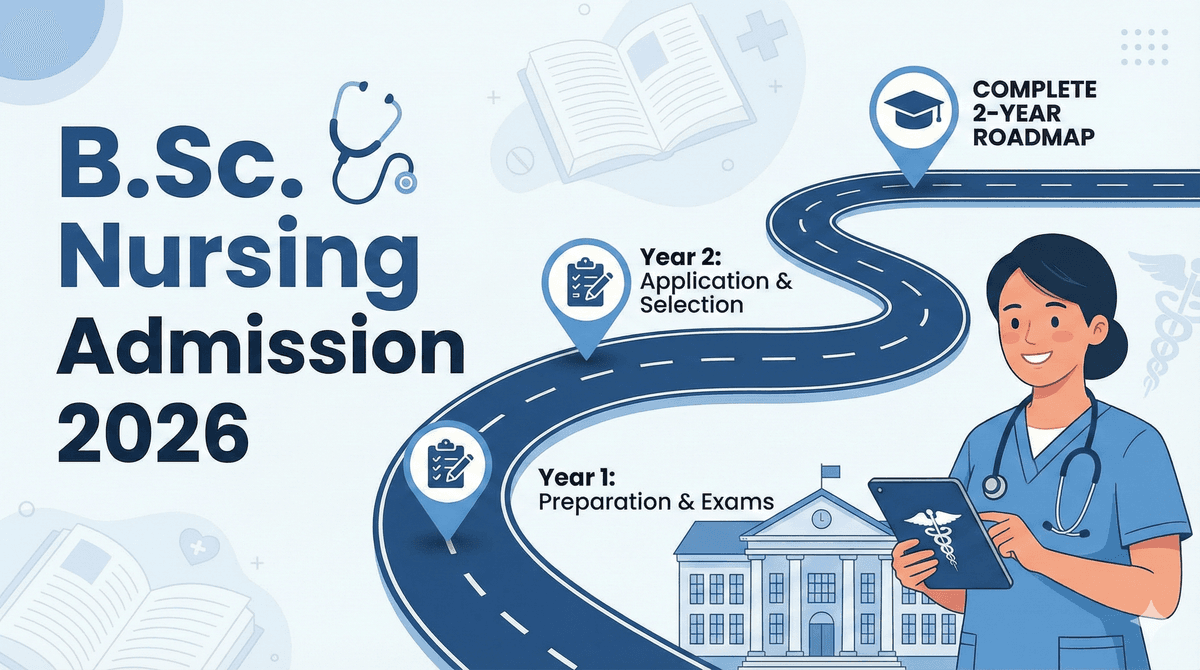
B.Sc. Nursing Admission 2026: The Complete 2-Year Roadmap for Entrance Exam Success
The healthcare sector needs dedicated professionals, and B.Sc. Nursing is your gateway. If you are currently in 11th or 12th grade and aiming for admission in 2026, the time to start strategizing is right now. This comprehensive guide details the eligibility rules, necessary entrance exams, and a step-by-step 2-year preparation plan to secure your seat in a top institution.
Key Takeaways for Aspiring Nurses
Start Early: Eligibility criteria (especially subject combination) must be confirmed in 11th grade.AIIMS is Key: Aiming for AIIMS B.Sc. Nursing requires dedicated preparation separate from standard board exams.Core Subjects: Physics, Chemistry, and Biology (PCB) are mandatory for all major exams.2-Year Commitment: Success in 2026 requires consistent effort across Class 11 and Class 12 syllabus mastery.
1. Why Planning for 2026 Starts Now
You’ve chosen a noble and highly rewarding path. B.Sc. Nursing graduates are in massive demand, not just in Indian hospitals but globally. However, this high demand leads to immense competition for limited seats in top government colleges.
Getting into prestigious colleges like AIIMS or JIPMER requires securing a top rank in highly selective entrance exams. Simply put, relying on last-minute preparation is a recipe for disappointment. A planned 2-year roadmap ensures you cover the vast syllabus comprehensively and build strong conceptual clarity.
2. Eligibility Essentials: Meeting the Requirements Early
Before you dive into preparation, you must confirm that you meet the foundational academic and personal criteria. Any gap here can disqualify you later.
Academic Criteria Checklist
The standard requirement for B.Sc. Nursing entrance exams is clear:
Note: While 45% might make you eligible, aiming for 70%+ in your 12th board exams is crucial for overall confidence.
Age Criteria
Age limits are strictly enforced by the Indian Nursing Council (INC) and major institutions:
Fitness Standards and Requirements
Most premier institutions require candidates to be medically fit. You will need to submit a Medical Fitness Certificate during the counseling phase.
3. Decoding the Entrance Exams for 2026
Unlike engineering or pure medicine, B.Sc. Nursing admissions rely on a mix of national, state, and institutional-specific examinations. Knowing which ones to target is the first step.
National Level Exams
AIIMS B.Sc. Nursing (The Gold Standard): This is the most prestigious exam, granting admission to the 15+ AIIMS institutions across the country. It is highly competitive and has a specific syllabus.NEET UG: While primarily for MBBS/BDS, many states (like Maharashtra and Haryana) and numerous private colleges now use NEET UG scores for their B.Sc. Nursing admissions. This is a critical factor, making strong NEET preparation doubly useful.
State Level CETs
If you prefer studying close to home, state-specific Common Entrance Tests (CETs) are essential:
Exam Syllabus Overview
The syllabus for B.Sc. Nursing entrance exams is primarily based on the NCERT Class 11 and Class 12 curriculum, focusing heavily on:
Comparative Snapshot: Key B.Sc. Nursing Entrance Exams (2026 Estimates)
Comparative Snapshot: Key B.Sc. Nursing Entrance Exams (2026 Estimates)| Entrance Exam Name | Eligibility Criteria (Min. %) | Application Window (Estimated) | Exam Date (Estimated) | Exam Subject Focus | Accepting Colleges |
|---|
| AIIMS B.Sc. Nursing | 55% General / 50% SC/ST | March - April 2026 | May - June 2026 | PCB + GK + Aptitude | AIIMS institutions only |
| NEET UG (For Nursing) | 50% General / 40% Reserved | February - March 2026 | May 2026 | PCB (Highly detailed) | Many Private/State Colleges |
| State CET (e.g., UP CNET) | 45% General | April - May 2026 | June 2026 | PCB + Nursing Aptitude | State Government/Private Colleges |
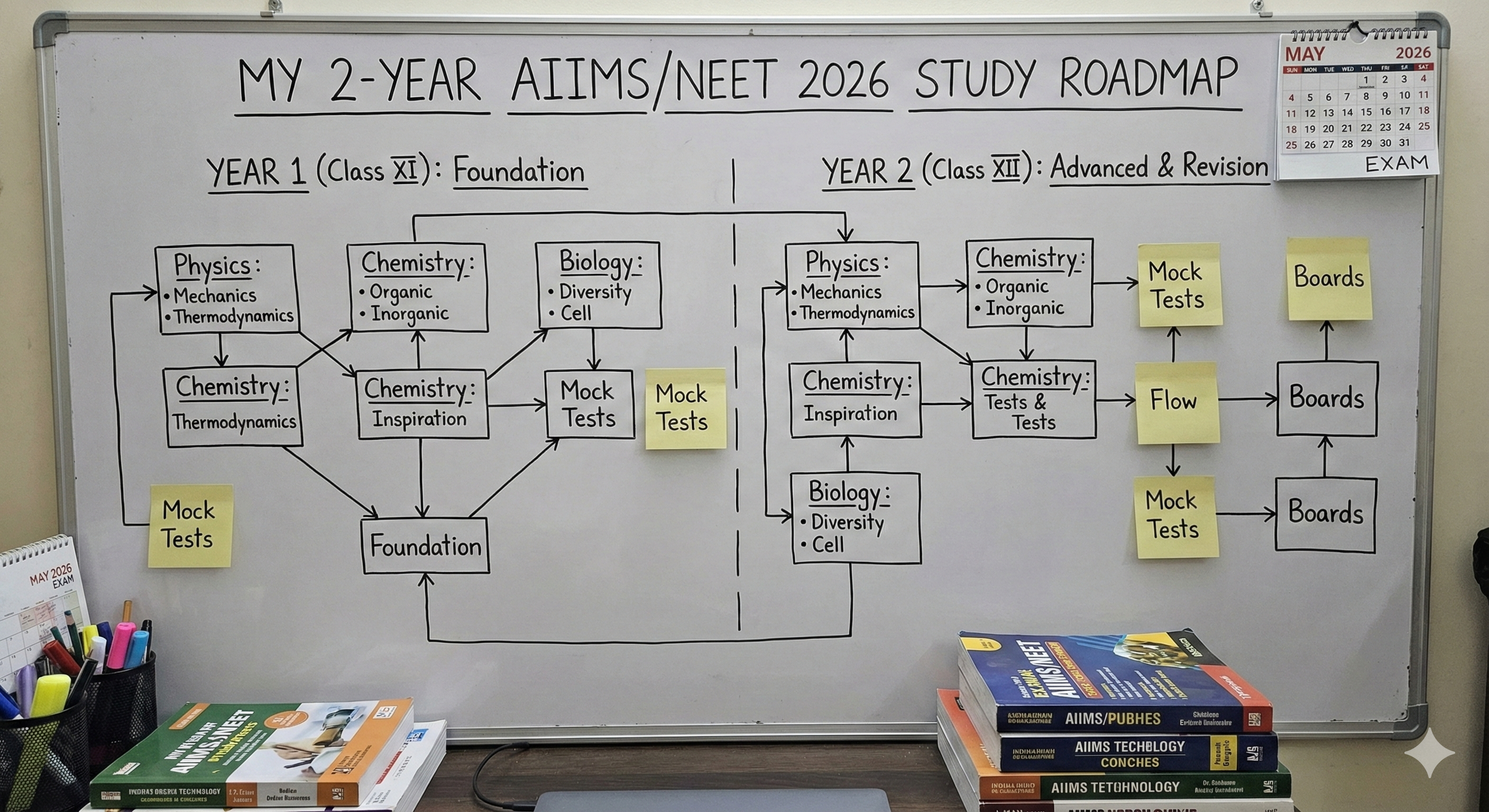
4. The Strategic Admission Timeline: 2024 to 2026 (The 2-Year Plan)
Your preparation should be systematic and phase-based. This roadmap aligns entrance exam preparation with your 11th and 12th standard studies.
Phase 1: Foundation Building (Mid-2024 – Early 2025)
This phase is dedicated to mastering the fundamentals (Class 11 syllabus).
Phase 2: Intensive Exam Preparation (Mid-2025 – End 2025)
As you complete your Class 12 syllabus, the focus shifts entirely to competitive practice.
Phase 3: Application, Examination, and Counseling (Early 2026 – Late 2026)
This final phase is about execution and procedure.
5. Top Institutions and Fee Structures
Choosing the right college is as important as clearing the exam. Your college determines the quality of training, clinical exposure, and future career prospects.
Key Factors for Selecting a Nursing College
Affiliation and Recognition: Ensure the college is recognized by the Indian Nursing Council (INC) and affiliated with a reputable university or body.Infrastructure and Clinical Exposure: Look for colleges attached to large, functioning hospitals that offer diverse clinical practice opportunities.Placement Record: Research where past graduates have been placed—in India or abroad.
List of Premier Government and Private B.Sc. Nursing Colleges
Target these colleges for the best career start:
Note on Fees: Government colleges (like AIIMS) have very low annual fees (often less than ₹10,000). Private institutions, however, can charge anywhere from ₹80,000 to ₹3,00,000 per year, making a successful entrance exam result critical for affordability.
6. Conclusion: Your Next Steps Today
The journey to B.Sc. Nursing admission in 2026 is a marathon, not a sprint. By starting now, you eliminate unnecessary stress and build a solid foundation that guarantees success.
Action Plan: Start Today
Confirm Eligibility: Verify that your 11th and 12th subjects (PCB + English) meet all criteria.Syllabus Review: Download the latest NCERT syllabi for Class 11 and 12 and map them against the AIIMS/NEET exam pattern.Time Allocation: Immediately integrate daily competitive exam preparation into your school routine.Healthcare is waiting for dedicated individuals like you. Stay focused, stay consistent, and we look forward to seeing you succeed in 2026!